
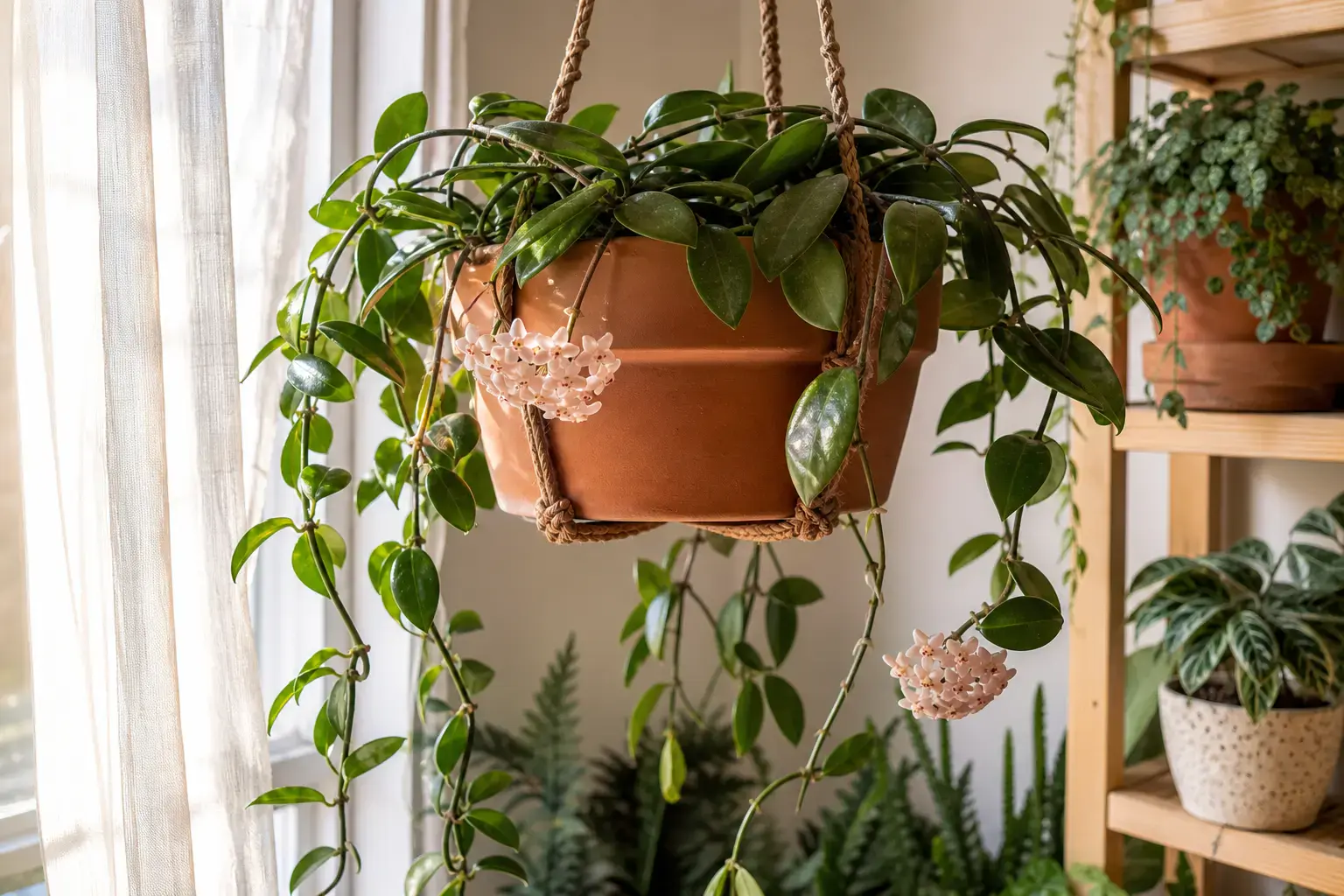
Hoya Carnosa
Hoya carnosa
Also known as: Wax Plant, Porcelain Flower, Wax Vine, Hindu Rope Plant
Last updated: Sep 10, 2026
Bright indirect light with gentle morning sun
When the top half of soil is dry
40–60%
60–85°F (16–29°C)
Chunky, fast-draining mix with orchid bark and perlite
Half-strength balanced fertilizer monthly in spring/summer
Beginner friendly
Pet safe
Seasonal Care Calendar
| Season | Watering | Fertilizer | Notes |
|---|---|---|---|
| Spring | Every 10–14 days | Start monthly feeding | Resume active growth care. Best time to repot or propagate. |
| Summer | Every 7–14 days | Monthly feeding | Strong growth and possible blooming. Protect from harsh afternoon sun. |
| Fall | Every 14–21 days | Reduce or stop | Growth slows. Keep bright and avoid sudden cold drafts. |
| Winter | Every 2–4 weeks | None | Let the mix dry farther between waterings. Cooler nights may support future blooms. |
Detailed Care Guide
Everything you need to know to keep your Hoya Carnosa thriving.
Light Requirements
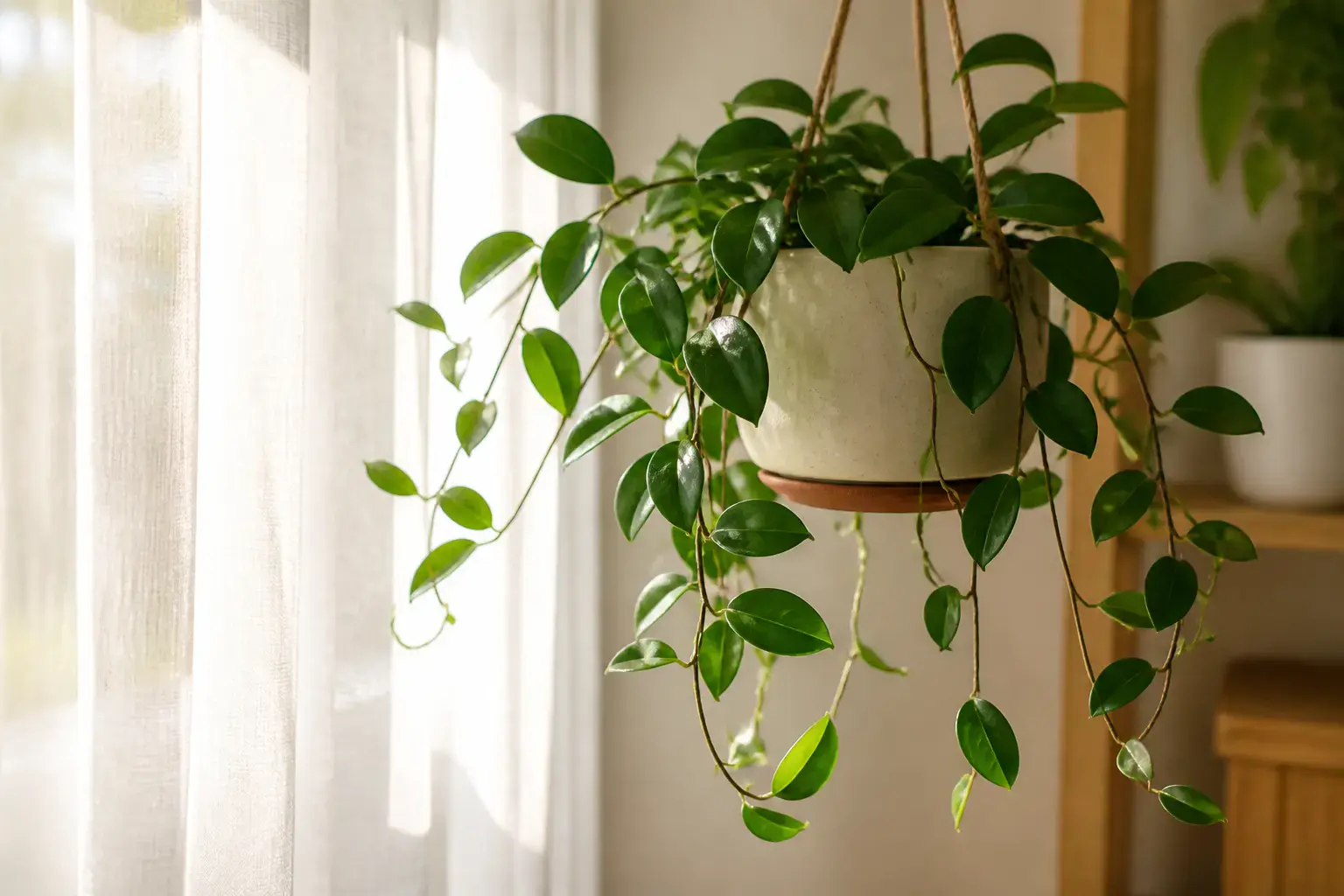
Hoya carnosa grows best in bright indirect light and rewards good light with faster growth, thicker leaves, and a much better chance of flowering. An east-facing window with gentle morning sun is ideal. A south- or west-facing window also works if the plant sits a few feet back or behind a sheer curtain.
This plant can survive in medium light, but survival is not the same as blooming. In dim corners, vines stretch, leaves become smaller and farther apart, and flower buds rarely form. If your goal is fragrant porcelain-like flowers, treat light as the first requirement rather than an optional upgrade.
A few hours of soft morning sun or late afternoon sun is helpful. Harsh midday sun can bleach or scorch the waxy leaves, especially on variegated cultivars. If leaves develop tan patches on the sun-facing side, move the plant slightly farther from the glass. Rotate the pot every week or two so vines grow evenly.
Watering
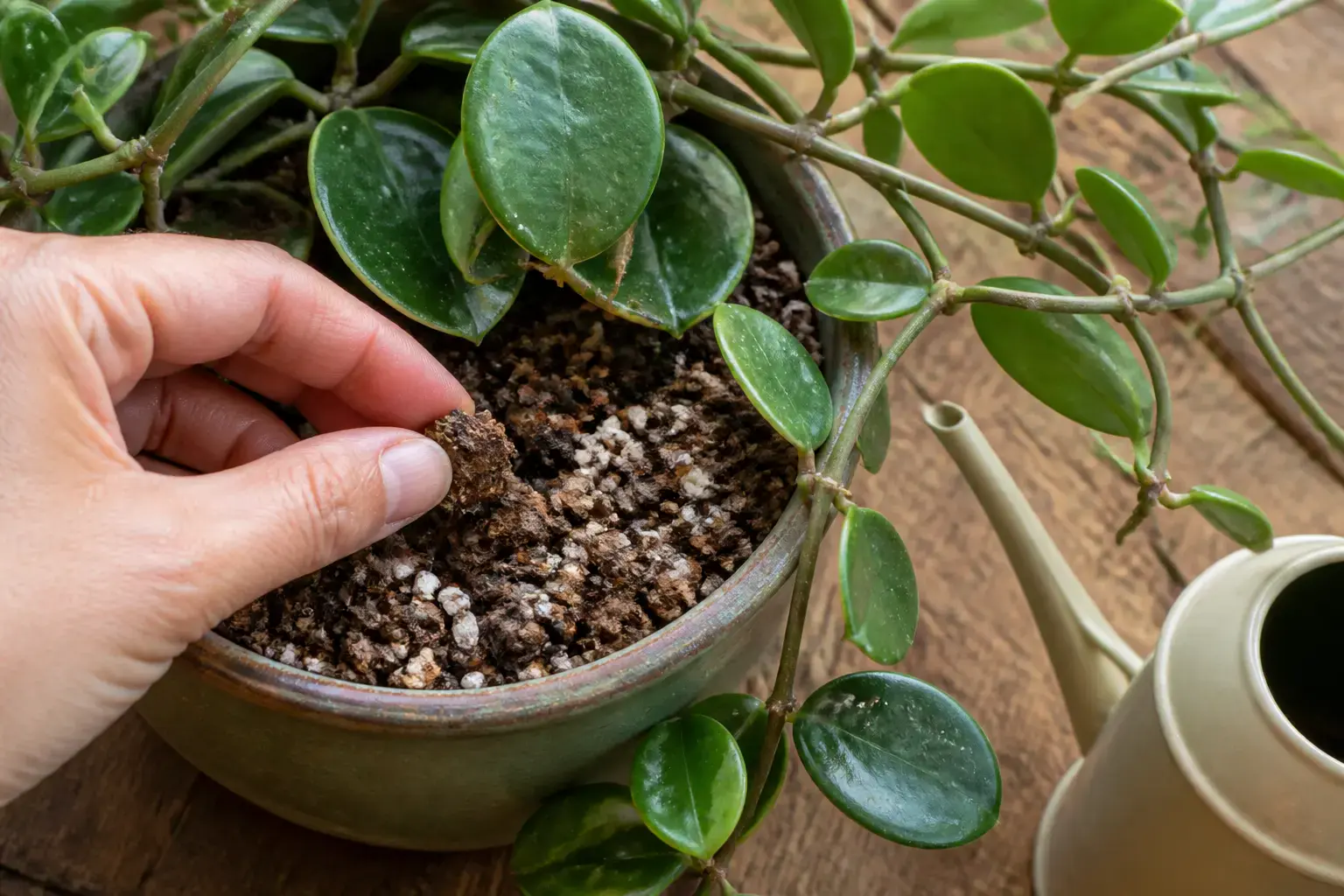
Water Hoya carnosa when the top half of the potting mix feels dry. The thick, semi-succulent leaves store moisture, so this plant prefers drying down between waterings rather than staying evenly moist like many tropical foliage plants. In a typical indoor pot, that often means every 10–14 days during spring and summer and every 2–4 weeks during fall and winter.
When you water, soak the mix thoroughly until water drains from the bottom, then empty the saucer. Light sips create shallow roots and leave dry pockets in chunky soil. The key is thorough watering followed by a real dry-down.
Overwatering is the most common cause of Hoya decline. Yellow leaves appearing in groups, soft stems, black roots, and soil that smells sour all point to a wet root zone. Underwatered hoyas usually show wrinkled or slightly puckered leaves that firm up after watering. If you are unsure, wait another day and check the pot weight; a dry Hoya pot feels noticeably lighter.
Humidity
Hoya carnosa is more forgiving of average home humidity than many tropical plants. It grows well around 40–60% humidity and usually tolerates the 30–40% range found in heated or air-conditioned homes. Higher humidity can support faster growth and easier rooting, but it is not worth keeping the plant constantly damp.
Avoid frequent misting as a humidity strategy. Water sitting on leaves, vines, and flower spurs can encourage fungal problems without meaningfully changing room humidity. If your home is very dry, use a small humidifier nearby or group plants together, but keep air moving.
Good airflow matters as much as humidity. Hoyas have dense vines and waxy foliage that can trap moisture after watering. Keep the plant out of stagnant corners, especially if you grow it in a hanging basket with many overlapping stems.
Temperature
Hoya carnosa prefers normal indoor temperatures between 60–85°F (16–29°C). It handles warm rooms well as long as the potting mix dries appropriately and the plant is not pressed against hot glass or a heating vent.
Cooler winter nights can help mature plants set buds, but avoid temperatures below 50°F (10°C). Chilly wet soil is especially risky because roots use less water in cool conditions while the potting mix stays damp for longer.
Keep the plant away from cold drafts, exterior doors, air-conditioning vents, and radiators. Sudden temperature swings can cause bud blast, where flower buds yellow and drop before opening.
Soil
Hoya carnosa needs a chunky, airy potting mix that drains fast while holding a little moisture around the roots. Standard all-purpose potting soil is usually too dense on its own and can remain wet long enough to cause root rot.
A reliable mix is 1 part potting soil, 1 part orchid bark, and 1 part perlite or pumice. The bark creates large air pockets, the perlite improves drainage, and the potting soil holds enough moisture and nutrients to support steady growth. A small amount of horticultural charcoal is also useful in hanging baskets that are watered less frequently.
Use a pot with drainage holes. Terracotta dries fastest and is helpful for heavy waterers; plastic retains moisture longer and can work well in bright, warm rooms. If the mix still feels wet a week after watering, repot into a chunkier blend or downsize the pot.
Fertilizer
Feed Hoya carnosa with a balanced liquid fertilizer diluted to half strength once a month during spring and summer. This supports new vines and leaf growth without overwhelming the roots. If the plant is actively budding, a bloom-supporting fertilizer with slightly higher phosphorus can be used occasionally, but strong light is still the main driver of flowers.
Do not fertilize dry soil. Water first or fertilize during a normal watering so nutrients distribute evenly through the root zone. Too much fertilizer causes salt buildup, brown leaf edges, and stalled growth. If you see white crust on the soil surface or pot rim, flush the mix thoroughly with plain water.
Stop feeding in fall and winter unless the plant is under grow lights and actively producing new leaves. A resting Hoya uses fewer nutrients, and unused salts accumulate in the pot.
Repotting
Hoya carnosa prefers being slightly root-bound and does not need frequent repotting. Repot every 2–3 years, or when the potting mix has broken down, roots circle tightly around the pot, or water runs straight through without wetting the mix.
Choose a new pot only 1–2 inches wider than the current one. Oversized pots hold too much damp mix around the roots and delay blooming because the plant spends energy filling the container. Spring or early summer is the best time to repot.
Handle the vines gently and avoid removing old flower spurs, also called peduncles. Hoyas often rebloom from the same spurs year after year. After repotting, keep the plant in bright indirect light and wait until the mix is partly dry before watering again.
Blooming Tips
Mature Hoya carnosa can produce clusters of star-shaped flowers that look like porcelain and smell sweet, especially in the evening. The most important bloom trigger is bright light. A plant that grows in dim light may stay alive for years without flowering.
Let the plant become slightly root-bound, avoid oversized pots, and do not cut off old flower spurs after blooms fade. Those short woody spurs often produce flowers again in future seasons. Removing them resets the plant and can delay the next bloom cycle.
A mild winter rest can also help. Keep the plant slightly cooler, water less often, and resume normal watering and feeding when spring growth begins. Buds are sensitive to change, so once you see them forming, avoid moving the plant, rotating it dramatically, or letting the pot dry to the point of severe leaf wrinkling.
Our Experience
My Hoya carnosa only started blooming after I moved it from a bookshelf to an east-facing window where it received direct morning sun. The care routine barely changed, but the extra light made the difference.
— Indoor apartment, east-facing window, mature plant in a hanging basket
I leave every old flower spur in place even when it looks bare. The same spur has rebloomed more than once, and trimming it would have removed the plant's easiest path to the next flower cluster.
— Indoor mature Hoya, spring and summer bloom cycles
A chunky orchid-bark mix solved the yellow leaf problem on my wax plant. The old potting soil stayed wet for too long; after repotting into bark, perlite, and potting mix, the roots stayed firm and new vines resumed.
— Overwatering recovery, plastic hanging pot, bright indirect light
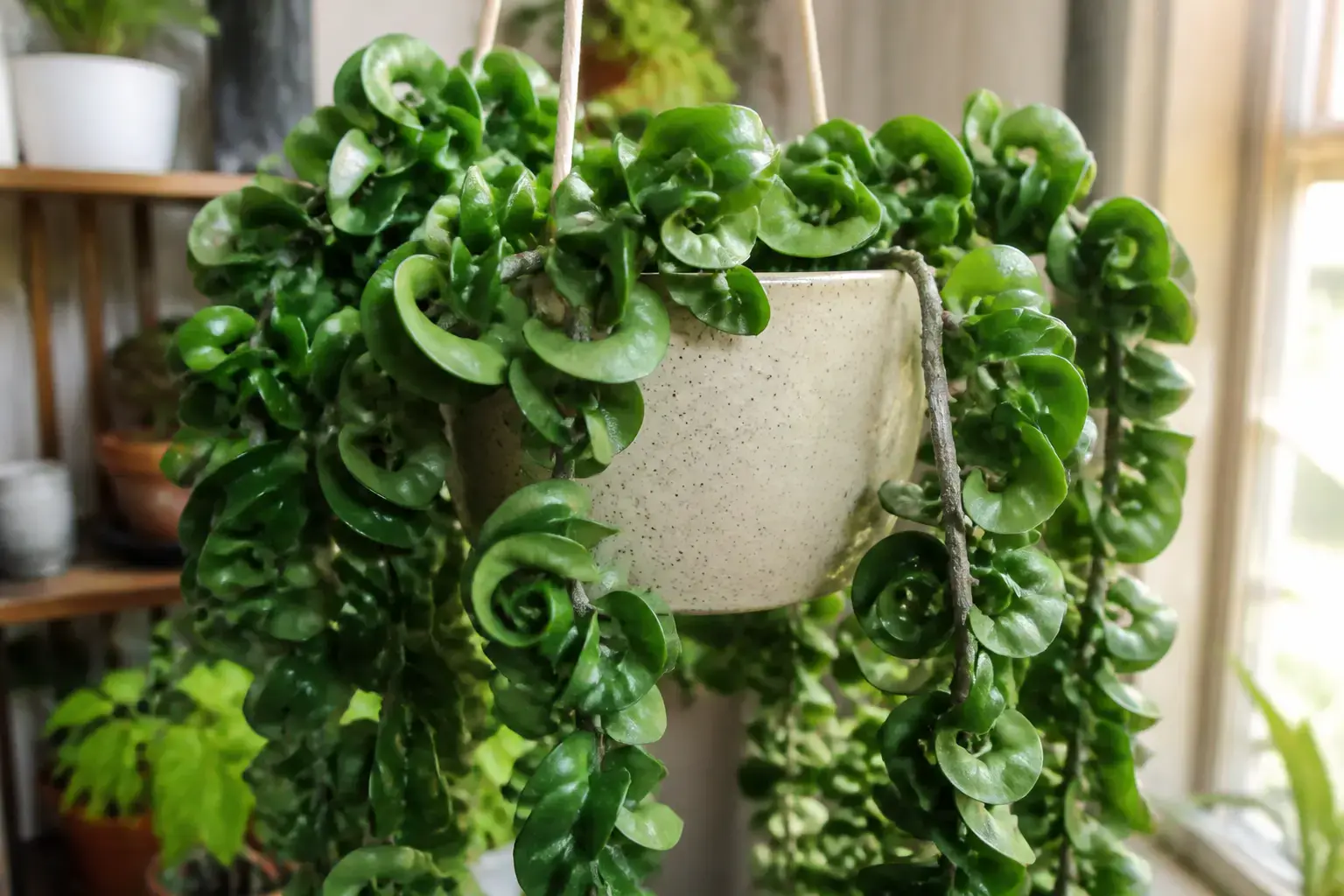 Compacta
 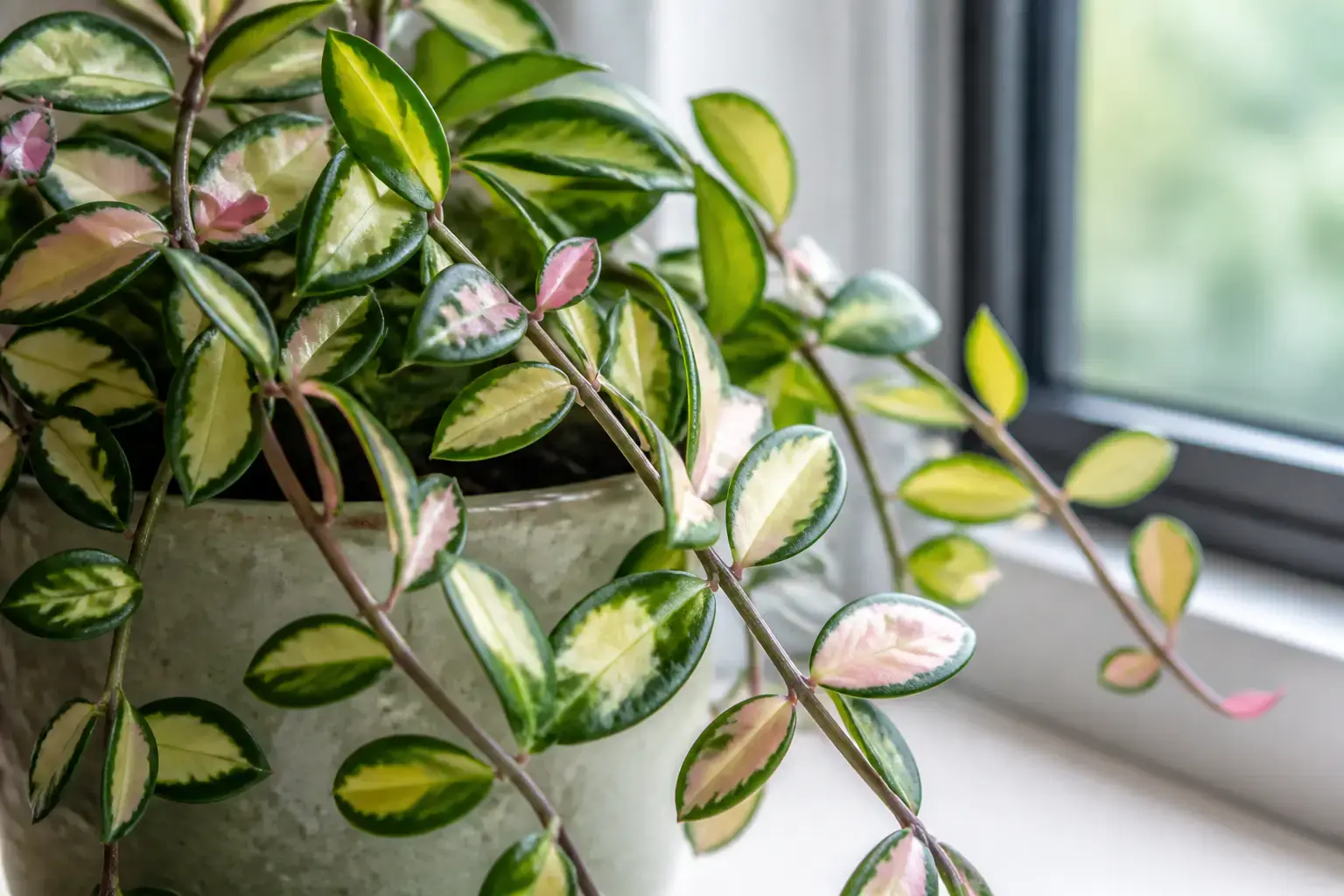 Krimson Princess
 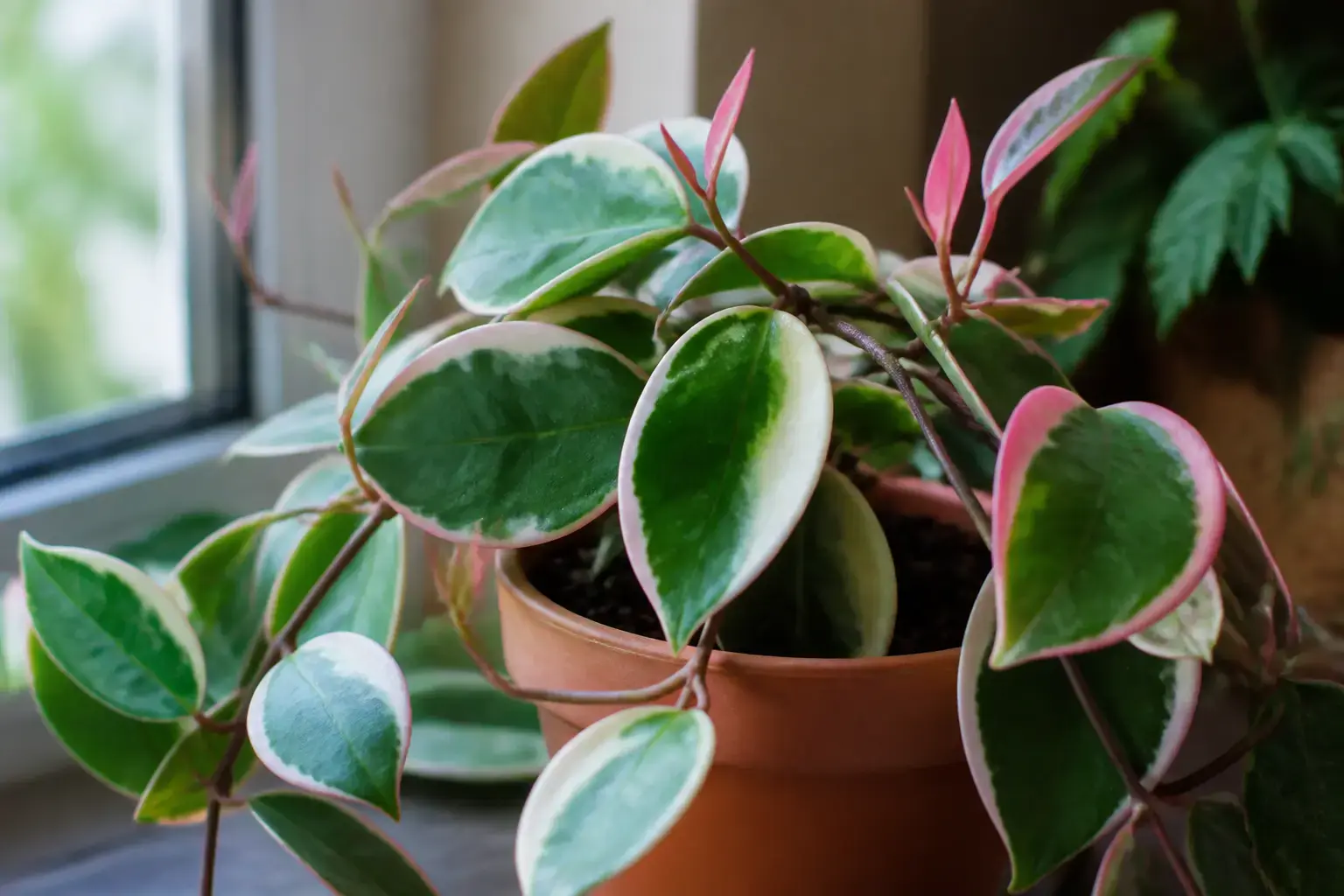 Krimson Queen
 Compare Varieties
Explore different cultivars side-by-side and find the best match for your space.
Browse all varieties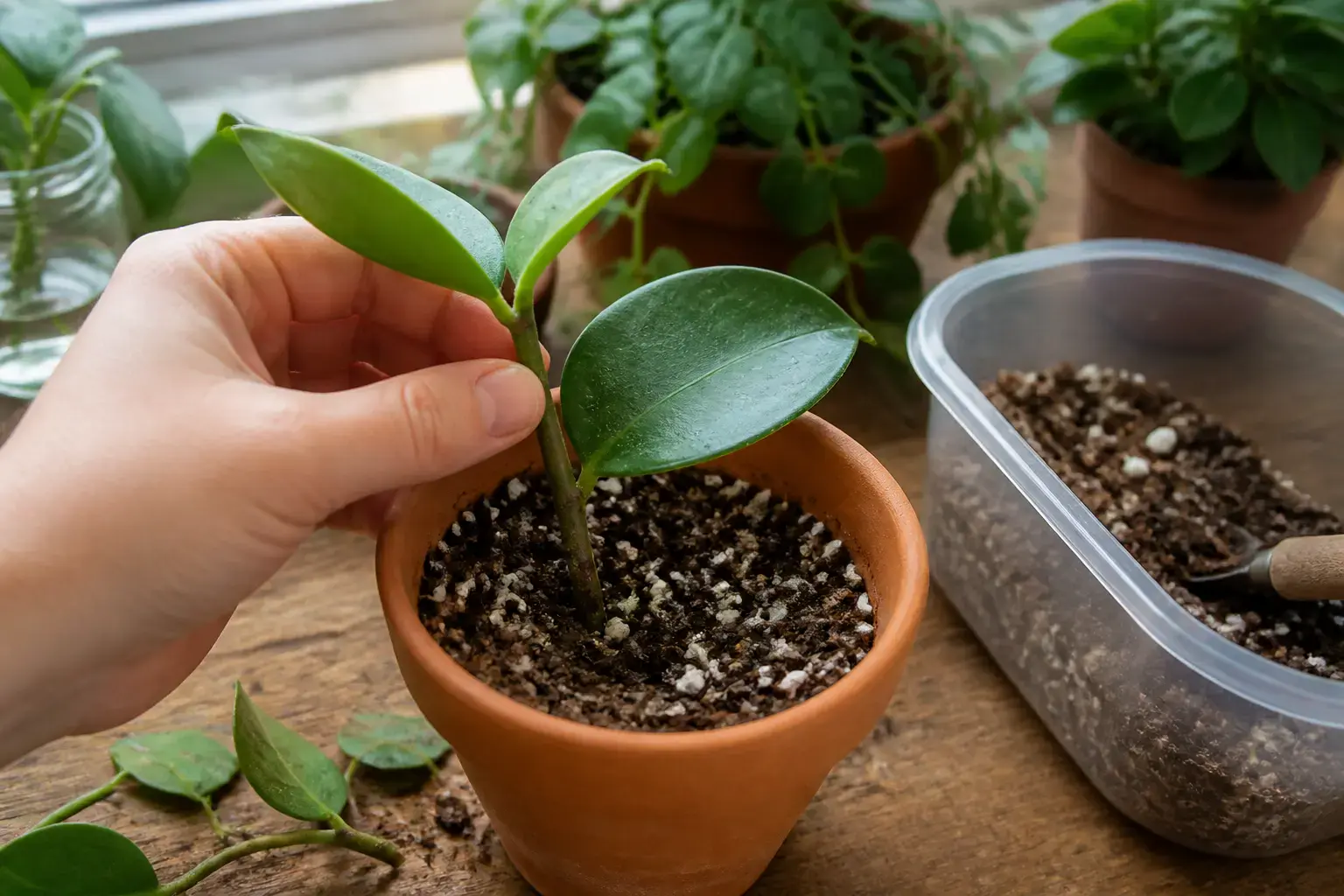
Propagation Guide
Step-by-step instructions for multiplying your plant collection.
Learn how to propagateFrequently Asked Questions
How often should I water Hoya carnosa?
Why are my Hoya carnosa leaves turning yellow?
How do I get Hoya carnosa to bloom?
Is Hoya carnosa safe for cats and dogs?
Can Hoya carnosa grow in low light?
What soil is best for Hoya carnosa?
Common Problems
Why Are My Plant Leaves Turning Yellow?
Yellowing leaves are one of the most common houseplant problems. The good news is that most causes are easy to identify and fix once you know what to look for.
Read diagnosis guideHow to Fix an Overwatered Plant
Overwatering kills more houseplants than any other cause. The tricky part? The symptoms — yellowing, wilting, drooping — look just like underwatering. Here's how to tell the difference and fix it.
Read diagnosis guideReferences
- [1] Missouri Botanical Garden. Hoya carnosa Plant Finder
- [2] ASPCA. Wax Plant Toxicity
- [3] Royal Horticultural Society. Hoya carnosa
Similar Plants

String of Pearls
Senecio rowleyanus

Pothos
Epipremnum aureum

Philodendron
Philodendron hederaceum

English Ivy
Hedera helix