

Pothos
Epipremnum aureum
Also known as: Devil's Ivy, Golden Pothos, Money Plant, Ceylon Creeper, Hunter's Robe
Last updated: Sep 10, 2026
Low to bright indirect light
When top inch of soil is dry
40–60%
60–80°F (15–27°C)
Standard well-draining potting mix
Balanced liquid fertilizer monthly in spring/summer
Beginner friendly
Toxic to pets
Toxic to Pets
Contains insoluble calcium oxalate crystals. Chewing or ingesting causes intense burning and swelling of lips, tongue, and throat, excessive drooling, vomiting, and difficulty swallowing. Keep away from curious pets and children.
Source: ASPCA Toxic Plant List
Seasonal Care Calendar
| Season | Watering | Fertilizer | Notes |
|---|---|---|---|
| Spring | Every 7–10 days | Begin monthly fertilizing | Active growth resumes; best time to propagate and repot |
| Summer | Every 7 days | Monthly balanced fertilizer | Peak growing season; vines can grow several feet per month |
| Fall | Every 10–14 days | Stop fertilizing | Growth slows; reduce watering frequency gradually |
| Winter | Every 10–14 days | No fertilizer | Dormant period; keep away from cold drafts; tolerate drier soil |
Detailed Care Guide
Everything you need to know to keep your Pothos thriving.
Light Requirements
Pothos is one of the most light-tolerant houseplants, happy in everything from dim corners to bright windowsills.
Low lightPothos will survive in low light, making it a staple for offices and north-facing rooms. However, growth will be slower, leaves will be smaller, and variegated varieties will gradually lose their patterning and revert to solid green.
Bright indirect lightThis is where pothos really shines. An east or north-facing window provides ideal conditions. The leaves grow larger, variegation stays vivid, and the plant produces vines rapidly. A pothos in good light can grow several feet per month during the growing season.
Direct sunAvoid harsh midday sun which will scorch the leaves, turning them pale and bleached. Gentle morning sun from an east window is fine and beneficial.
Leggy growthIf your pothos is developing long spaces between leaves (bare vines), it is telling you it needs more light. Move it to a brighter spot and the new growth will fill in nicely.

Watering
Pothos has a wonderful built-in watering indicator — the leaves visibly droop when the plant is thirsty, then perk back up within hours of a good soak.
When to waterAllow the top inch of soil to dry out between waterings. In practice, this is usually every 7–10 days in summer and every 10–14 days in winter. Wait for the leaves to just begin to soften and droop slightly before watering — this ensures you are never overwatering.
How to waterGive the plant a thorough soaking until water runs from the drainage holes, then empty the saucer. Pothos does not like sitting in water.
Overwatering signsYellow leaves, especially on the lower vines, are the classic sign of overwatering. The soil may also develop a sour smell. If this happens, remove the yellow leaves, let the soil dry out, and adjust your schedule.
Underwatering signsCrispy brown leaf edges and dramatically drooping vines. The good news is that pothos is incredibly resilient — a drought-stressed plant bounces back fast once watered. It is always better to underwater than overwater.

Humidity
Pothos is a tropical plant that appreciates moderate humidity but tolerates dry indoor air remarkably well.
Ideal range40–60% relative humidity. Most homes fall within this range naturally, so there is usually no need for a humidifier.
Dry environmentsIf your home is very dry (below 30% in winter), you may notice brown crispy leaf tips. This is cosmetic and does not harm the plant's health. A pebble tray with water placed under the pot can help if the browning bothers you.
Bathrooms and kitchensPothos thrives in the naturally higher humidity of bathrooms and kitchens, as long as there is adequate light. It is one of the best plants for these spaces.
MistingLight misting once or twice a week is optional but not necessary. Avoid heavy misting which can promote fungal leaf spots.
Temperature
Pothos prefers warm, consistent temperatures typical of most indoor environments.
Ideal range65–80°F (18–27°C). Standard room temperature is perfect for pothos — no special adjustments needed.
Minimum temperatureDo not let temperatures drop below 50°F (10°C). Cold damage causes leaves to turn dark and mushy. If your pothos is near a drafty window in winter, move it to a warmer location.
Temperature fluctuationsPothos dislikes sudden temperature changes. Avoid placing it near heating vents, air conditioning units, or frequently opened exterior doors. Consistent temperatures produce the best growth.
Outdoor growingIn USDA zones 10–12, pothos can grow outdoors year-round in shade to partial shade. In cooler zones, it makes an excellent summer patio plant but must be brought indoors before temperatures drop below 50°F.
Soil & Potting Mix
Pothos is not picky about soil, but a well-draining mix is important to prevent root rot.
Best mixA standard potting mix with added perlite or orchid bark works great. The ratio should be about 3 parts potting soil to 1 part perlite. This provides good drainage while retaining enough moisture for the plant to access between waterings.
Simple optionRegular potting mix alone works fine for most indoor conditions. Pothos is forgiving — it will grow in almost any commercial mix. Just make sure your pot has drainage holes.
pHPothos prefers slightly acidic soil (pH 6.0–6.5), but it adapts well to a wide range. Most commercial potting mixes are within the acceptable range.
Repotting soil refreshWhen repotting, gently shake off the old soil from the roots and use fresh mix. Over time, potting soil breaks down and compacts, which can lead to drainage problems.
Fertilizer
Pothos is a light feeder that does not need much fertilizer to thrive.
When to fertilizeFeed with a balanced liquid houseplant fertilizer (10-10-10 or 20-20-20) once a month during spring and summer. Stop fertilizing in fall and winter when growth naturally slows.
How muchDilute the fertilizer to half the strength recommended on the package. Over-fertilizing causes brown leaf tips and salt buildup in the soil.
Signs of nutrient deficiencyIf the new leaves are small, pale, or the vine growth has slowed despite adequate light and water, your pothos may benefit from a feeding. Pale leaves with green veins can indicate iron deficiency — a chelated iron supplement will correct this quickly.
Organic alternativesWorm castings or a diluted compost tea applied monthly during the growing season provide gentle, slow-release nutrition without the risk of burning.
Repotting
Pothos does not mind being slightly rootbound but will eventually need a larger home as the vine network expands.
When to repotEvery 1–2 years, or when you notice roots circling the bottom of the pot or growing out of the drainage holes. Another sign is water running straight through the pot without being absorbed — this means the root ball has displaced most of the soil.
Pot sizeChoose a pot 1–2 inches larger in diameter than the current one. Pothos does best in pots that are not too large — excess soil retains too much moisture. Hanging baskets work beautifully for trailing growth.
How to repotGently remove the plant from its pot, tease apart any tightly wound roots, and place it in the new pot with fresh soil at the same depth. Water thoroughly after repotting and place in bright indirect light for a week to recover.
Best timeSpring or early summer when the plant is in active growth and can recover quickly from the disturbance.
Our Experience
Pothos tells you when it needs water — the leaves will visibly droop. Wait for that signal rather than watering on a schedule. A good soak and it perks right back up within hours. This built-in indicator makes it almost impossible to kill from underwatering.
— Grown indoors in medium light conditions, various rooms
I always root my pothos cuttings in an old mason jar on the kitchen windowsill. They look great as a temporary display, and once the roots are a few inches long, I either plant them in soil or just leave them in the water. I have a jar that has been growing in just water for over two years now.
— Kitchen windowsill with east-facing light, water propagation
If you want a fuller, bushier pothos instead of long trailing vines, trim the vines back regularly and stick the cuttings right back into the same pot. Each cutting will root and produce a new vine, giving you a dense lush plant rather than a few long strings.
— Multiple pothos plants, living room, bright indirect light
 Golden
  Marble Queen
  Neon
Neon Compare Varieties
Explore different cultivars side-by-side and find the best match for your space.
Browse all varieties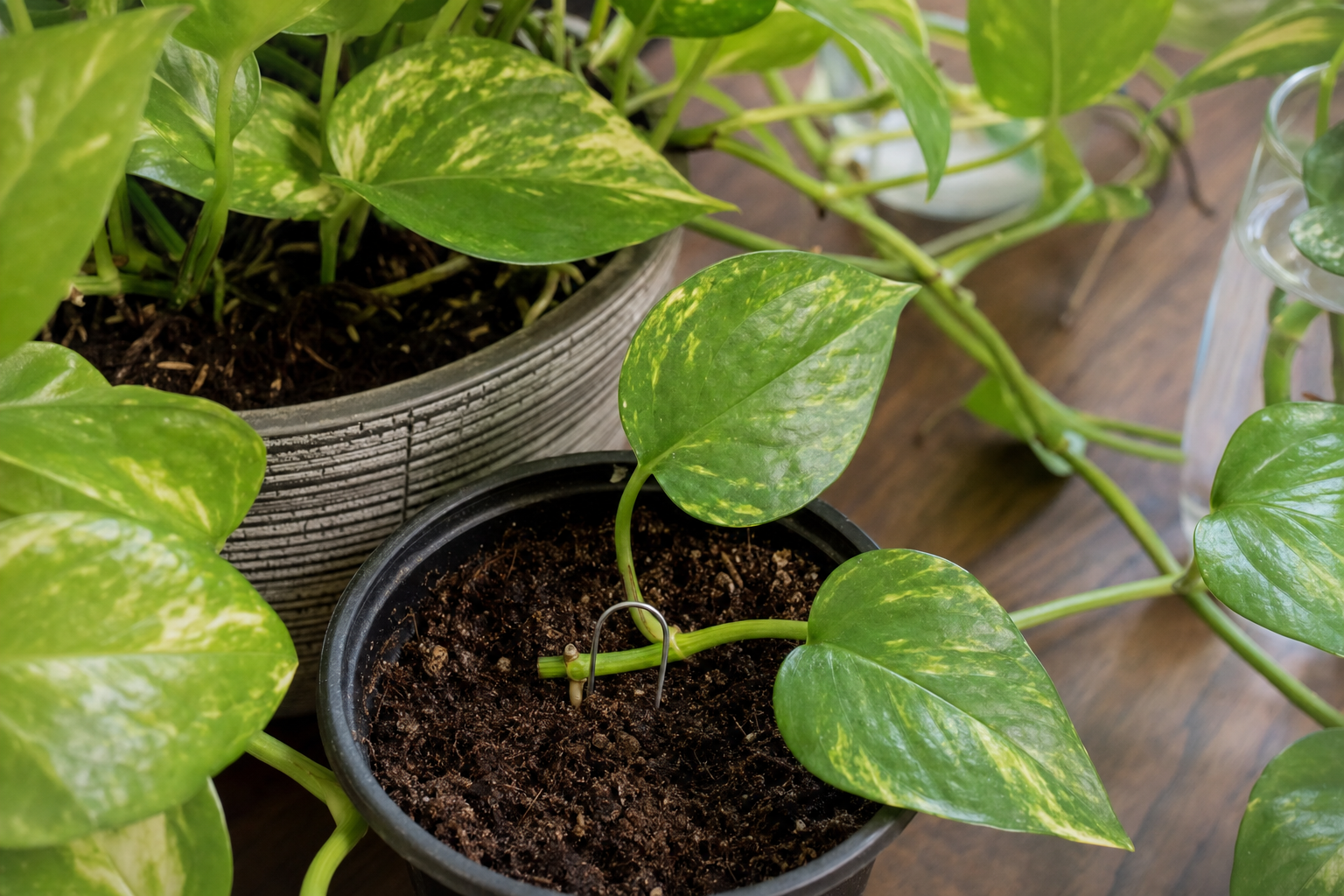
Propagation Guide
Step-by-step instructions for multiplying your plant collection.
Learn how to propagateFrequently Asked Questions
Why are my pothos leaves turning yellow?
How do I propagate pothos in water?
What is the difference between pothos and philodendron?
Can pothos grow in low light?
Is pothos toxic to cats and dogs?
Why are my pothos leaves curling?
How often should I water pothos?
Can I grow pothos in just water?
Common Problems
Why Are My Plant Leaves Turning Yellow?
Yellowing leaves are one of the most common houseplant problems. The good news is that most causes are easy to identify and fix once you know what to look for.
Read diagnosis guideHow to Fix an Overwatered Plant
Overwatering kills more houseplants than any other cause. The tricky part? The symptoms — yellowing, wilting, drooping — look just like underwatering. Here's how to tell the difference and fix it.
Read diagnosis guideReferences
- [1] Royal Horticultural Society. Epipremnum aureum
- [2] ASPCA. Pothos Toxicity
- [3] University of Florida IFAS Extension. Epipremnum aureum Pothos
- [4] International Aroid Society. Epipremnum aureum Care & Cultivation

