
Indoor Plant Care Basics
Last updated: Sep 10, 2026
Everything you need to know to keep your houseplants happy and healthy. From light and water to soil and repotting — master the fundamentals and watch your indoor garden thrive.
In This Guide
Light
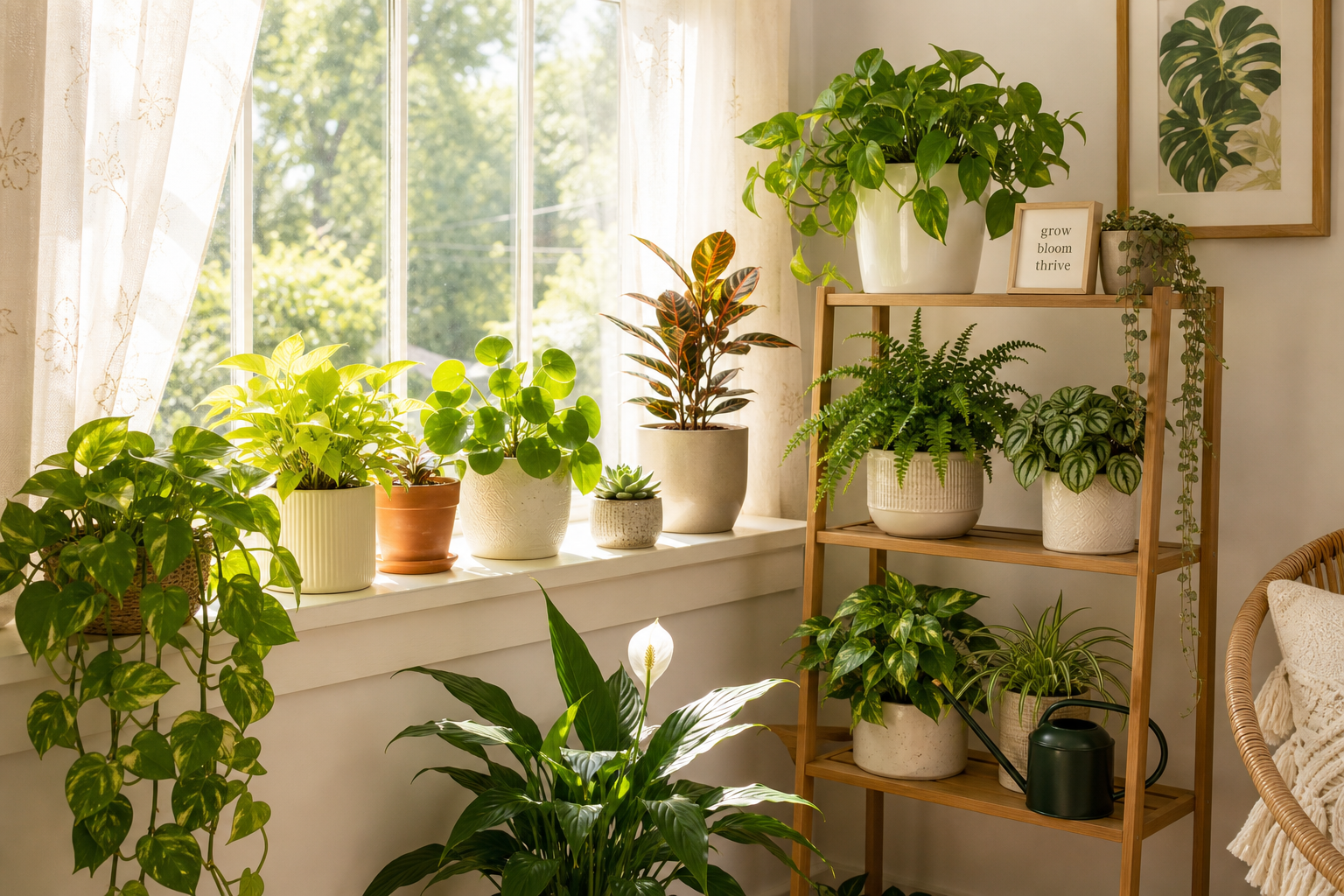
Light is the single most important factor for indoor plant health. Plants use light to photosynthesize — converting water and carbon dioxide into the energy they need to grow. Understanding how much light your space provides is the first step to choosing the right plants.
Low lightmeans a room with no direct sunlight, such as a north-facing window or a spot several feet away from any window. <a href="/plants/snake-plant/">Snake plants</a>, <a href="/plants/zz-plant/">ZZ plants</a>, and <a href="/plants/pothos/">pothos</a> tolerate these conditions well.
Medium lightis indirect light near an east- or west-facing window, or a few feet back from a south-facing one. Most popular houseplants — <a href="/plants/peace-lily/">peace lilies</a>, <a href="/plants/philodendron/">philodendrons</a>, <a href="/plants/dracaena/">dracaenas</a> — thrive here.
Bright indirect lightis the sweet spot for tropical houseplants. Think of a spot right next to a large window where the sun's rays don't directly hit the leaves. <a href="/plants/monstera-deliciosa/">Monstera</a>, <a href="/plants/fiddle-leaf-fig/">fiddle leaf figs</a>, and <a href="/plants/rubber-plant/">rubber plants</a> love this.
Direct sunmeans several hours of unfiltered sunlight. Only a few houseplants, like <a href="/plants/aloe-vera/">aloe vera</a>, cacti, and succulents, can handle direct sun without burning.
A simple test: hold your hand about a foot above a sheet of white paper where your plant would sit. If you see a clear, sharp shadow, it's bright light. A fuzzy but visible shadow means medium. No discernible shadow means low light. The University of Minnesota Extension recommends this "hand shadow test" as a practical way to assess indoor light levels for home gardeners [1].
Our Experience: In our south-facing living room, we found that plants placed directly on the windowsill developed scorched patches within days during summer. Moving them just two feet back from the glass made all the difference — the same bright indirect light without any leaf damage. If you can't move a plant, a sheer curtain is an easy fix.
— Grown in USDA Zone 7a, south-facing room, summer
Water
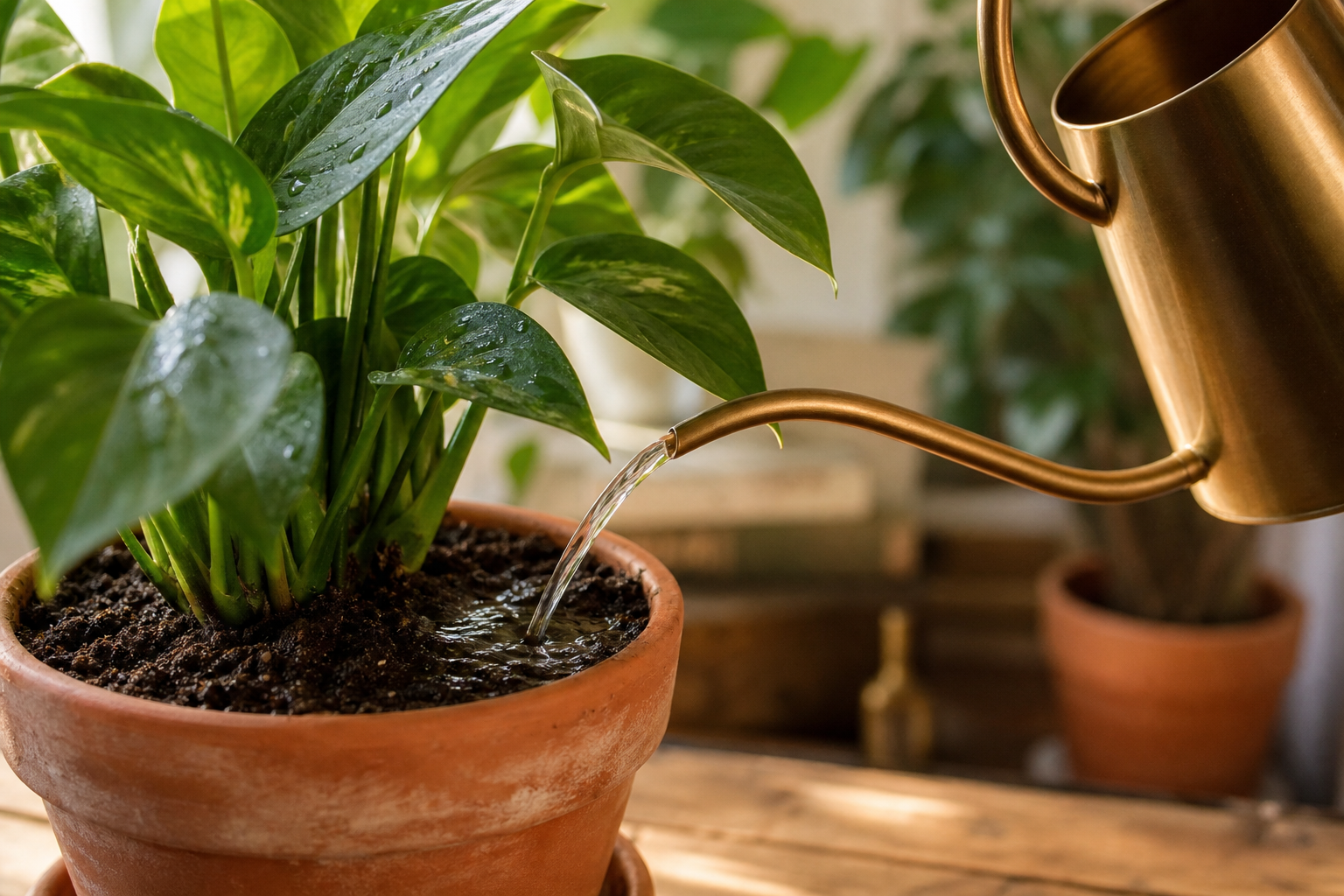
More houseplants die from overwatering than any other cause [2]. The golden rule: water only when the plant needs it, not on a fixed schedule.
How to check:*Stick your finger about an inch into the soil. If it feels moist, wait. If it's dry, it's time to water. For succulents and drought-tolerant plants, let the soil dry out completely between waterings.
How to water:*Water thoroughly until it drains from the bottom of the pot. This encourages deep root growth. Never let your plant sit in standing water — empty the saucer after 15 minutes.
Signs of overwatering:*Yellowing lower leaves, mushy stems, a sour smell from the soil, or fungus gnats hovering around the pot.
Signs of underwatering:*Crispy brown leaf edges, drooping or curling leaves, soil pulling away from the pot edges.
Seasonal adjustments:*Plants need less water in winter when growth slows and daylight is shorter. Increase frequency in spring and summer when they're actively growing. The Cornell University Cooperative Extension notes that most indoor plants reduce water uptake by 50% or more during winter dormancy [2].
Our Experience: We killed more plants by following a "water every Sunday" routine than by any other mistake. Now we check each plant individually — our pothos needs water every 5 days in summer but every 12 days in winter. A cheap moisture meter ($8) eliminated the guesswork entirely.
— Grown in a dry NYC apartment with forced-air heating, year-round
Soil
Not all soil is created equal. The potting mix you use directly affects drainage, aeration, and nutrient availability.
Standard houseplant potting mixworks for most tropical foliage plants. Look for mixes that contain peat moss or coco coir (for moisture retention) and perlite (for drainage).
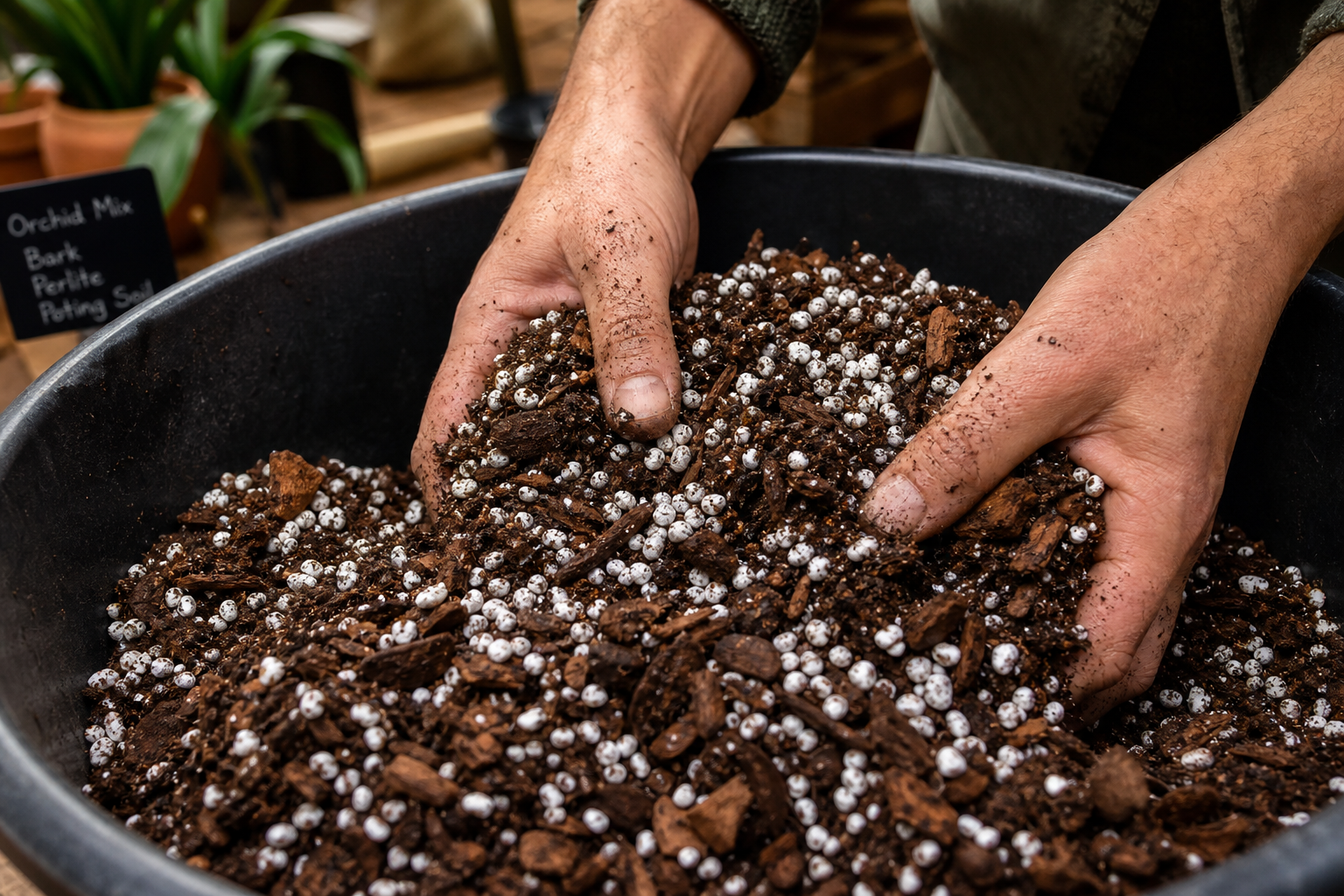
Aroid mixis ideal for plants in the Araceae family — <a href="/plants/monstera-deliciosa/">monstera</a>, <a href="/plants/pothos/">pothos</a>, <a href="/plants/philodendron/">philodendron</a>, <a href="/plants/peace-lily/">peace lily</a>. These plants need extra drainage and aeration. You can make your own by combining regular potting mix with additional perlite, orchid bark, and a handful of horticultural charcoal. The University of Georgia Extension recommends a ratio of roughly 1:1:1 potting mix to perlite to bark for aroid plants [3].
Succulent and cactus mixis formulated to drain quickly. It contains more sand and perlite and less organic matter than standard mixes. Never plant succulents in regular potting mix — they will rot.
Orchid barkis for epiphytic plants (orchids, some bromeliads) that in nature grow on tree bark rather than in soil. These need an extremely open, chunky mix that lets air circulate around the roots.
Never use garden soil or topsoil from your yard in containers — it compacts, doesn't drain, and may contain pests or diseases.
Our Experience: When we first started growing aroids, we used standard potting mix straight from the bag. Our monstera developed yellowing leaves and root rot within two months. Switching to a chunky aroid mix (potting soil + perlite + orchid bark) solved the problem completely — the roots now get the airflow they need.
— Grown in a humid apartment, year-round indoor conditions
Humidity
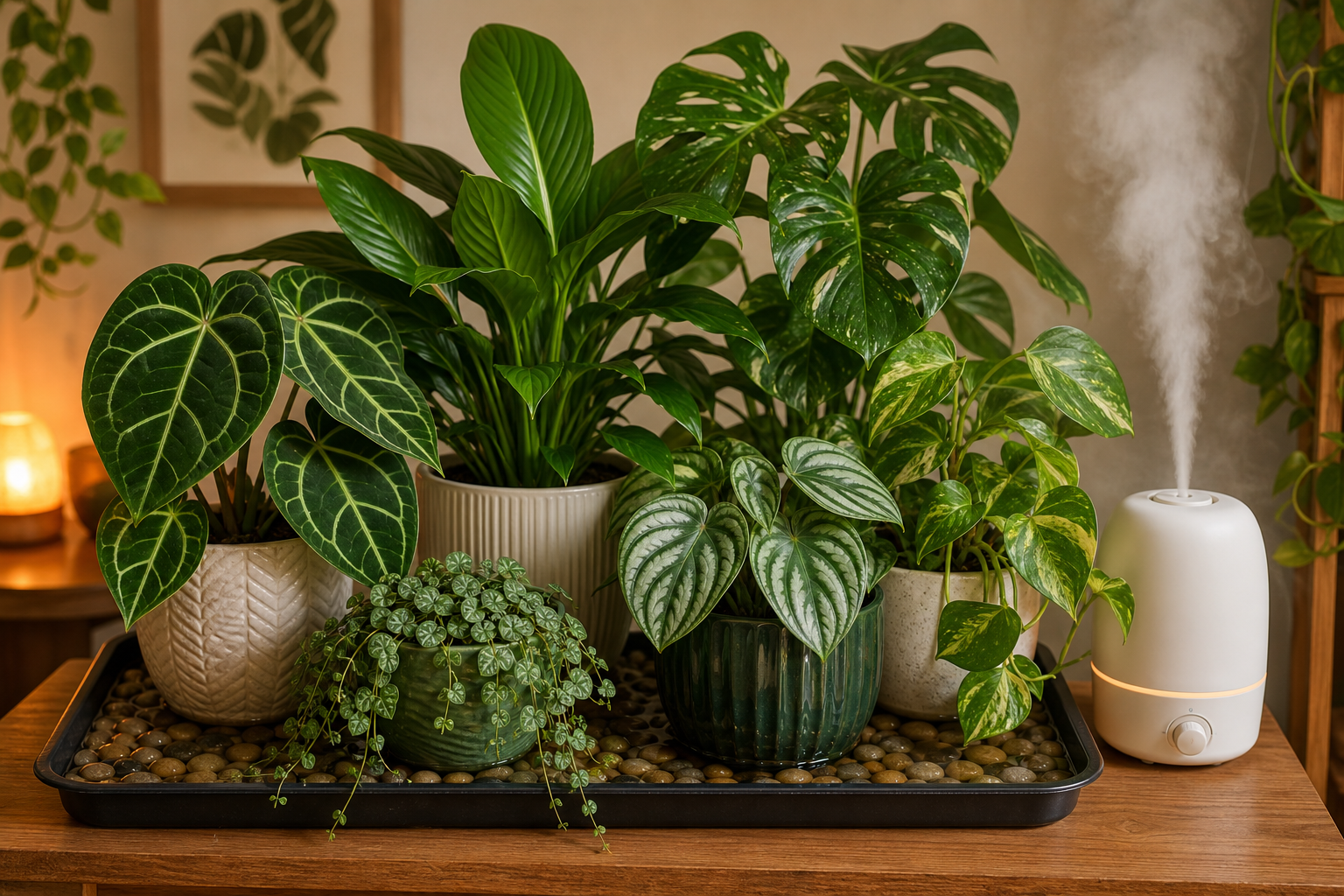
Most houseplants originate from tropical or subtropical regions where humidity ranges from 60–90% [4]. The average home sits at 30–50%, and heating or air conditioning can drop it even lower.
Plants that love humidity:*<a href="/plants/calathea/">Calathea</a>, <a href="/plants/boston-fern/">ferns</a>, <a href="/plants/peace-lily/">peace lily</a>, <a href="/plants/philodendron/">philodendron</a>, <a href="/plants/monstera-deliciosa/">monstera</a>. These plants may develop brown, crispy leaf edges in dry air.
Plants that tolerate dry air:*<a href="/plants/snake-plant/">Snake plant</a>, <a href="/plants/zz-plant/">ZZ plant</a>, <a href="/plants/pothos/">pothos</a>, <a href="/plants/rubber-plant/">rubber plant</a>, succulents. These are more forgiving of average home humidity.
How to increase humidity:*- Place a humidifier within 3–4 feet of your plants — this is the most effective method. - Group plants together to create a shared microclimate. - Use a pebble tray filled with water beneath the pot (make sure the pot sits on the pebbles, not in the water). - Misting is popular but largely ineffective — the moisture evaporates in minutes and can promote fungal issues if leaves stay wet overnight. The Royal Horticultural Society (RHS) recommends humidifiers and grouping over misting for sustained humidity improvement [4].
Our Experience: Our calathea kept getting crispy leaf edges despite regular misting. Once we placed a small cool-mist humidifier about 3 feet away and set it to maintain 55–60% humidity, the new leaves came in perfect. A $20 hygrometer from the hardware store helped us dial in the right setting.
— Grown in a dry heated apartment, winter, USDA Zone 7a
Temperature
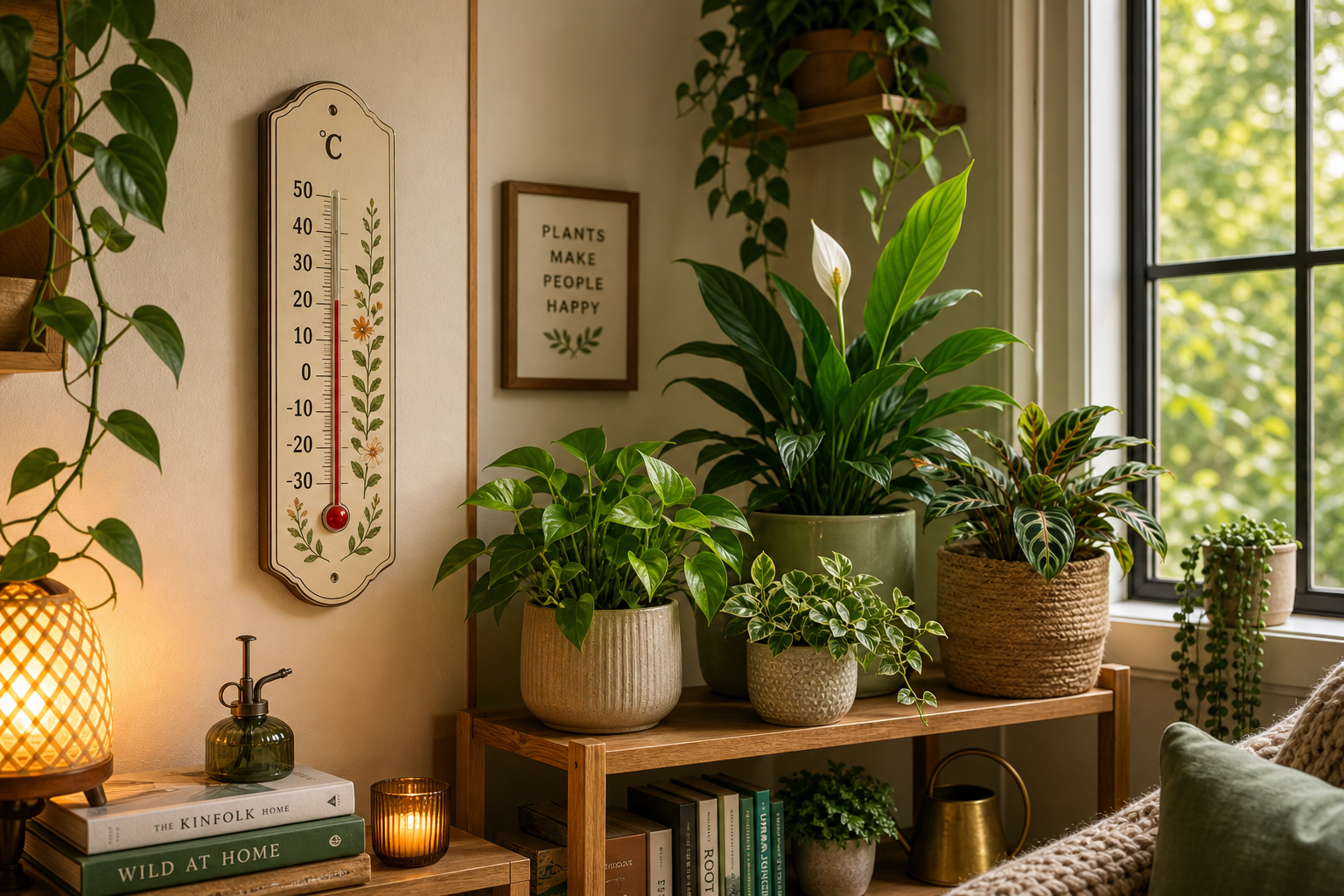
The ideal temperature range for most houseplants is 65–80°F (18–27°C) — which conveniently matches most people's comfort zone [4].
Avoid these common temperature mistakes:*- Placing plants near drafty windows or exterior doors in winter. - Setting plants directly above or next to heating vents or radiators. - Leaving plants on windowsills where temperatures can drop dramatically at night. - Moving plants outside in summer without gradually acclimating them.
Signs of temperature stress:*Drooping leaves, leaf drop, stunted growth, or scorched patches from hot, dry air. Cold damage appears as dark, mushy spots on leaves.
Most houseplants can tolerate brief dips into the 50s°F, but prolonged exposure below 55°F (13°C) will damage tropical species. The American Horticultural Society notes that sudden temperature fluctuations are more harmful than gradual changes [5]. If you wouldn't be comfortable sitting by the window in a T-shirt, your tropical plant probably isn't either.
Our Experience: We lost a peace lily after placing it next to a front door that was opened repeatedly during a cold snap — the temperature swings from warm to near-freezing over just a few hours were enough to kill it. Now we keep all tropical plants at least 5 feet away from exterior doors during winter.
— Grown near an exterior entrance, winter cold snap, USDA Zone 7a
Fertilizer
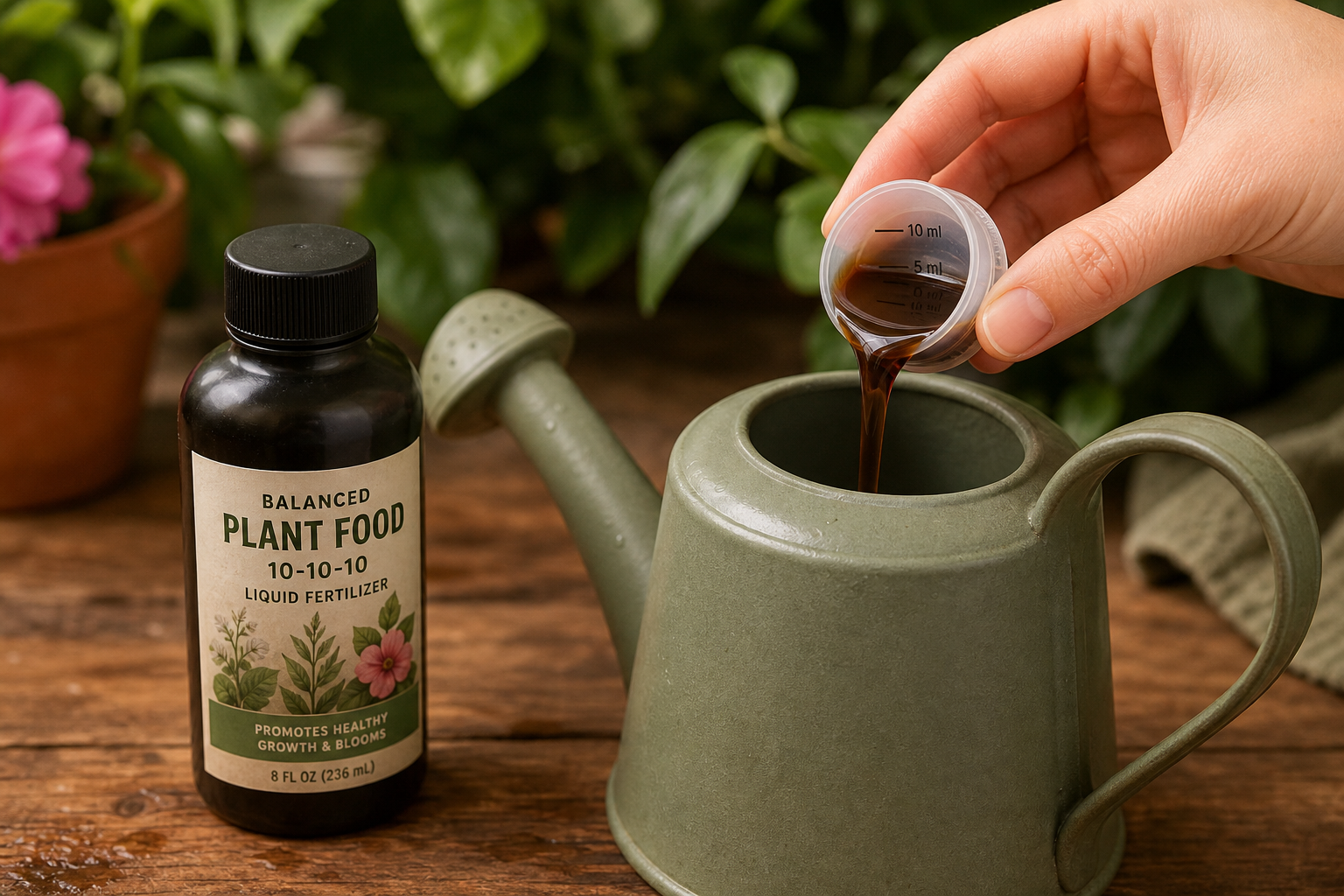
Plants in pots can't send roots out searching for nutrients the way garden plants can. Over time, the soil's nutrient supply is depleted, and that's where fertilizer comes in.
When to fertilize:*During the active growing season — spring and summer. Most plants enter a rest period in fall and winter and should not be fertilized then.
What to use:*A balanced liquid fertilizer (such as 10-10-10 or 20-20-20) diluted to half strength works for most foliage houseplants. Apply every 2–4 weeks during the growing season. The University of California Division of Agriculture and Natural Resources recommends the "weakly, weekly" approach — dilute to quarter strength and apply with every watering during the growing season [6].
Special cases:*- Flowering plants benefit from a formula higher in phosphorus (the middle number). - Succulents need less fertilizer — feed at quarter strength, once a month in summer. - Never fertilize a dry plant — water first, then apply fertilizer to avoid burning the roots.
Signs of over-fertilizing:*White crust on the soil surface, brown leaf tips, yellowing lower leaves. If this happens, flush the soil with plain water to wash out excess salts.
Our Experience: We accidentally killed a snake plant by using full-strength fertilizer on dry soil — the roots burned within days and the plant never recovered. Now we always follow the rule: water first, then apply half-strength fertilizer. For succulents, we dilute to quarter strength and only feed once a month in summer.
— Grown indoors, summer growing season
Repotting
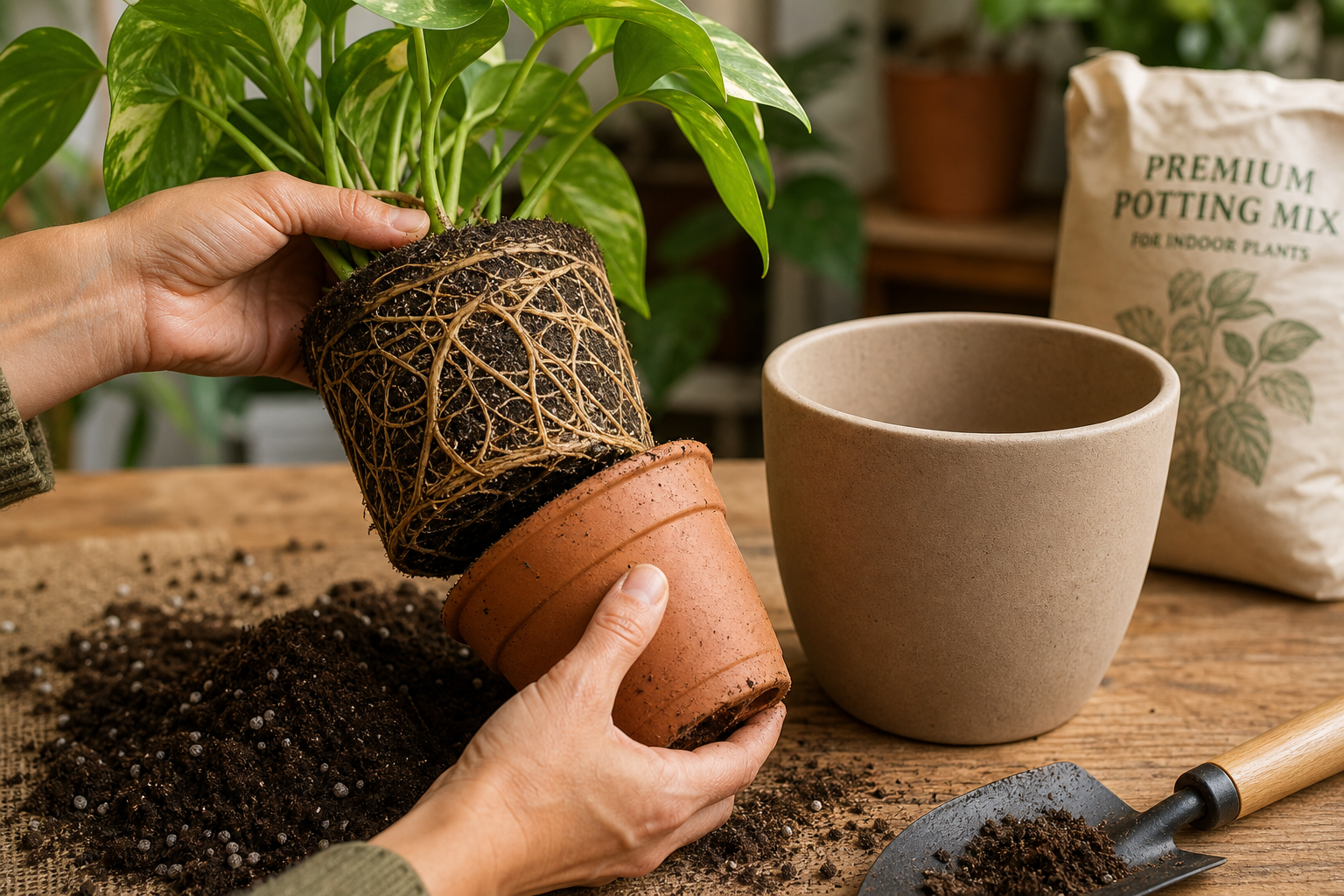
Repotting gives your plant fresh soil and more room to grow. Most houseplants need repotting every 1–2 years.
Signs it's time to repot:*- Roots are growing out of the drainage holes. - Water runs straight through the pot without being absorbed. - The plant is top-heavy and keeps tipping over. - Growth has slowed significantly despite proper care.
How to repot:*1. Choose a pot only 1–2 inches larger in diameter. Going too big leads to overwatering because the excess soil holds too much moisture. 2. Gently remove the plant from its current pot. If it's stuck, run a knife around the edge. 3. Loosen the root ball gently with your fingers. Trim any rotting or circling roots. 4. Add fresh potting mix to the new pot, position the plant, and fill in around the sides. 5. Water thoroughly and keep the plant in a sheltered spot for a few days to recover.
Best time to repot:*Spring, when the plant is entering its active growth phase and can recover quickly from root disturbance. The RHS recommends avoiding repotting during winter dormancy or during flowering [4].
Our Experience: We used to think bigger pots meant happier plants, but after losing several plants to root rot in oversized containers, we learned the hard way: only go up 1–2 inches in pot diameter. Also, terracotta pots are much more forgiving than plastic — they breathe, which helps prevent overwatering.
— Grown in terracotta vs plastic pots, spring repotting
Frequently Asked Questions
How often should I water my indoor plants?
What is the best soil for indoor plants?
How do I know if my plant is getting too much or too little light?
When should I repot my houseplant?
Do I need to fertilize my indoor plants?
References
- [1] University of Minnesota Extension. Lighting for Indoor Plants
- [2] Cornell University Cooperative Extension. Watering Houseplants
- [3] University of Georgia Extension. Growing Indoor Plants with Success
- [4] Royal Horticultural Society (RHS). Houseplants: Indoor Care
- [5] American Horticultural Society (AHS). Temperature and Houseplants
- [6] University of California Agriculture & Natural Resources. Houseplant Care: Fertilizing
Next Steps
Now that you know the basics, dive deeper with our other guides or explore specific plant care instructions.