

English Ivy
Hedera helix
Also known as: Common Ivy, European Ivy, Woodbine
Last updated: Sep 10, 2026
Medium to bright indirect light
When top inch of soil is dry
50–60%
55–70°F (13–21°C)
Well-draining potting mix with perlite
Balanced liquid fertilizer, monthly in spring/summer
Beginner friendly
Toxic to pets
Toxic to Pets
Contains triterpenoid saponins that are toxic to cats and dogs according to the ASPCA. Ingestion causes vomiting, abdominal pain, excessive drooling, and diarrhea. The sap can also cause contact dermatitis in sensitive individuals. Wear gloves when pruning.
Source: ASPCA Toxic Plant List
Seasonal Care Calendar
| Season | Watering | Fertilizer | Notes |
|---|---|---|---|
| Spring | Every 7–10 days | Start monthly feeding | Begin repotting if needed. Resume regular watering. Good time to propagate. |
| Summer | Every 7–10 days | Monthly feeding | Watch for spider mites in hot weather. Keep cool if possible. Mist regularly. |
| Fall | Every 10–14 days | Reduce to every 6 weeks | Growth slows. Reduce watering. Stop fertilizing by late fall. |
| Winter | Every 10–14 days | None | Cool dormant period. Keep away from heating vents. Mist to prevent mites. |
Detailed Care Guide
Everything you need to know to keep your English Ivy thriving.
Light Requirements
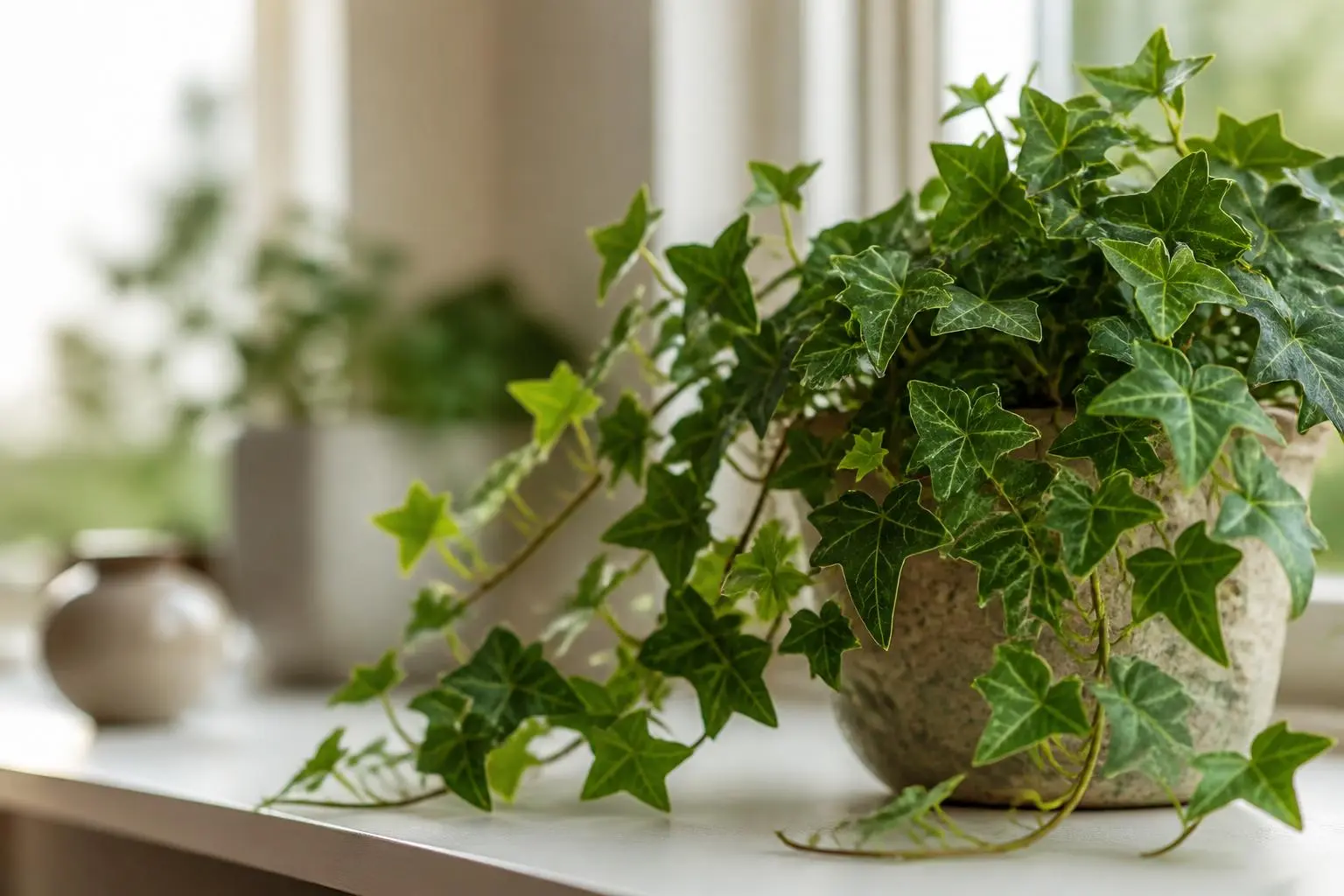
English Ivy thrives in medium to bright indirect light. An east- or north-facing window is ideal, or a spot a few feet back from a brighter window. It tolerates lower light better than many houseplants, making it versatile for different rooms.
Variegated varieties (with white or yellow markings) need brighter light to maintain their coloration. In low light, they'll gradually revert to all-green, losing the variegation that makes them attractive. Solid green varieties hold their color in lower light.
Avoid direct afternoon sunlight, which scorches the leaves and causes brown, crispy patches. English Ivy also dislikes being moved from one light condition to another — sudden changes cause leaf drop. If you need to relocate it, do it gradually over 1–2 weeks.
Interestingly, English Ivy actually prefers cooler conditions with moderate light over warm, very bright spots. This makes it well-suited for older homes, north-facing rooms, and cooler seasons.
Watering
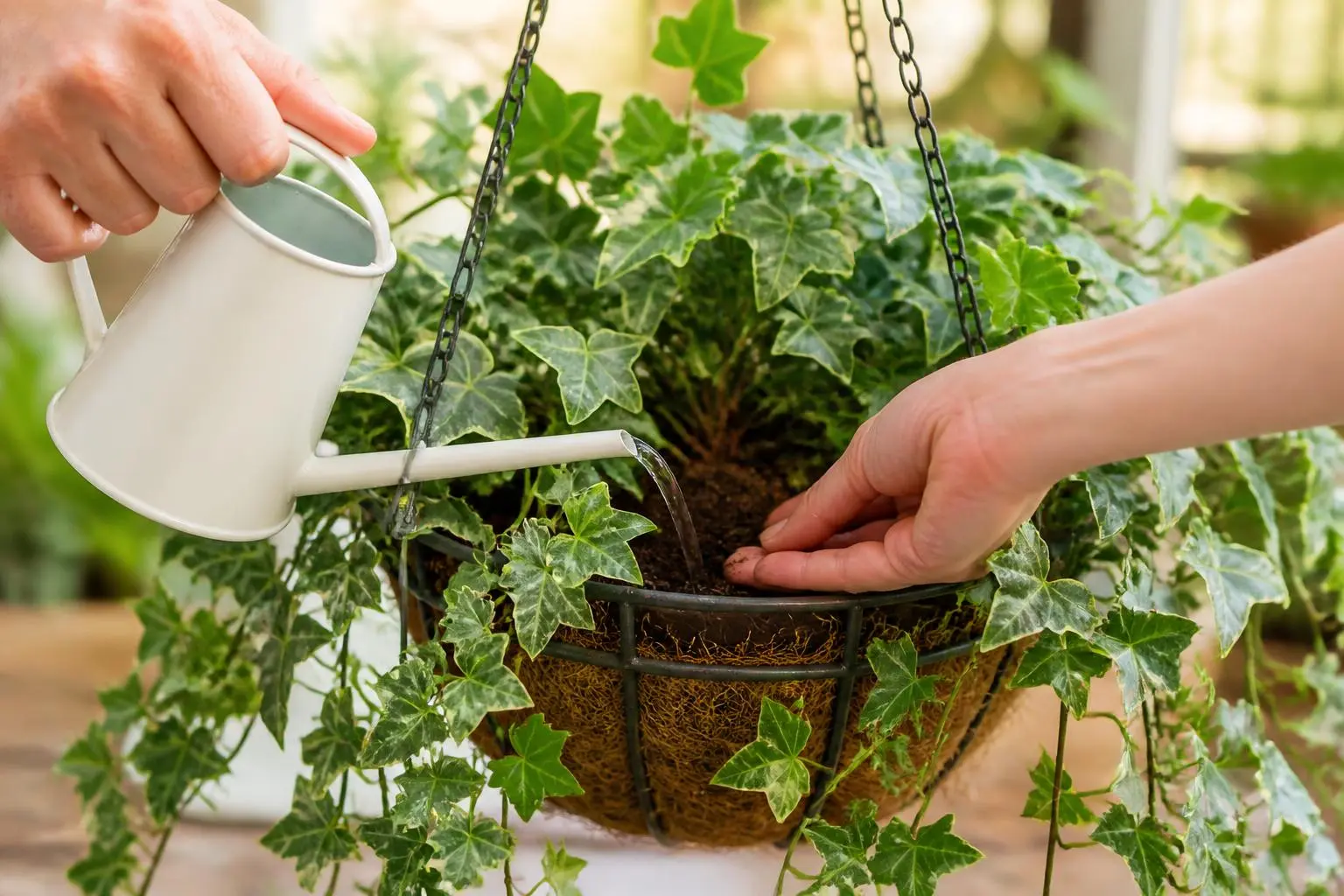
Water your English Ivy when the top inch of soil feels dry — typically every 7–10 days in spring/summer and every 10–14 days in fall/winter. English Ivy prefers slightly moist soil but is very sensitive to overwatering, which quickly leads to root rot.
Overwatering is the most common cause of death for indoor English Ivy. If the soil stays soggy, leaves yellow and drop, and the roots begin to rot. Always check the soil before watering rather than following a schedule. Empty saucers after 15 minutes.
English Ivy is also sensitive to dry soil — if it dries out completely, the leaf edges turn brown and crispy, and the lower leaves drop. Finding the balance between too wet and too dry is the main challenge.
Use room-temperature water. These plants are somewhat sensitive to minerals in tap water, so filtered water or rainwater is preferred. Mist the leaves occasionally if the air is very dry.
Humidity
English Ivy prefers moderate to high humidity (50–60%). While it tolerates average home humidity, dry air is a common cause of spider mite infestations — the #1 pest problem for indoor Ivy. Keeping humidity above 50% significantly reduces mite problems.
A pebble tray with water beneath the pot or a small humidifier nearby helps maintain adequate humidity. Misting the leaves regularly (every 2–3 days) is beneficial for Ivy, unlike many houseplants where misting is ineffective. The moisture helps deter spider mites and keeps the leaves fresh.
Bathrooms and kitchens, with their naturally higher humidity, are excellent locations for English Ivy. Grouping plants together also creates a more humid microclimate.
Temperature
English Ivy prefers cool to moderate temperatures between 55–70°F (13–21°C) — significantly cooler than most houseplants prefer. This makes it ideal for drafty older homes, north-facing rooms, and cooler seasons when other plants struggle.
Hot temperatures above 75°F (24°C) stress the plant and make it highly susceptible to spider mites. This is why English Ivy often thrives outdoors but struggles indoors during summer — our homes are simply too warm and dry for its preferences.
Avoid placing near heating vents, radiators, or fireplaces. The hot, dry air causes rapid leaf browning and invites mites. English Ivy enjoys cool, fresh air — a spot near a slightly open window in spring and fall is ideal.
Outdoors, English Ivy is extremely cold-hardy (USDA zones 4–9). Indoor plants can be summered outdoors in a shaded, cool spot.
Soil
English Ivy needs well-draining soil that retains some moisture without becoming waterlogged. A standard potting mix amended with perlite works well.
Recommended mix: 2 parts potting soil + 1 part perlite. This provides good drainage while retaining enough moisture. Adding a handful of coco coir improves moisture retention without making the mix too dense.
The pH should be slightly acidic to neutral (6.0–7.5). Avoid heavy, compacted soils that hold too much water. English Ivy roots are relatively fine and need good aeration. Repot every 1–2 years to refresh the soil.
Fertilizer
Feed your English Ivy with a balanced liquid fertilizer (NPK 20-20-20) diluted to half strength, applied once a month during spring and summer. English Ivy is a light feeder — over-fertilizing causes salt buildup, leaf tip burn, and excessive growth that's more susceptible to pests.
Nitrogen-heavy fertilizers promote leafy growth but can make the plant more attractive to mites and other pests. A balanced formula is safer. Stop fertilizing entirely from late fall through winter.
If the leaves are pale and growth is slow despite adequate light, the plant may need feeding. But most indoor English Ivy grows well with minimal fertilization.
Repotting
Repot your English Ivy every 1–2 years, or when roots are visibly growing out of the drainage holes. English Ivy doesn't mind being slightly root-bound, but very congested roots can't absorb water properly.
Choose a pot only 1–2 inches larger in diameter. Going too large means excess soil that stays wet too long. Hanging baskets work beautifully for trailing Ivy. Always use pots with drainage holes.
The best time to repot is in spring. Water the plant a day before for easier removal. Gently loosen the root ball and trim any dead or rotting roots. Plant at the same depth in fresh soil, water thoroughly, and keep in a cool, shaded spot for a week to recover.
Our Experience
Spider mites were destroying my English Ivy until I started giving it a cool-water shower in the sink every two weeks. I just hold the pot at an angle and run lukewarm water over the leaves, top and bottom. It washes away mites and their webs. Combined with regular misting, the mites haven't come back.
— Indoor environment, spider mite prevention, year-round
My English Ivy thrives in a north-facing bathroom window where it stays cool and gets moderate light with natural humidity. It's the only spot in my house where Ivy does well — everywhere else it eventually gets mites and dies. Cool, humid, and moderate light is the secret.
— North-facing bathroom, cool temperatures, high humidity
I propagate Ivy by just pinning a stem section to moist potting soil while it's still attached to the parent plant. I use a bent paperclip to hold the nodes down. After 2 weeks, roots form and I snip the connection. Near 100% success rate with zero effort.
— Indoor propagation, spring/summer, standard potting soil
 Glacier
  Goldchild
  Needlepoint
 Compare Varieties
Explore different cultivars side-by-side and find the best match for your space.
Browse all varieties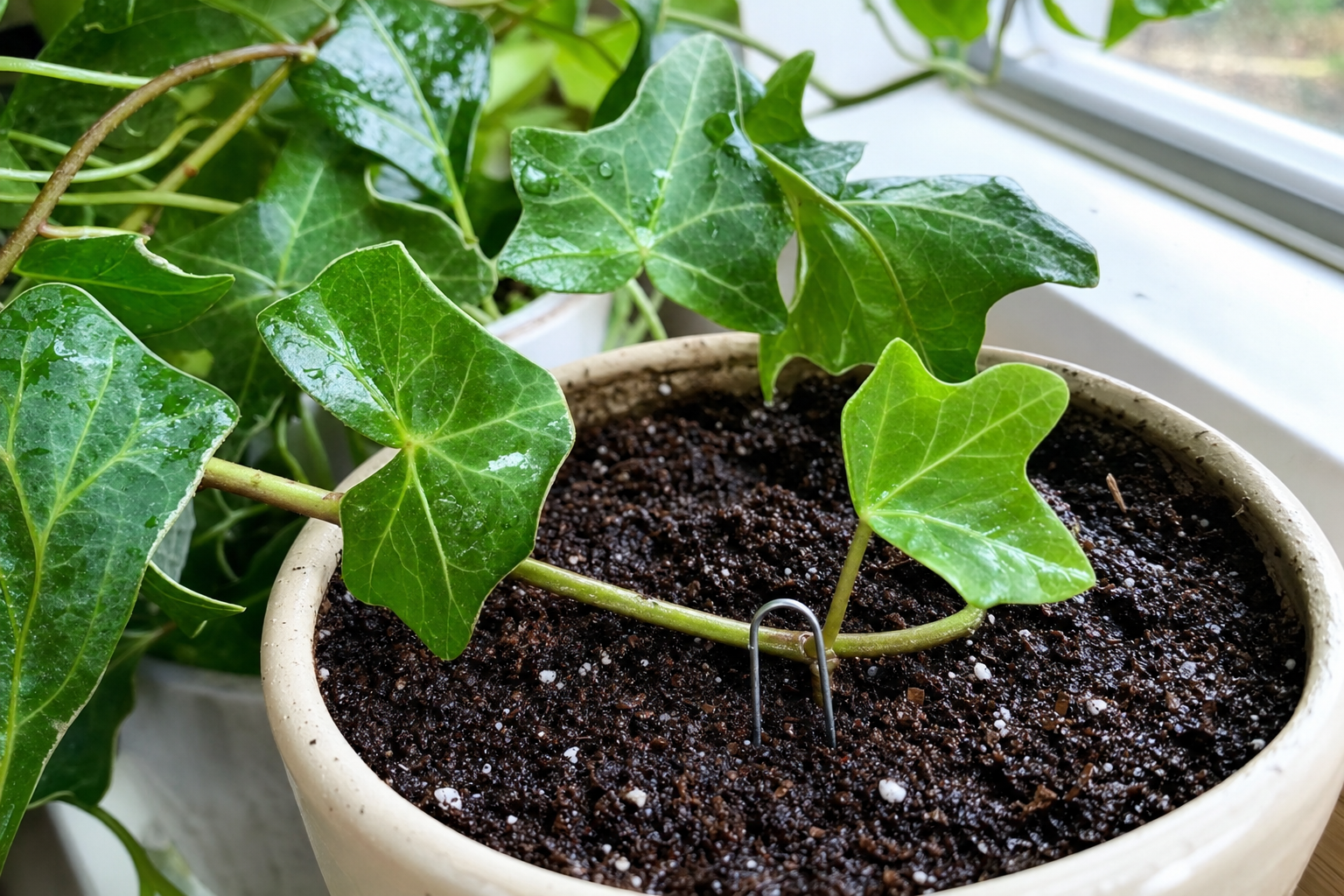
Propagation Guide
Step-by-step instructions for multiplying your plant collection.
Learn how to propagateFrequently Asked Questions
Can English Ivy grow indoors?
Why is my English Ivy turning yellow?
How do I propagate English Ivy?
Is English Ivy toxic to pets?
How often should I water English Ivy?
How do I get rid of spider mites on English Ivy?
Common Problems
Why Are My Plant Leaves Turning Yellow?
Yellowing leaves are one of the most common houseplant problems. The good news is that most causes are easy to identify and fix once you know what to look for.
Read diagnosis guideHow to Fix an Overwatered Plant
Overwatering kills more houseplants than any other cause. The tricky part? The symptoms — yellowing, wilting, drooping — look just like underwatering. Here's how to tell the difference and fix it.
Read diagnosis guideReferences
- [1] Royal Horticultural Society. Hedera helix
- [2] ASPCA. Hedera helix Toxicity
- [3] NASA Clean Air Study. Interior Landscape Plants for Indoor Air Pollution Abatement
- [4] University of Connecticut Plant Database. Hedera helix — English Ivy
Similar Plants

Pothos
Epipremnum aureum

Spider Plant
Chlorophytum comosum

Arrowhead Plant
Syngonium podophyllum