

Arrowhead Plant
Syngonium podophyllum
Also known as: Arrowhead Vine, Syngonium, Goosefoot Plant, American Evergreen
Last updated: Sep 10, 2026
Medium to bright indirect light
When top 1–2 inches of soil are dry
50–70%
60–80°F (16–27°C)
Well-draining potting mix with peat and perlite
Balanced liquid fertilizer, monthly in spring/summer
Beginner friendly
Toxic to pets
Toxic to Pets
Contains insoluble calcium oxalate crystals that are toxic to cats and dogs according to the ASPCA. Ingestion causes oral irritation, burning of the lips and tongue, excessive drooling, vomiting, and difficulty swallowing. Keep away from pets and small children.
Source: ASPCA Toxic Plant List
Seasonal Care Calendar
| Season | Watering | Fertilizer | Notes |
|---|---|---|---|
| Spring | Every 7–10 days | Start monthly feeding | Begin repotting if needed. Resume regular watering. Pinch tips for bushier growth. |
| Summer | Every 7–10 days | Monthly feeding | Active growth. Can move outdoors to shaded area. Mist regularly in dry conditions. |
| Fall | Every 10–14 days | Reduce to every 6 weeks | Growth slows. Reduce watering. Stop fertilizing by late fall. |
| Winter | Every 10–14 days | None | Resting period. Reduce watering. Keep away from cold drafts and heating vents. |
Detailed Care Guide
Everything you need to know to keep your Arrowhead Plant thriving.
Light Requirements
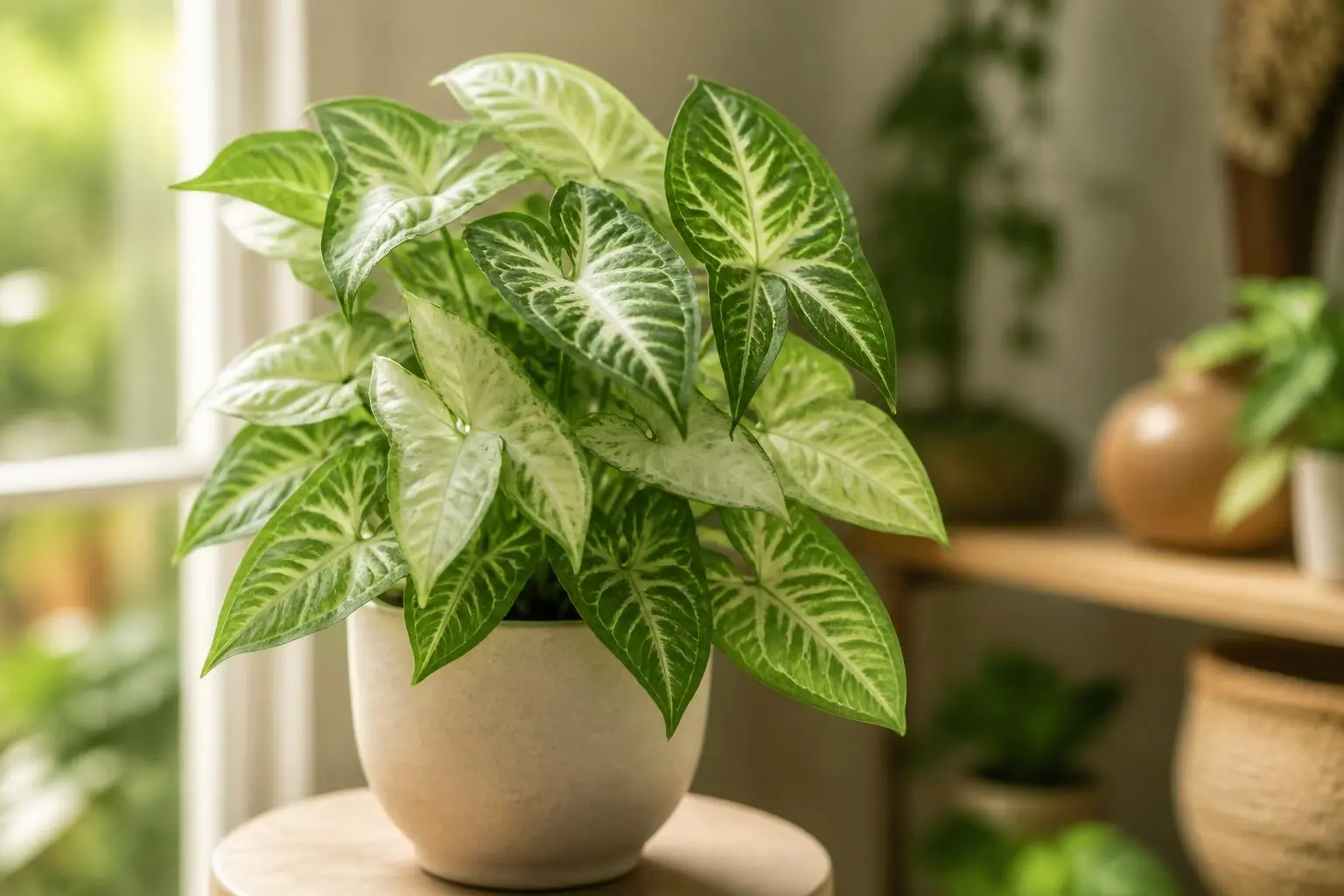
Arrowhead Plants thrive in medium to bright indirect light. An east- or north-facing window is ideal, or a spot a few feet back from a brighter window. They're adaptable and tolerate lower light better than many variegated houseplants.
Variegated varieties (with pink, white, or cream markings) need brighter light to maintain their colors. In low light, the variegation fades and leaves revert to solid green. Solid green varieties hold their color in lower light.
Direct sunlight scorches the delicate leaves, causing bleached patches and brown crispy edges — especially on the lighter-colored portions. If you notice the plant reaching or getting leggy, it needs more light. Rotate the pot weekly for even growth.
The leaf shape changes with light and maturity: juvenile plants produce simple arrow-shaped leaves, while mature specimens develop multi-lobed leaves. More light encourages faster maturation and lobing.
Watering
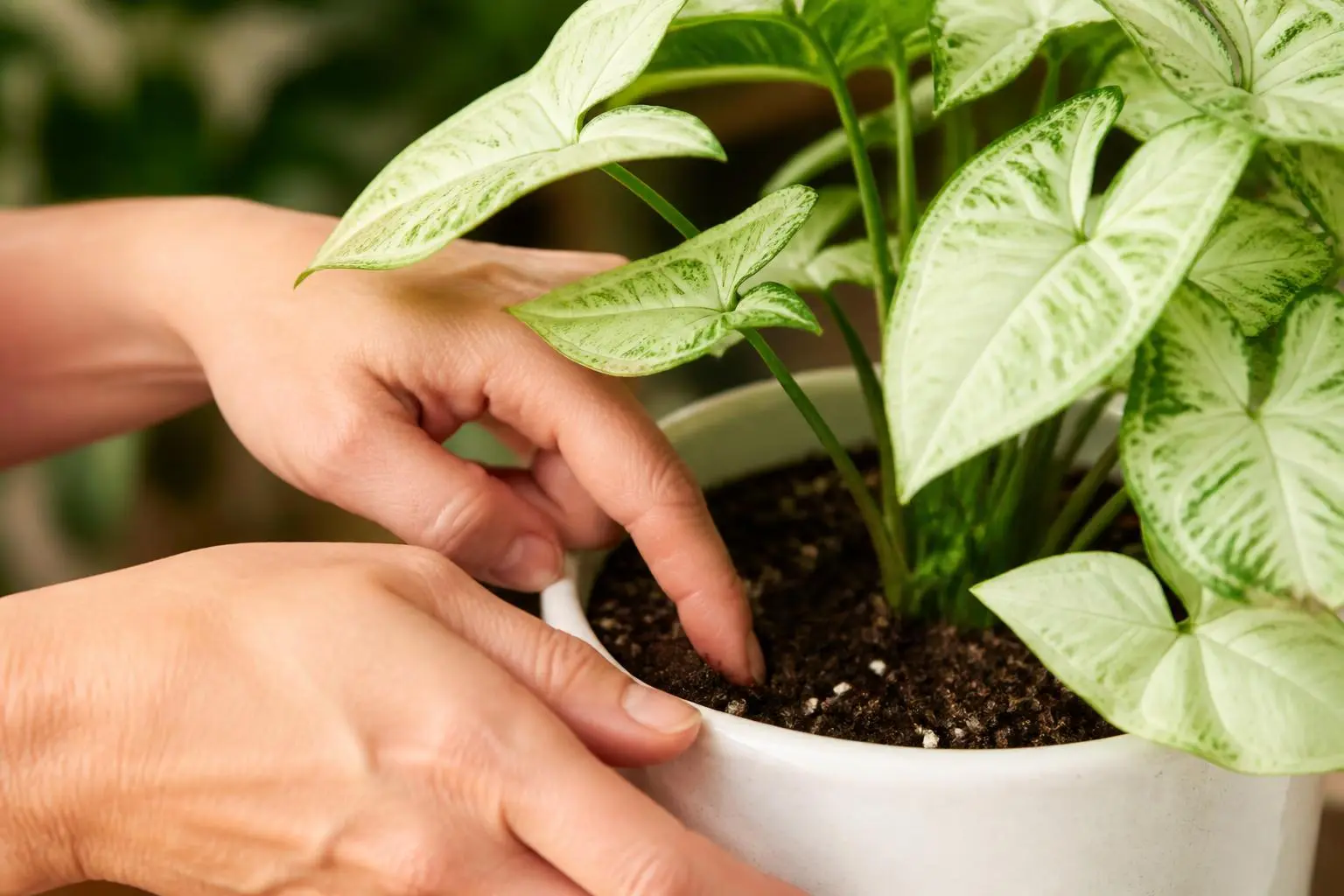
Water your Arrowhead Plant when the top 1–2 inches of soil feel dry — typically every 7–10 days in spring/summer and every 10–14 days in fall/winter. These plants prefer consistently moist (not soggy) soil during the growing season.
Overwatering causes yellow leaves and root rot — the most common problem. Underwatering causes brown, crispy leaf edges and wilting. Arrowhead Plants are somewhat dramatic about underwatering — they droop noticeably when thirsty but recover quickly after watering, making them good at communicating their needs.
When watering, give it a thorough soak until water runs from the drainage holes. Empty saucers after 15 minutes. Use room-temperature water. These plants can be sensitive to chlorine — letting tap water sit out overnight helps.
In winter, reduce watering frequency significantly. The plant is semi-dormant and needs less moisture. Wait until the top 2 inches of soil are dry before watering.
Humidity
Arrowhead Plants prefer moderate to high humidity (50–70%). While they tolerate average home humidity, they look their best and grow most vigorously in more humid conditions. Dry air causes brown, crispy leaf edges, especially on the variegated portions.
A humidifier nearby is the most effective solution. A pebble tray with water beneath the pot also helps. Grouping plants together creates a more humid microclimate. Misting is somewhat beneficial for Arrowhead Plants — more so than for plants with fuzzy leaves — but it's not a substitute for ambient humidity.
Bathrooms and kitchens, with their naturally higher humidity, are excellent locations. If your Arrowhead Plant is in a dry living room, consider running a small humidifier nearby, especially during winter when heating dries the air.
Temperature
Arrowhead Plants prefer temperatures between 60–80°F (16–27°C), which suits most indoor environments. They can tolerate brief dips to 50°F (10°C) but will suffer damage below that — leaves may yellow and drop.
Avoid cold drafts from air conditioning vents and exterior doors in winter. Also avoid placing near heating vents — the dry, hot air causes leaf tip browning and invites spider mites. Stable, warm temperatures without drafts are ideal.
These plants enjoy spending summers outdoors in a shaded, humid spot. Bring them inside when nighttime temperatures drop below 55°F. They are hardy in USDA zones 10–12.
Soil
Arrowhead Plants need a well-draining, slightly acidic potting mix that retains some moisture. A peat-based mix with added perlite works well.
Recommended mix: 2 parts peat-based potting soil + 1 part perlite. The peat provides acidity (pH 5.5–6.5) and moisture retention, while perlite ensures drainage. Adding a handful of orchid bark improves aeration.
Avoid heavy, compacted soils that hold too much water. Also avoid pure cactus soil, which drains too quickly. The soil should feel like a damp sponge after watering — moist but not dripping.
Fertilizer
Feed your Arrowhead Plant with a balanced liquid fertilizer (NPK 20-20-20) diluted to half strength, applied once a month during spring and summer. Arrowhead Plants are moderate feeders.
Over-fertilizing causes salt buildup that burns leaf tips. If you notice white crust on the soil or brown leaf tips despite good care, flush the pot with plenty of water to leach out excess minerals.
Stop fertilizing from late fall through winter. Resume when new growth appears in spring. For faster growth, you can feed every 2 weeks during the peak growing season, but monitor for salt buildup.
Repotting
Repot your Arrowhead Plant every 1–2 years, or when roots are growing out of the drainage holes. These plants grow quickly and can become root-bound faster than many houseplants.
Choose a pot only 1–2 inches larger in diameter. Going too large means excess soil that stays wet too long. Always use pots with drainage holes. Hanging baskets work beautifully for trailing Arrowhead Plants.
Spring is the best time to repot. Water the plant a day before for easier removal. Gently loosen the root ball and trim any dead roots. Plant at the same depth in fresh soil, water thoroughly, and keep in a slightly shadier spot for a few days to recover.
Our Experience
My Arrowhead Plant was getting long and viney until I started pinching off the growing tips every few weeks. Now it stays bushy and full instead of trailing everywhere. Each pinch point grows two new stems, so the plant gets denser with every prune. I root the tip cuttings in water for new plants.
— Indoor environment, bright indirect light, spring/summer pruning
I grow my Syngonium on a moss pole and it's completely changed the plant — the leaves are twice as large and developing the mature lobed shape instead of staying as simple arrowheads. The aerial roots grab onto the pole naturally. It's like having a different, more impressive plant.
— Indoor with moss pole, bright indirect light, year-round
The Pink Splash variety loses its pink in low light — I learned this the hard way when I moved it to a dimmer spot and it turned mostly green. Now I keep it in my brightest room (south-facing window with sheer curtains) and the pink is vivid and stable. Light really matters for variegated Syngoniums.
— South-facing window with sheer curtains, indoor, year-round
 Albo Variegata
  Neon
Neon  Pink Splash
 Compare Varieties
Explore different cultivars side-by-side and find the best match for your space.
Browse all varieties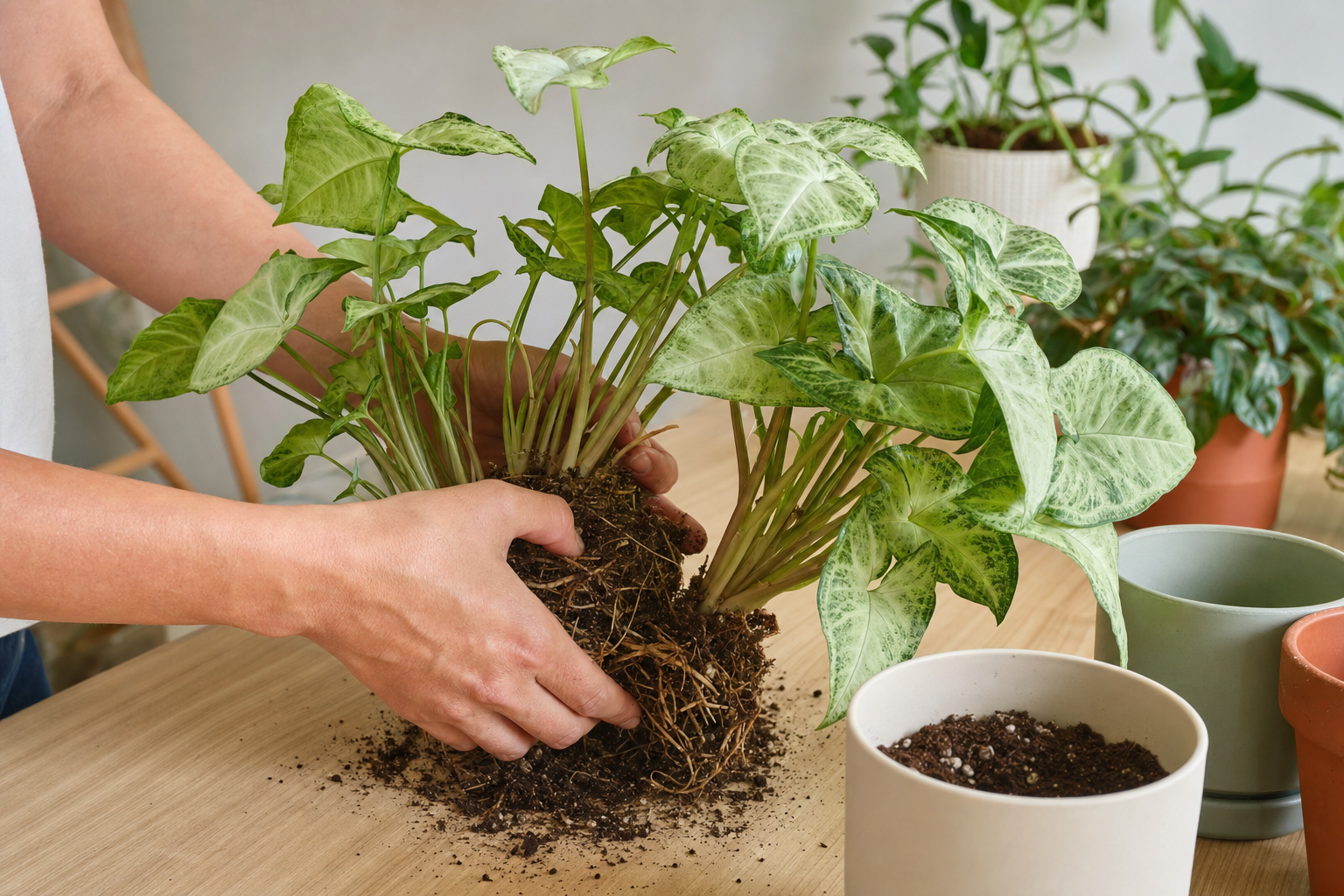
Propagation Guide
Step-by-step instructions for multiplying your plant collection.
Learn how to propagateFrequently Asked Questions
How do I care for an Arrowhead Plant?
Why is my Syngonium turning yellow?
How do I propagate my Arrowhead Plant?
Can Syngonium grow in low light?
Is Arrowhead Plant toxic to cats?
Common Problems
Why Are My Plant Leaves Turning Yellow?
Yellowing leaves are one of the most common houseplant problems. The good news is that most causes are easy to identify and fix once you know what to look for.
Read diagnosis guideHow to Fix an Overwatered Plant
Overwatering kills more houseplants than any other cause. The tricky part? The symptoms — yellowing, wilting, drooping — look just like underwatering. Here's how to tell the difference and fix it.
Read diagnosis guideReferences
- [1] Royal Horticultural Society. Syngonium podophyllum
- [2] ASPCA. Syngonium podophyllum Toxicity
- [3] University of Florida IFAS Extension. Syngonium podophyllum — Arrowhead Plant
- [4] Missouri Botanical Garden. Syngonium podophyllum


