
Hoya Carnosa Varieties
A comparison of the most popular Hoya Carnosa varieties — learn which one is right for your space and skill level.
| Variety | Key Feature | Care Difficulty | Price Range |
|---|---|---|---|
| Hoya carnosa (Standard Wax Plant) | Plain green waxy oval leaves with vigorous trailing or climbing vines and fragrant porcelain-like flower clusters | Easy | Varies |
| Hoya carnosa Compacta (Hindu Rope Plant) | Curled rope-like vines with tightly folded waxy leaves | Easy | Varies |
| Hoya carnosa Krimson Queen | Creamy white and pink leaf margins with green centers and pink new growth | Easy | Varies |
| Hoya carnosa Krimson Princess | Creamy central leaf variegation framed by green margins | Easy | Varies |
Variety Details
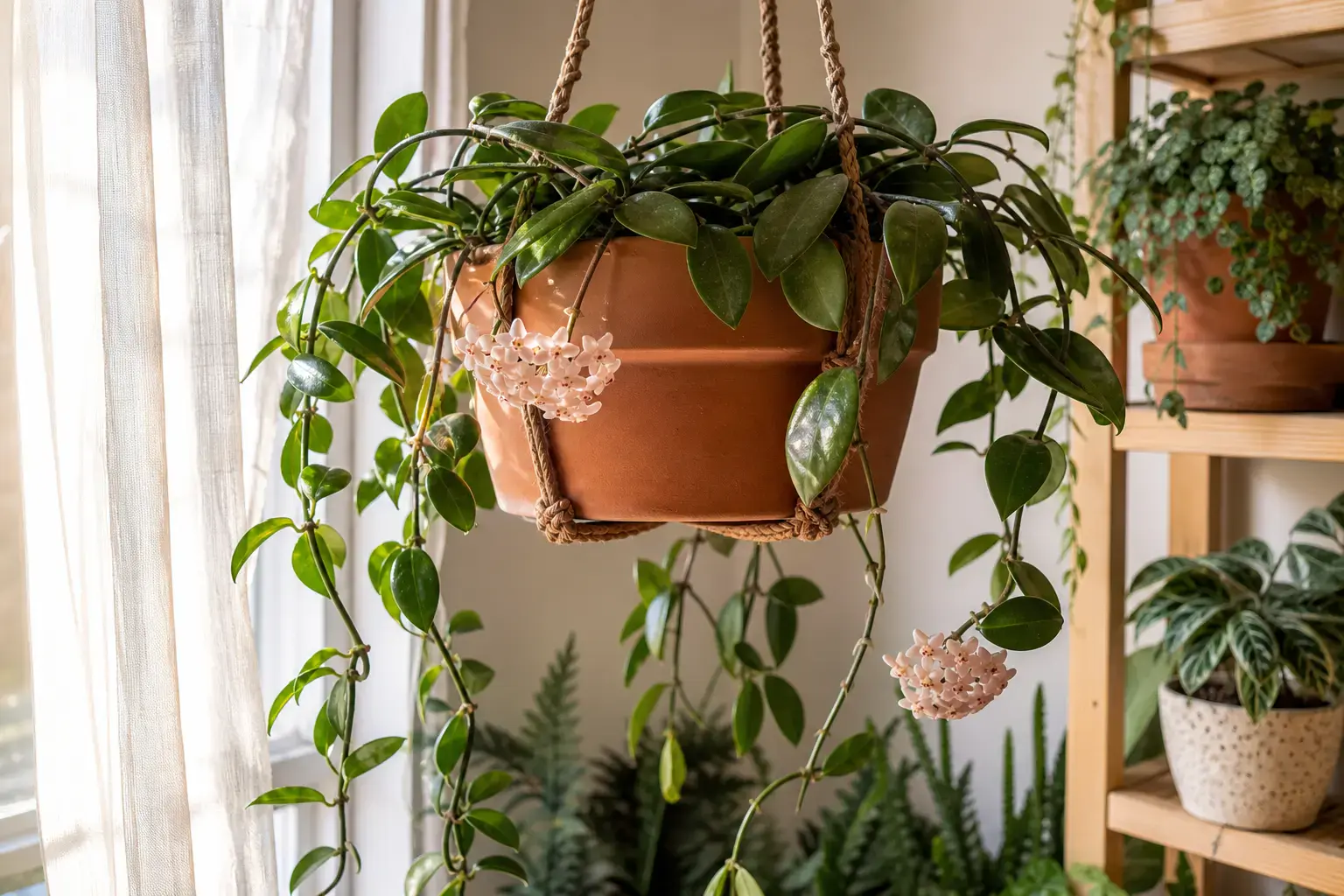
Hoya carnosa (Standard Wax Plant)
The classic green Hoya carnosa has thick oval leaves, long flexible vines, and fragrant clusters of pale pink to white star-shaped flowers on mature plants. It is one of the most forgiving hoyas for indoor growers because it tolerates average humidity, occasional missed waterings, and a range of bright indoor locations. The standard form is widely available, affordable, and often becomes a long-lived heirloom plant when grown in a hanging basket or trained up a trellis.
Distinguishing feature: Plain green waxy oval leaves with vigorous trailing or climbing vines and fragrant porcelain-like flower clusters
Care notes: Give bright indirect light, let the top half of the mix dry before watering, and keep it in a snug pot with chunky soil. This is the best starter Hoya for beginners who want flowers without fussy care.
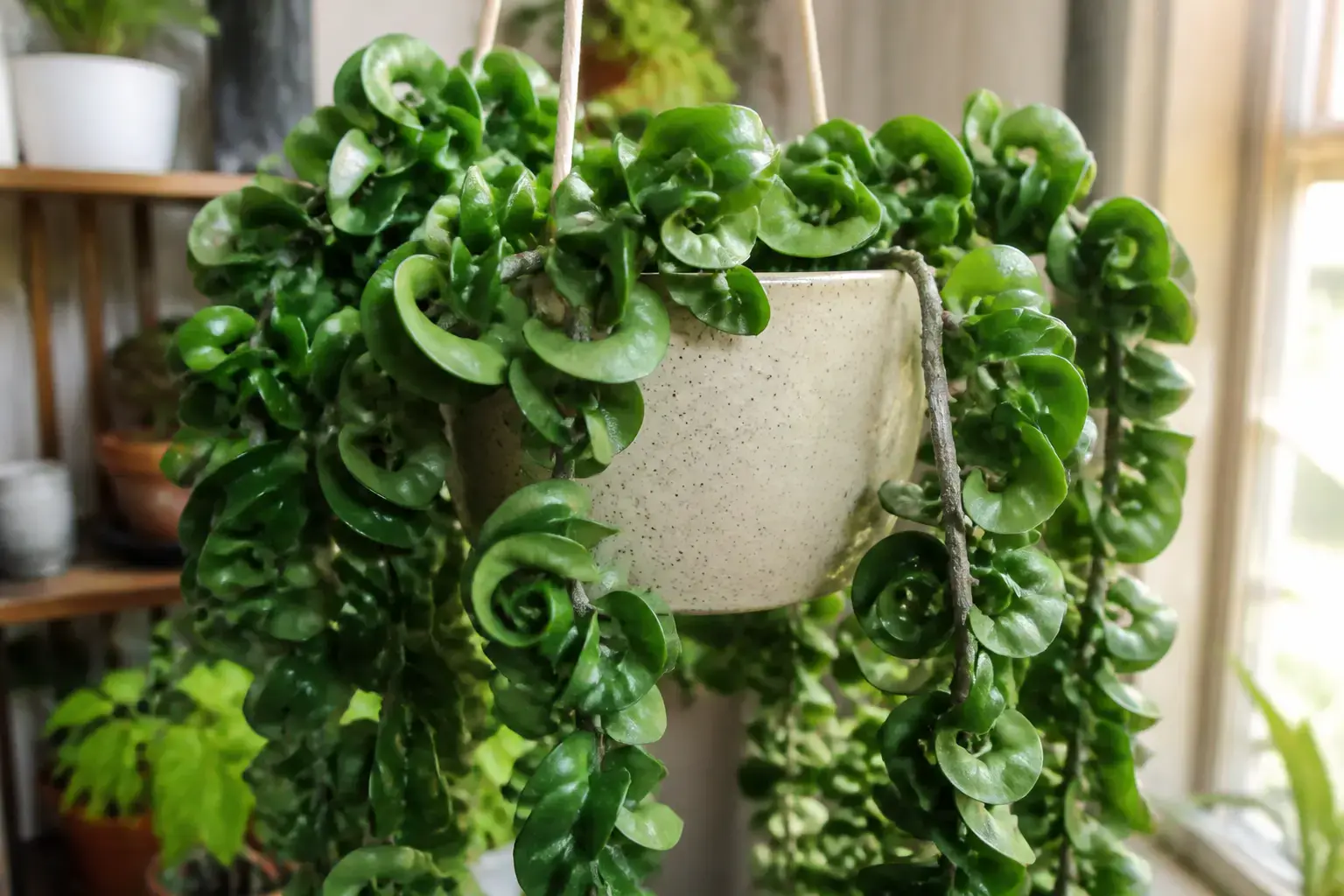
Hoya carnosa Compacta (Hindu Rope Plant)
Hoya carnosa Compacta, commonly called Hindu Rope Plant, has curled, twisted leaves packed tightly along thick rope-like vines. The sculptural foliage makes it one of the most recognizable hoyas, and mature plants can still produce the same fragrant starry flower clusters as the standard form. Because the leaves overlap tightly, pests and trapped moisture can hide in the folds, so it needs careful inspection and good airflow.
Distinguishing feature: Curled rope-like vines with tightly folded waxy leaves
Care notes: Care is similar to standard Hoya carnosa, but water a bit more cautiously because the dense foliage dries slowly. Inspect leaf folds for mealybugs and avoid misting. Growth is slower, so be patient.
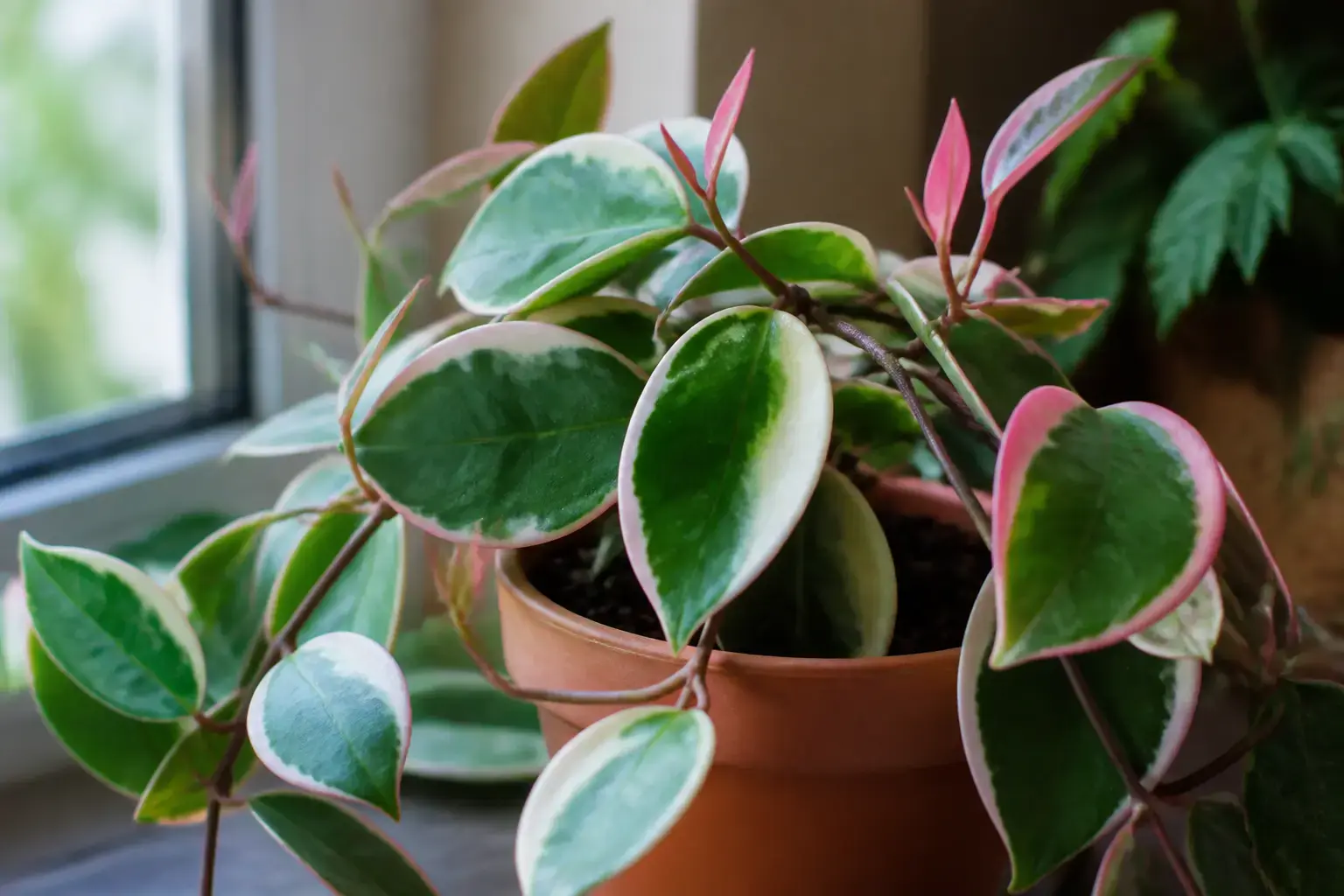
Hoya carnosa Krimson Queen
Krimson Queen is a variegated Hoya carnosa with creamy white to pink margins around green leaf centers. New growth often emerges rosy pink before maturing to cream and green, making the plant colorful even when it is not blooming. The reduced chlorophyll in variegated tissue slows growth compared with the all-green form, but the care remains approachable for bright indoor rooms.
Distinguishing feature: Creamy white and pink leaf margins with green centers and pink new growth
Care notes: Provide brighter indirect light than the standard green form to maintain variegation. Avoid harsh direct sun that can burn pale leaf edges. Water when the top half of the mix dries.
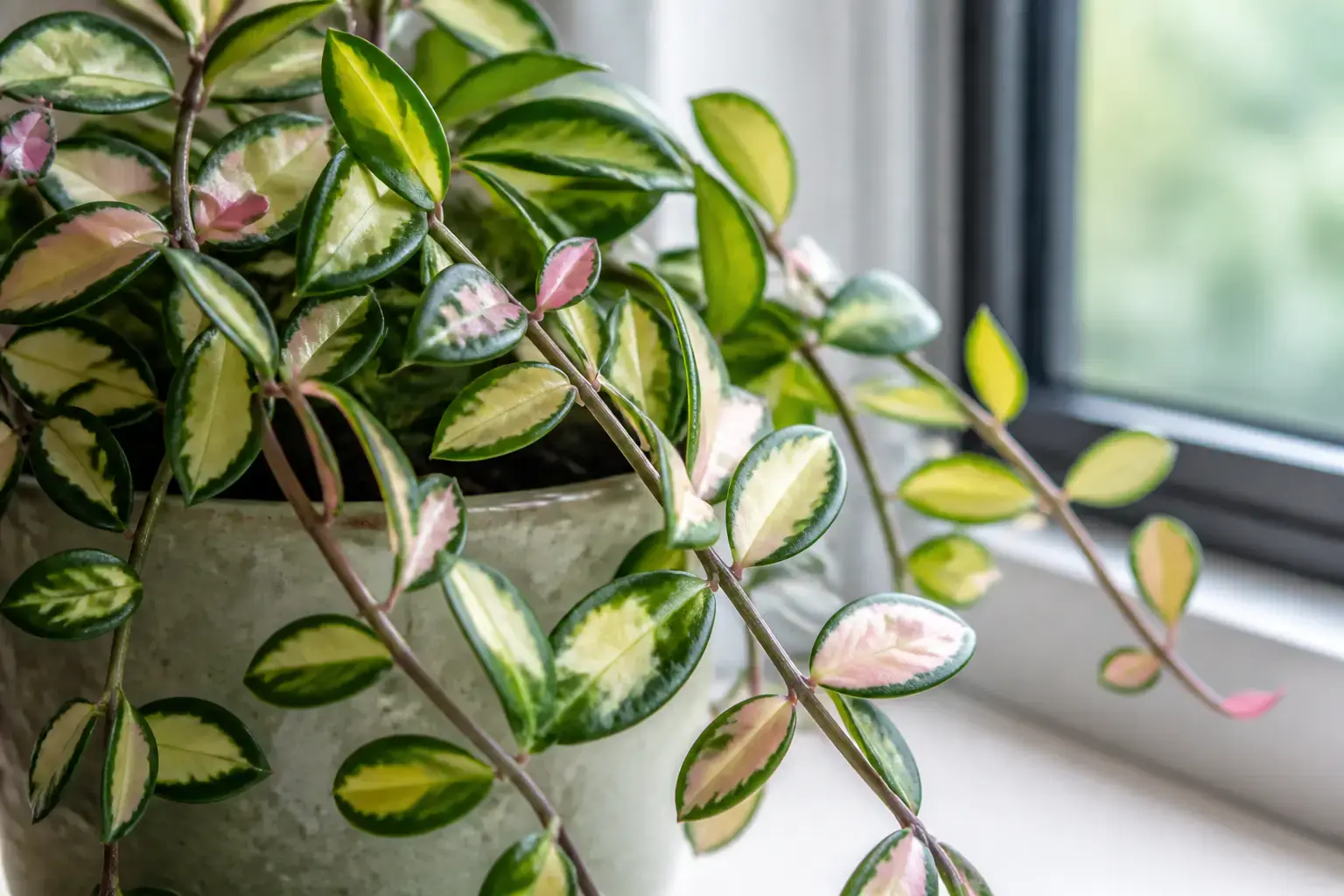
Hoya carnosa Krimson Princess
Krimson Princess has the reverse variegation pattern of Krimson Queen: creamy yellow or white variegation appears in the center of the leaf, surrounded by green margins. This central variegation gives the plant a glowing look in hanging baskets. It is popular with collectors but still easier than many rare hoyas.
Distinguishing feature: Creamy central leaf variegation framed by green margins
Care notes: Keep in bright indirect light to preserve the variegated centers. Because pale tissue is more sensitive, avoid intense afternoon sun and overwatering. Prune fully green reversions if you want to maintain the variegated look.