
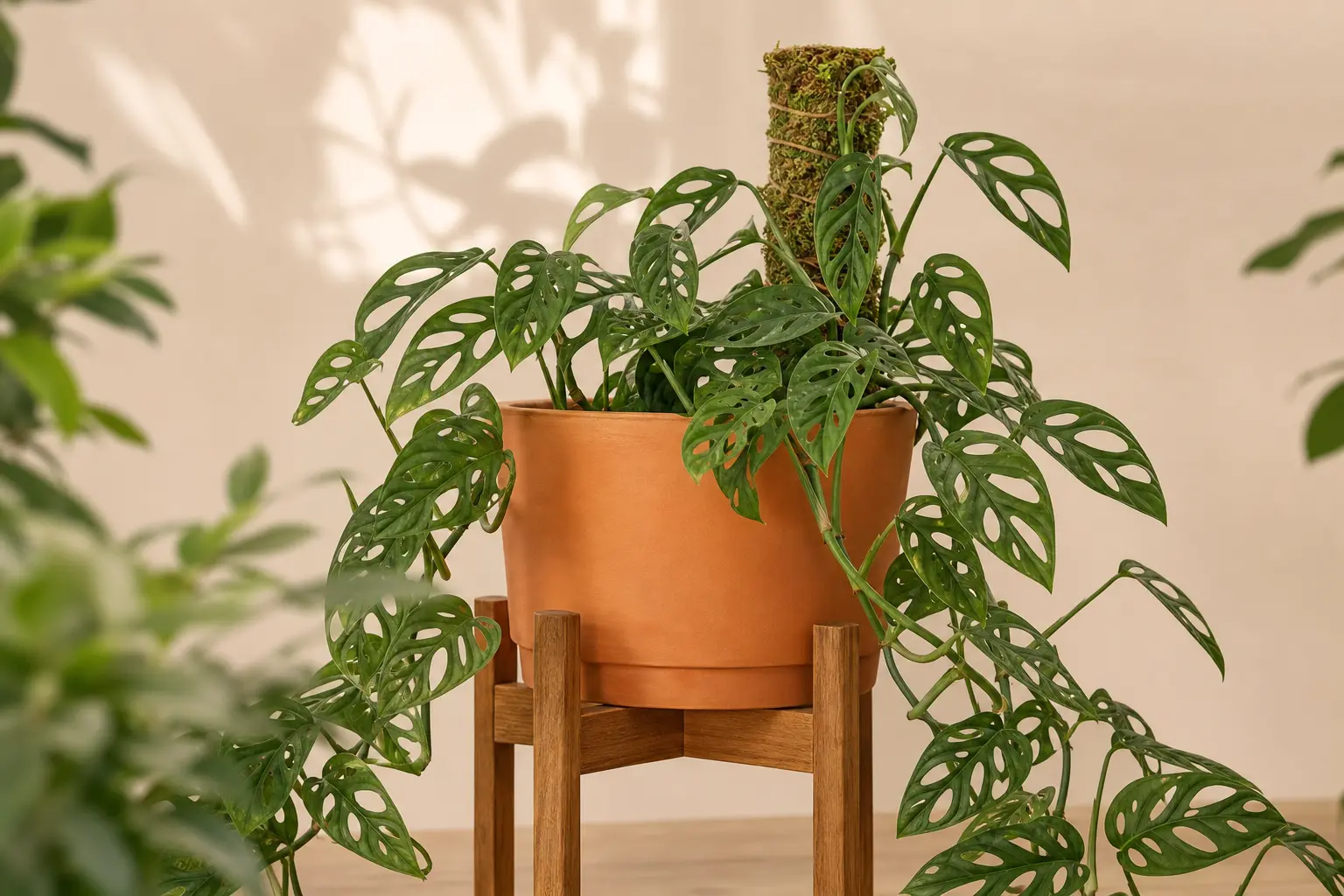
Monstera Adansonii
Monstera adansonii
Also known as: Swiss Cheese Vine, Adanson's Monstera, Five Holes Plant, Monkey Mask
Last updated: Sep 10, 2026
Bright indirect light
When top 1–2 inches of soil are dry
60–80%
65–85°F (18–29°C)
Chunky aroid mix (potting soil + perlite + orchid bark)
Balanced liquid feed monthly in spring/summer
Beginner friendly
Toxic to pets
Toxic to Pets
Contains insoluble calcium oxalate crystals. If chewed or ingested, these needle-like crystals pierce oral tissues, causing intense burning, drooling, vomiting, and difficulty swallowing. Keep away from cats, dogs, and small children.
Source: ASPCA Toxic Plant List
Seasonal Care Calendar
| Season | Watering | Fertilizer | Notes |
|---|---|---|---|
| Spring | Every 5–7 days | Start monthly feeding | Best time to repot and take cuttings. Resume regular watering as growth resumes. |
| Summer | Every 5–7 days | Monthly feeding | Peak growth. Check for spider mites in hot, dry weather. Can summer outdoors in shade. |
| Fall | Every 7–10 days | Reduce to every 6–8 weeks | Growth slows. Taper watering. Stop fertilizing by late fall. Inspect before any outdoor plants return. |
| Winter | Every 10–14 days | None | Dormant period. Move away from cold drafts and heaters. Keep humidity up as indoor heating dries the air. |
Detailed Care Guide
Everything you need to know to keep your Monstera Adansonii thriving.
Light Requirements
Monstera adansonii grows best in bright, indirect light - an east-facing window is ideal, or a spot a few feet back from a south- or west-facing one. In its native habitat it scrambles along shaded forest edges and up tree trunks beneath the canopy, so it is adapted to lots of ambient light with little direct sun.
Too much direct afternoon sun is the fastest way to damage this plant - its thin leaves scorch easily, showing bleached, papery patches and crispy brown margins within days. Too little light is the more common indoor problem: growth gets leggy with long gaps between leaves, the vines stretch toward the window, and new leaves come in small, pale, and with few or no holes.
A simple placement test: if the plant casts a soft, fuzzy shadow at midday, the light is right. A sharp, hard-edged shadow means too much sun. Rotate the pot a quarter turn each week so the vine fills in evenly instead of growing lopsided, and in short winter days consider moving it closer to the window or adding a grow light for 10–12 hours a day.
Watering
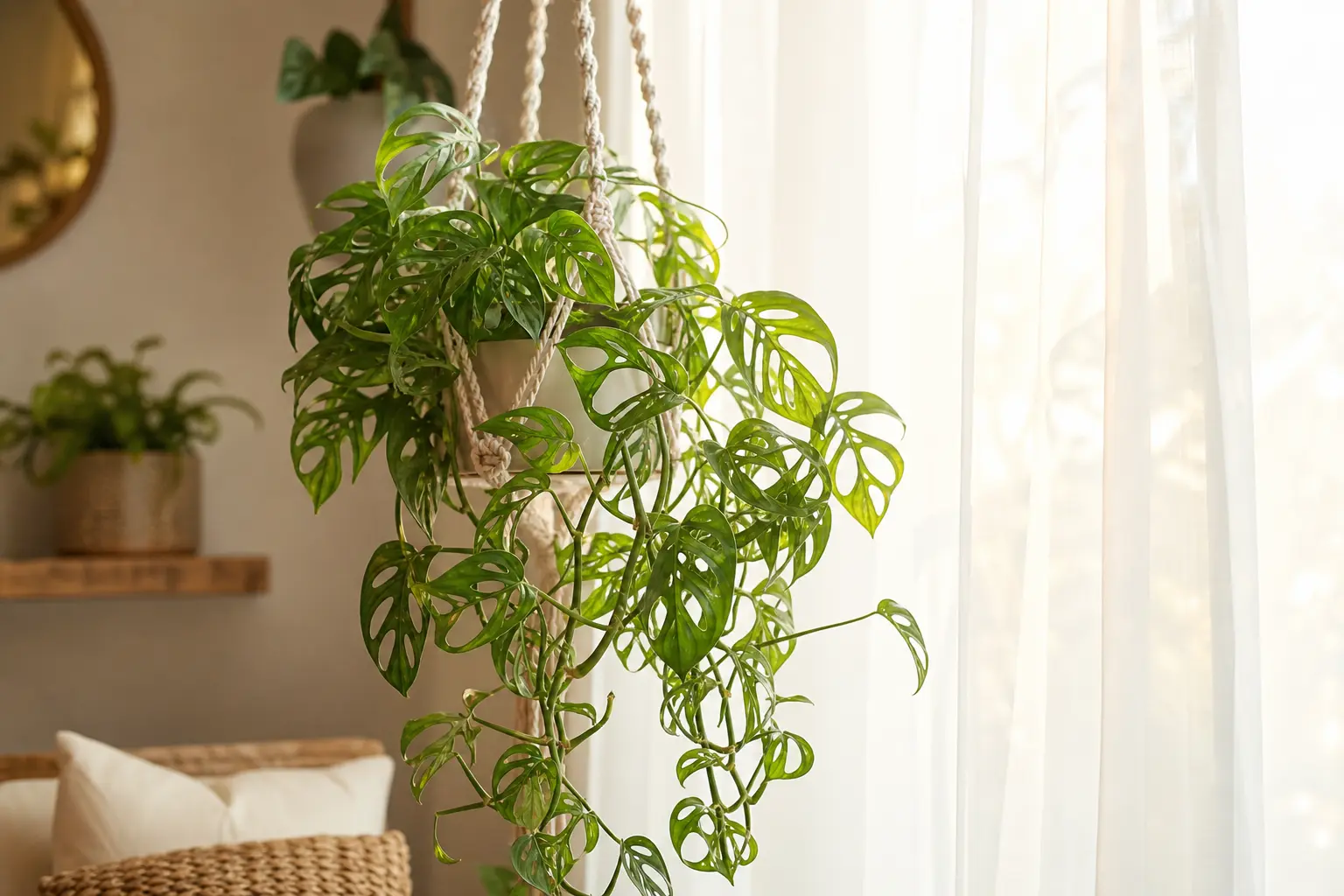
Water when the top 1–2 inches of soil feel dry. Adansonii has thinner leaves and finer roots than Monstera deliciosa, so it likes slightly more consistent moisture - but it still rots quickly in soggy soil. In practice this means roughly every 5–7 days in spring and summer and every 10–14 days in winter, always verified with a finger test rather than a calendar.
Water thoroughly until it runs from the drainage holes, then empty the saucer after 15 minutes. The fine roots hate sitting in water. Use room-temperature water; if your tap water is heavily chlorinated, let it sit out overnight - adansonii leaf tips are quick to brown from chlorine and dissolved mineral salts.
Watch the signals: yellowing lower leaves with wet soil means back off; dull, drooping leaves that perk up an hour after watering means you waited slightly too long. Consistency matters more with this species than with deliciosa - wild swings between bone-dry and waterlogged cause leaf drop.
Humidity
As a cloud-forest native, Monstera adansonii wants 60–80% humidity and shows it clearly when the air is too dry: crisp brown leaf edges, tightly curled new leaves that tear as they unfurl, and frequent spider mite attacks. Average home humidity (30–50%) keeps it alive, but it truly shines with more moisture in the air.
A small humidifier within 3–4 feet is the single best investment. Grouping plants together, or hanging it above a pebble tray filled with water, adds a few points as well. Bathrooms with a bright window are a classic placement for exactly this reason.
Misting is largely cosmetic - the humidity spike lasts only minutes and wet leaves overnight invite fungal spots. If you enjoy misting, do it in the morning so foliage dries by evening, but treat it as a bonus, never a humidity strategy.
Temperature
Keep adansonii between 65–85°F (18–29°C) - standard indoor conditions. It tolerates brief dips to 50°F (10°C), but growth stops below about 55°F and leaves suffer cold damage below 50°F, showing dark, water-soaked patches.
Keep it away from air-conditioning vents, drafty doors in winter, and radiators. Sudden temperature swings cause sudden leaf drop - often the mystery behind a vine that "went bald" overnight. Outdoors it suits USDA zones 10–11; elsewhere, summer it outside in shade and bring it back in when nights fall below 55°F. Always check for pests before it re-enters the house.
Soil
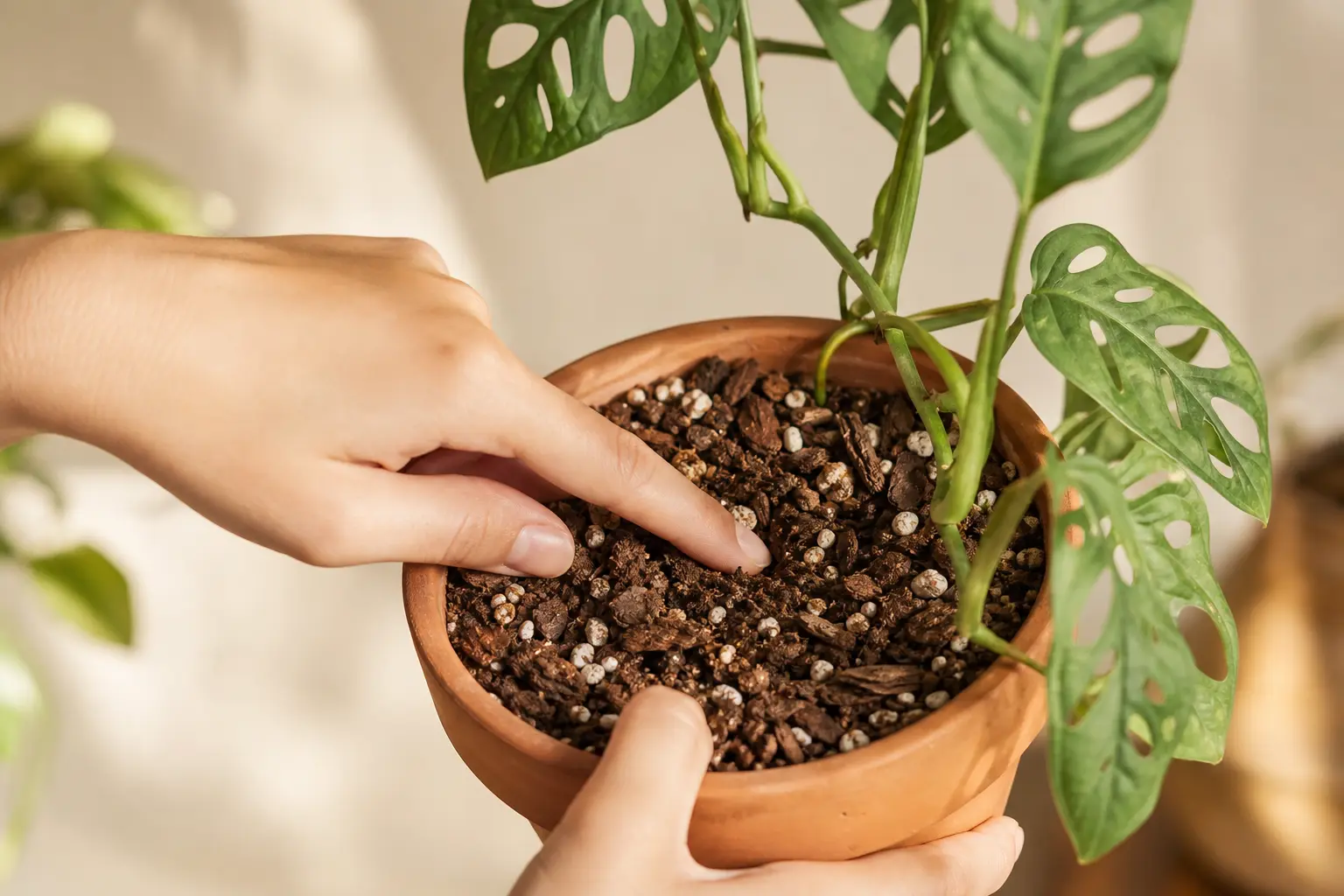
Use a chunky, airy aroid mix: 1 parts quality potting soil + 1 part perlite + 1 part orchid bark. The fine roots need both oxygen and moisture, and a dense, compacted standard mix holds water too long - the classic road to root rot and yellowing vines.
Adding a handful of horticultural charcoal or coco chips further improves drainage and sweetens the mix. Aim for slightly acidic to neutral pH (5.5–7.0). A handful of worm castings mixed in provides gentle, slow nutrition for the heavy growing season.
If you prefer a shelf option, "aroid mix" blends sold for Monsteras and Philodendrons work out of the bag. Avoid garden soil or topsoil entirely - in a pot they compact, suffocate roots, and introduce fungus gnats.
Fertilizer
Feed monthly in spring and summer with a balanced liquid fertilizer (NPK 20-20-20) diluted to half strength. Adansonii is a vigorous vine and responds to regular feeding with noticeably larger, more heavily perforated leaves.
Organic alternatives work well too: worm castings top-dressed every 6–8 weeks, or diluted fish emulsion monthly. Slow-release granules mixed into the soil in spring feed for 3–4 months with one application.
Stop feeding entirely from late fall through winter. If you see a white crust on the soil surface or around drainage holes, that is salt buildup - flush the pot thoroughly with plain water and skip the next feeding. Over-fertilizing burns the fine root hairs first, showing up as brown, crispy leaf margins across the whole plant.
Repotting
Repot every 1–2 years in spring or early summer - adansonii grows fast and quickly fills its pot with roots. Signs it is time: roots circling the drainage holes, water running straight through the pot, or growth stalling mid-season despite regular feeding.
Choose a pot just 2 inches wider than the current one. Oversized pots hold excess wet soil around a small root ball and invite rot. Drainage holes are non-negotiable.
Water the day before, slide the root ball out, gently tease apart circling roots, and trim any black or mushy sections with sterilized scissors. Settle the plant at its original depth in fresh aroid mix, water thoroughly, and keep it out of direct sun for a week while it recovers.
Support & Training
Adansonii is a natural climber, and giving it a support transforms the plant. Vines allowed to climb produce progressively larger, more heavily perforated leaves - mature climbing foliage can be nearly twice the size of trailing leaves - while unsupported vines eventually trail, tangle, and produce smaller juvenile leaves.
A moss pole or coco coir pole is ideal: aerial roots grip the fibers, and you can keep the pole moist for extra humidity uptake. Bamboo trellises, obelisks, and even command-hooked wall trails work well for a "living wall" look. For a hanging display instead, let the vines cascade from a shelf or hanging pot - beautiful, but expect smaller leaves.
Attach vines loosely with soft plant ties or velcro tape every 6–8 inches, guiding rather than forcing. Repositioning is easiest at repotting time when the whole plant can be handled without disturbing anchored roots.
Why Does Adansonii Have So Many Holes?
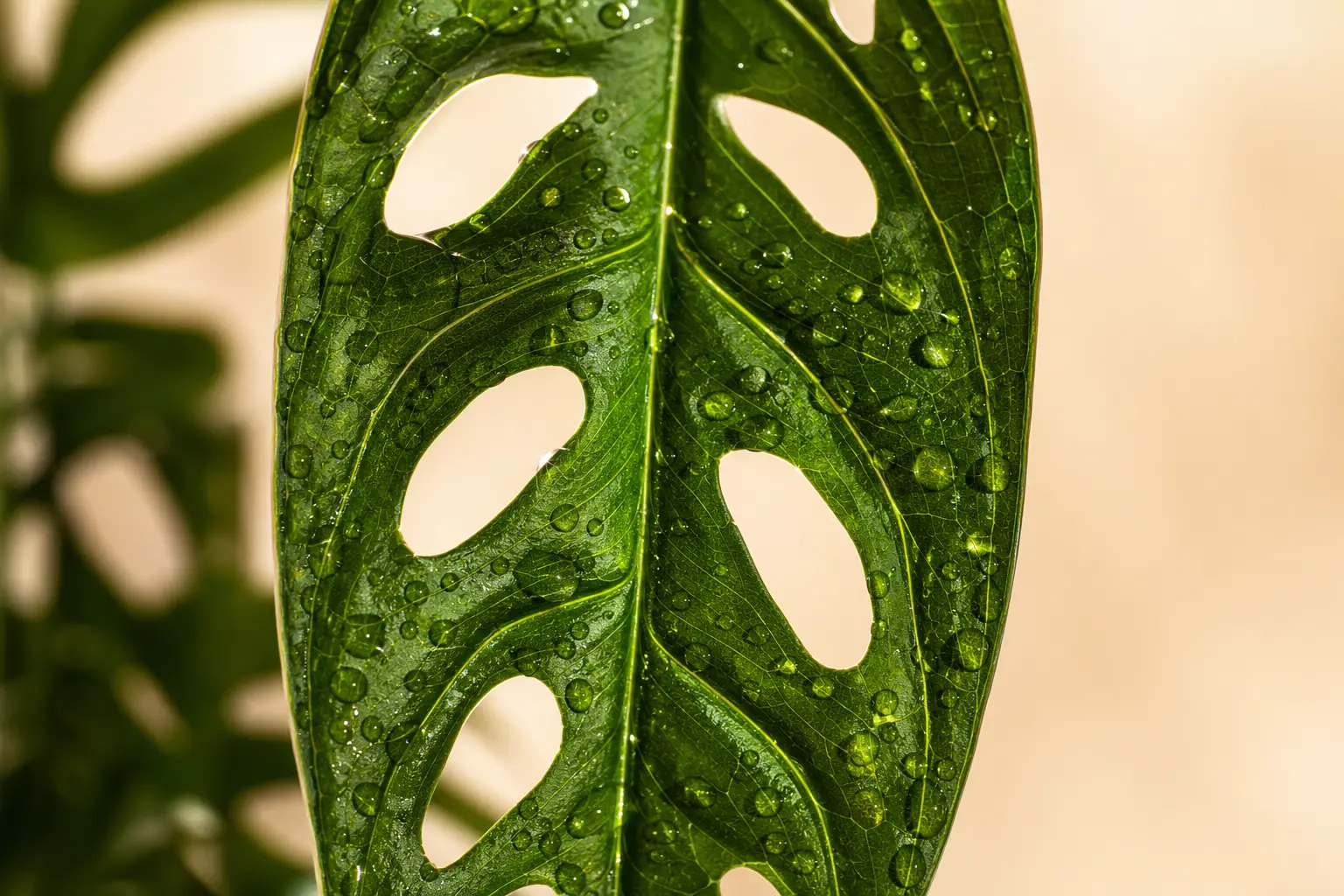
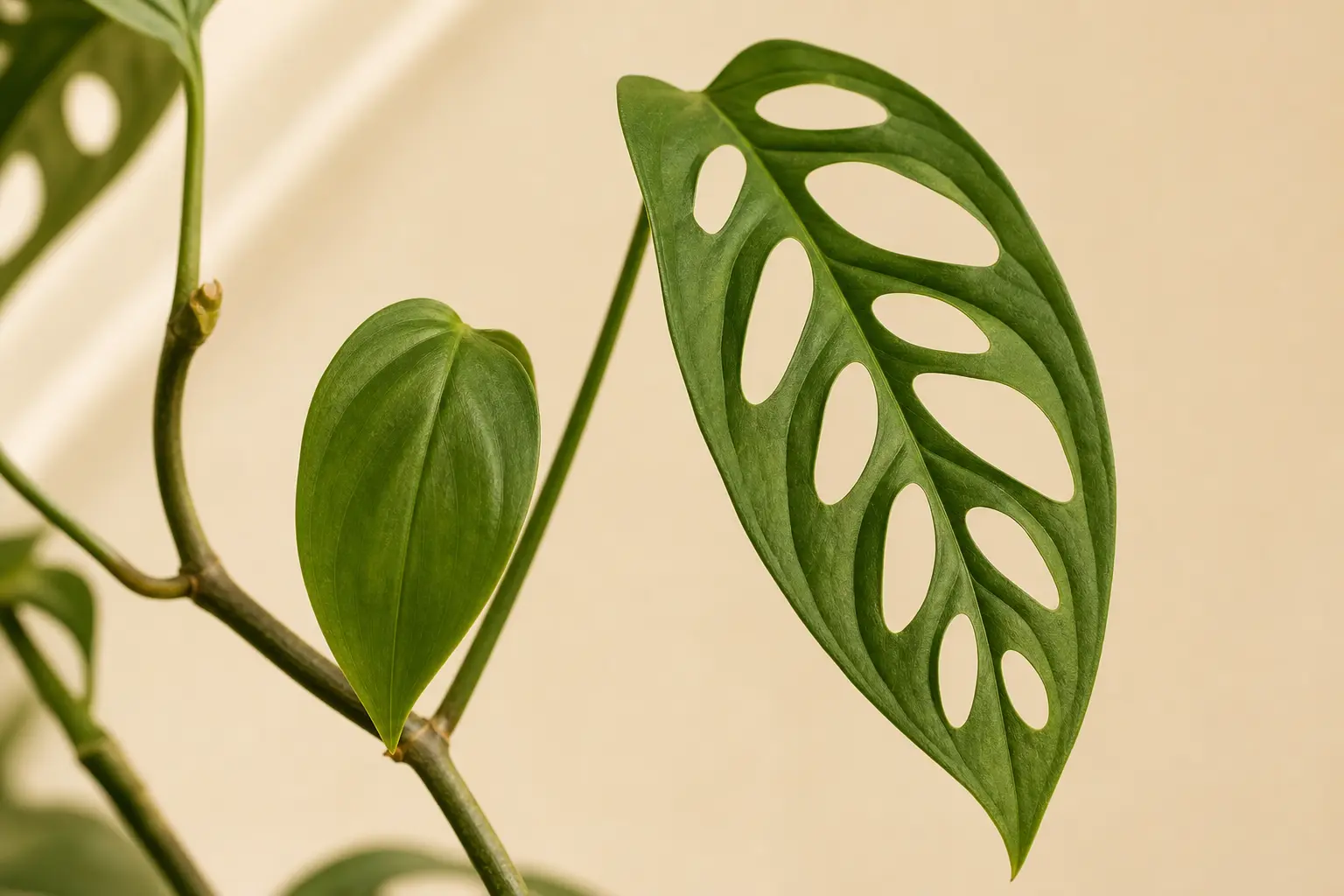
Monstera adansonii is even more heavily perforated than its famous cousin deliciosa - mature leaves can be close to half holes. The prevailing explanations:
Hurricane tolerance:*In its native range from Mexico to Ecuador, storms bring driving rain and strong gusts. A solid leaf acts like a sail; a perforated one lets wind and rain pass through with far less tearing force.
Light harvesting:*Adansonii scrambles through shaded forest undergrowth toward sunlit gaps. The holes let limited light filter through to lower leaves on the same vine, so the plant shades itself less as it climbs.
The catch for growers: perforation is maturity- and light-dependent. Juvenile leaves emerge solid and oval; the number and size of holes increase as the plant ages, climbs, and receives bright indirect light. A "hole-less" adansonii almost always needs more light or a support to climb - not a different plant.
Our Experience
My adansonii sulked for months trailing from a shelf, then exploded when I moved it onto a moss pole - within two leaf cycles the new leaves doubled in size and finally started developing proper rows of holes. Climbing is genuinely the unlock for this plant.
— Grown indoors in USDA Zone 7a, bright east window, moss pole, year-round
Spider mites find adansonii before any other plant in my collection. Now I rinse the leaf undersides in the shower every 2–3 weeks year-round as prevention - since starting that routine I have not had a single outbreak in three years.
— Indoor collection with forced-air heating, dry winter air, USDA Zone 7a
Winter was my enemy until I put a cheap hygrometer next to the plant and realized heating had dropped the room to 25% humidity - the curled, torn new leaves matched exactly. A small humidifier 3 feet away fixed the issue within a week.
— NYC apartment, radiator heating, winter months
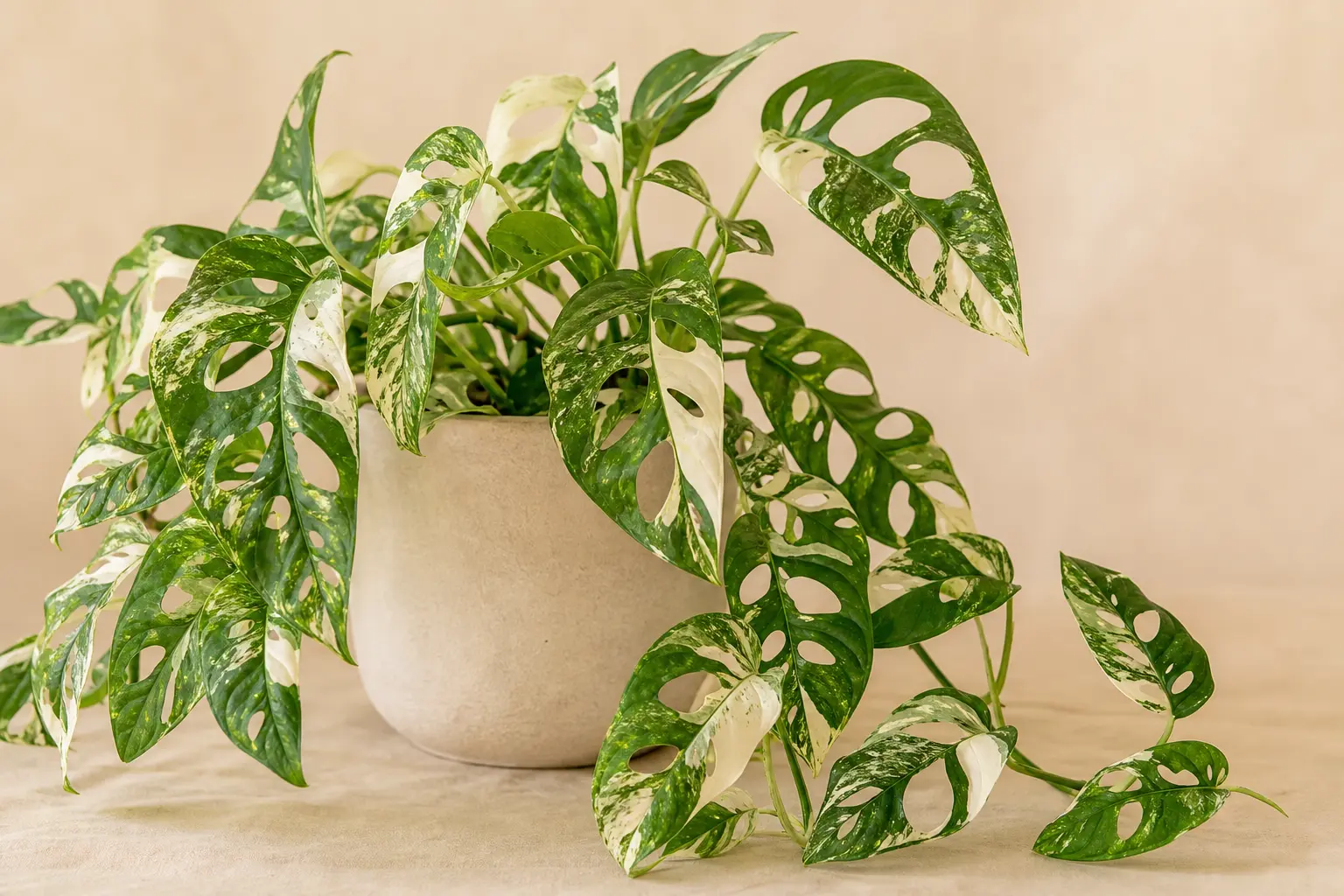 Archipelago
 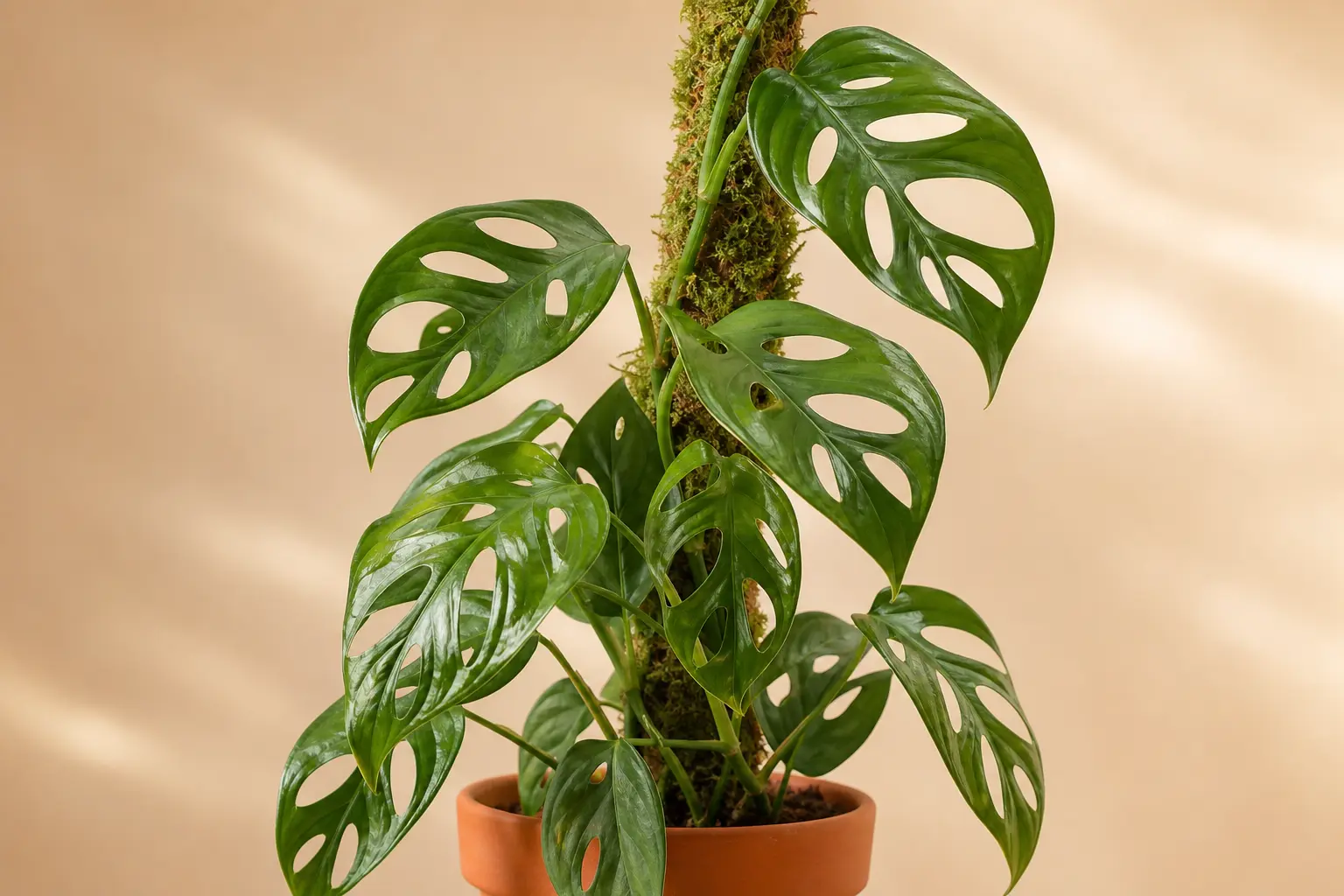 Laniata
 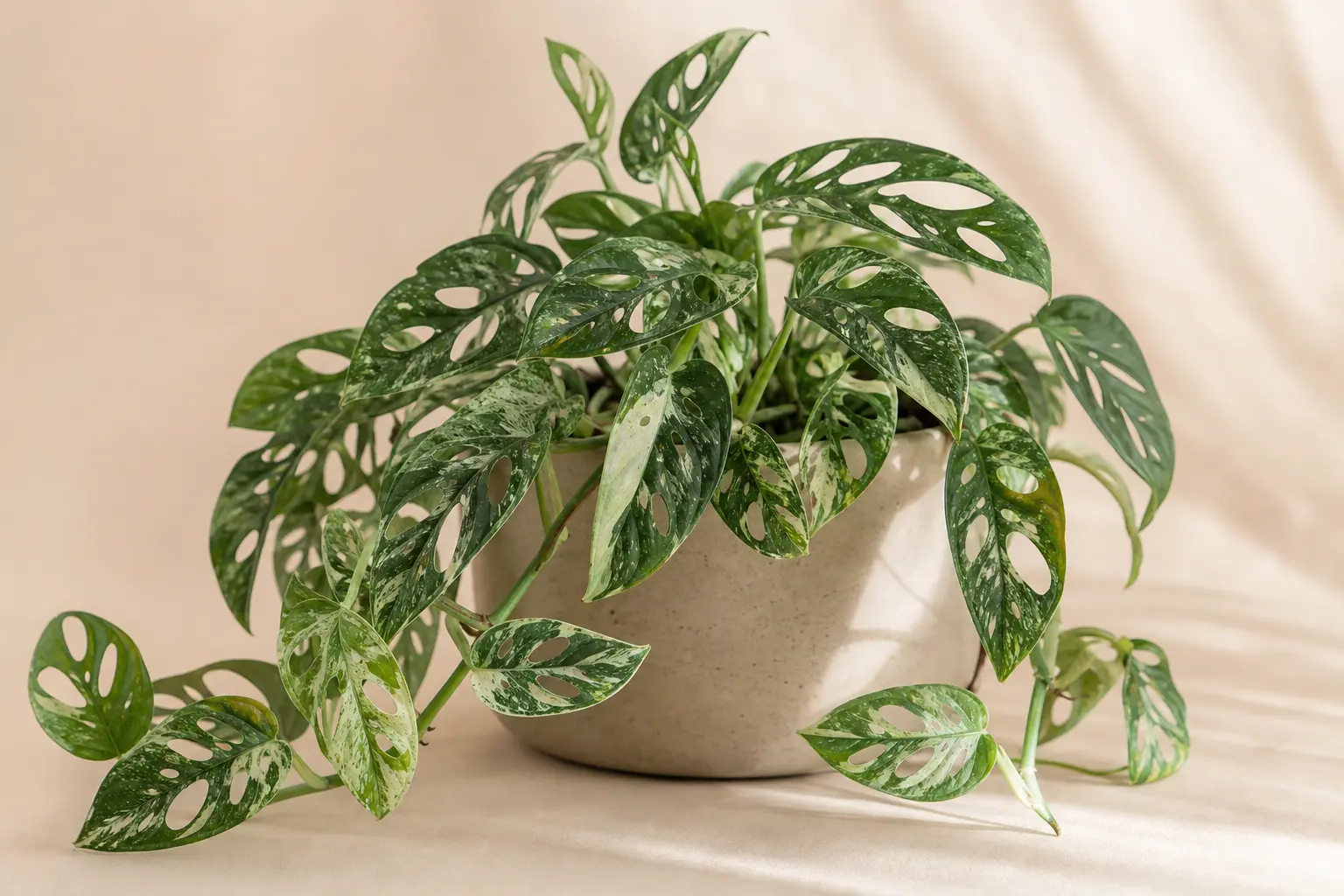 Mint
Mint Compare Varieties
Explore different cultivars side-by-side and find the best match for your space.
Browse all varieties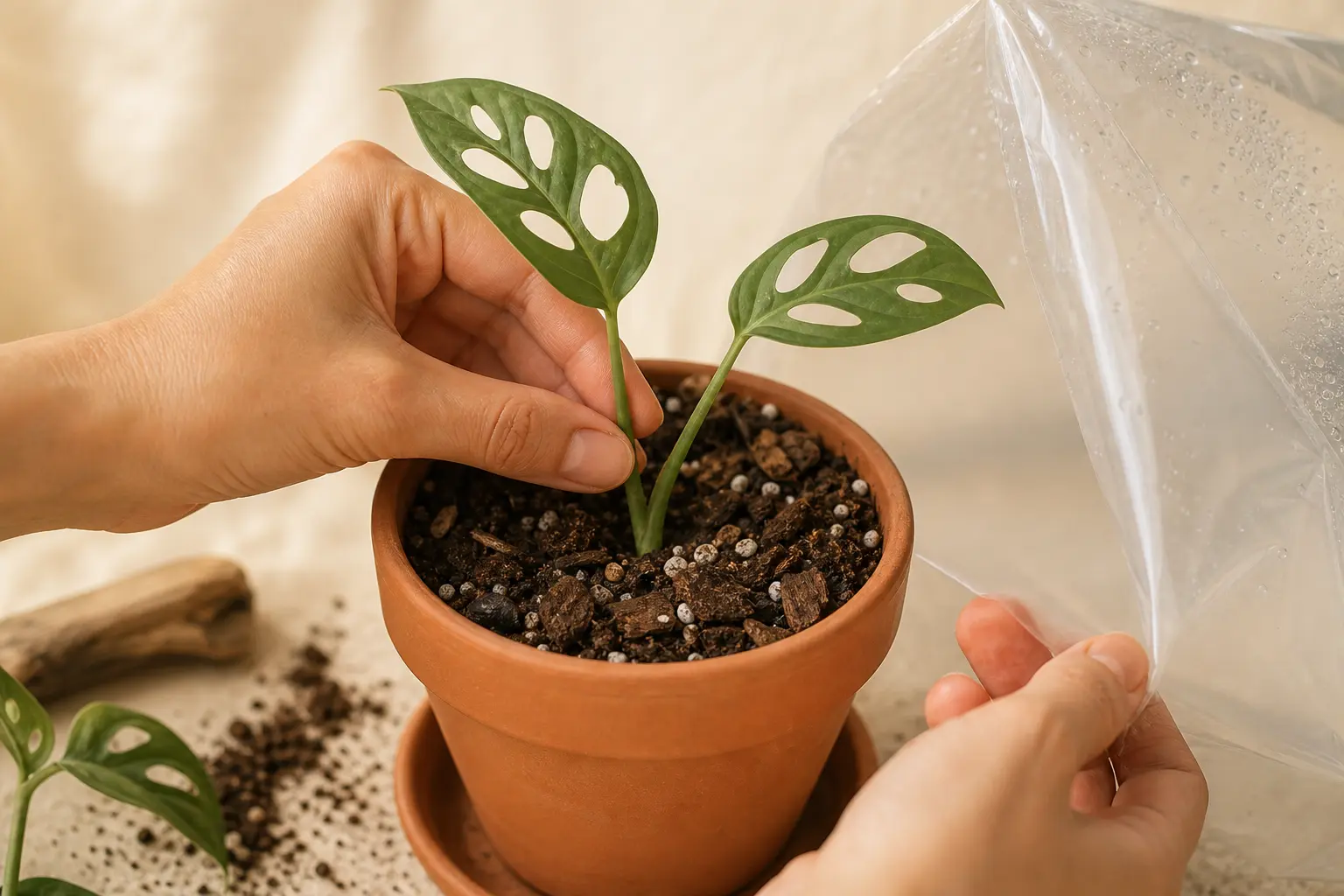
Propagation Guide
Step-by-step instructions for multiplying your plant collection.
Learn how to propagateFrequently Asked Questions
How often should I water Monstera adansonii?
Why are my Monstera adansonii leaves turning yellow?
Why doesn't my adansonii have holes in the leaves?
Is Monstera adansonii toxic to cats and dogs?
How do I propagate Monstera adansonii?
Why is my adansonii so leggy and sparse?
Should adansonii climb or hang?
What's the difference between Monstera adansonii and Monstera deliciosa?
Why are the new leaves tearing or getting stuck while unfurling?
How do I deal with spider mites on adansonii?
Common Problems
Why Are My Plant Leaves Turning Yellow?
Yellowing leaves are one of the most common houseplant problems. The good news is that most causes are easy to identify and fix once you know what to look for.
Read diagnosis guideHow to Fix an Overwatered Plant
Overwatering kills more houseplants than any other cause. The tricky part? The symptoms — yellowing, wilting, drooping — look just like underwatering. Here's how to tell the difference and fix it.
Read diagnosis guideReferences
- [1] Royal Horticultural Society. Monstera adansonii
- [2] ASPCA. Monstera adansonii Toxicity
- [3] International Aroid Society. Monstera adansonii Schott
- [4] Missouri Botanical Garden. Monstera adansonii - Plant Finder
Similar Plants

Monstera Deliciosa
Monstera deliciosa

Pothos
Epipremnum aureum

Philodendron
Philodendron hederaceum
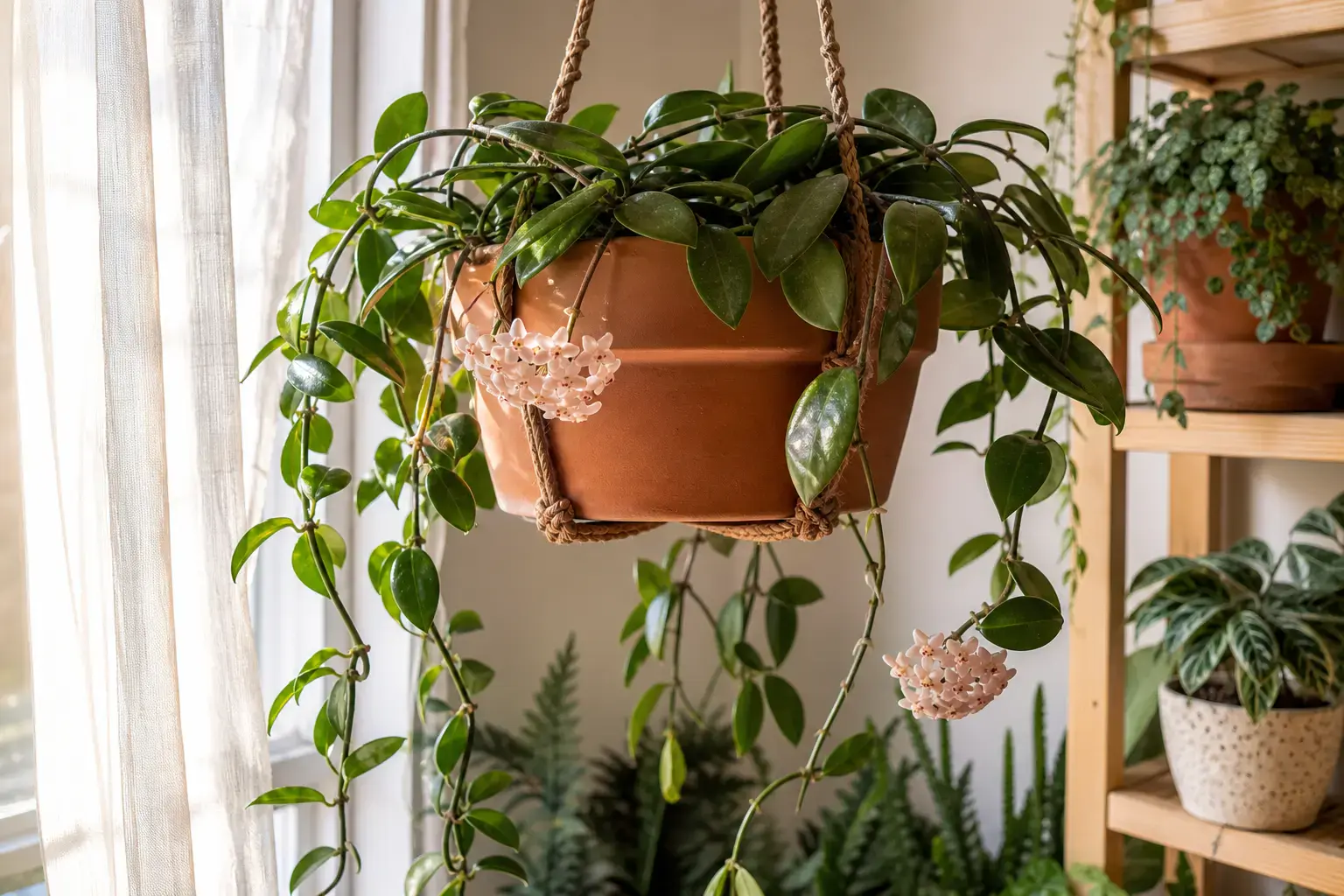
Hoya Carnosa
Hoya carnosa