
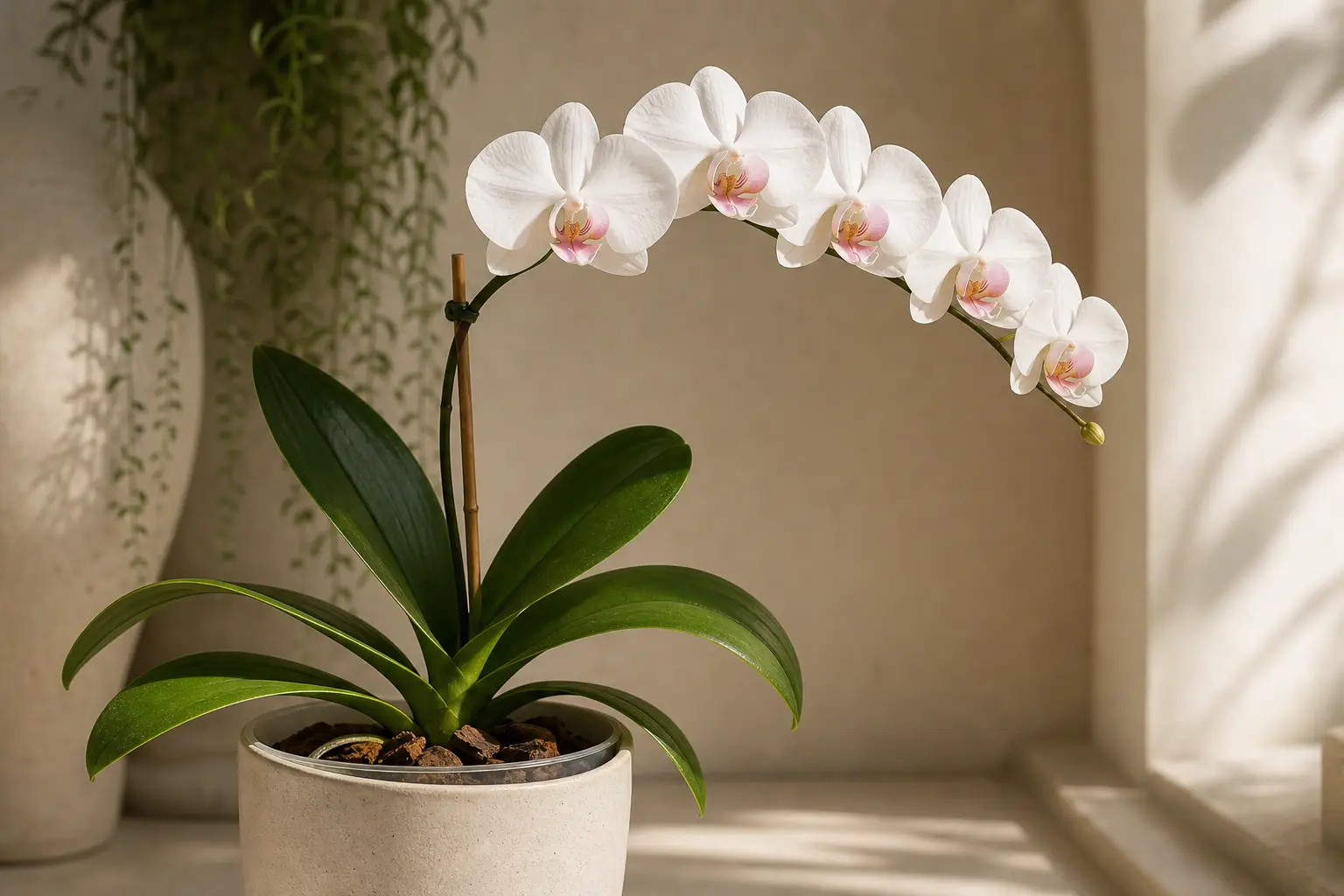
Phalaenopsis Orchid
Phalaenopsis spp.
Also known as: Moth Orchid, Phal, Butterfly Orchid
Last updated: Sep 10, 2026
Bright indirect light; east window is ideal
Soak thoroughly, then dry; every 7–10 days
50–70%
65–85°F (18–29°C); cooler nights help blooming
Orchid bark mix (never potting soil)
Weak weekly orchid feed ("weekly, weakly")
Beginner friendly
Pet safe
Seasonal Care Calendar
| Season | Watering | Fertilizer | Notes |
|---|---|---|---|
| Spring | Every 7 days | Weekly weakly | Repot if bark is broken down, right after blooms drop. Watch new root growth. |
| Summer | Every 5–7 days | Weekly weakly | Active growth. Bright indirect light. Flush salts with plain water monthly. |
| Fall | Every 7–10 days | Switch to bloom booster | Give 3–4 weeks of cooler nights (55–62°F) to trigger a new spike. Stop feeding once spike forms. |
| Winter | Every 10–14 days | None or minimal | Spike develops and buds set. Keep away from drafts and heaters. Do not move a budding plant. |
Detailed Care Guide
Everything you need to know to keep your Phalaenopsis Orchid thriving.
Light Requirements
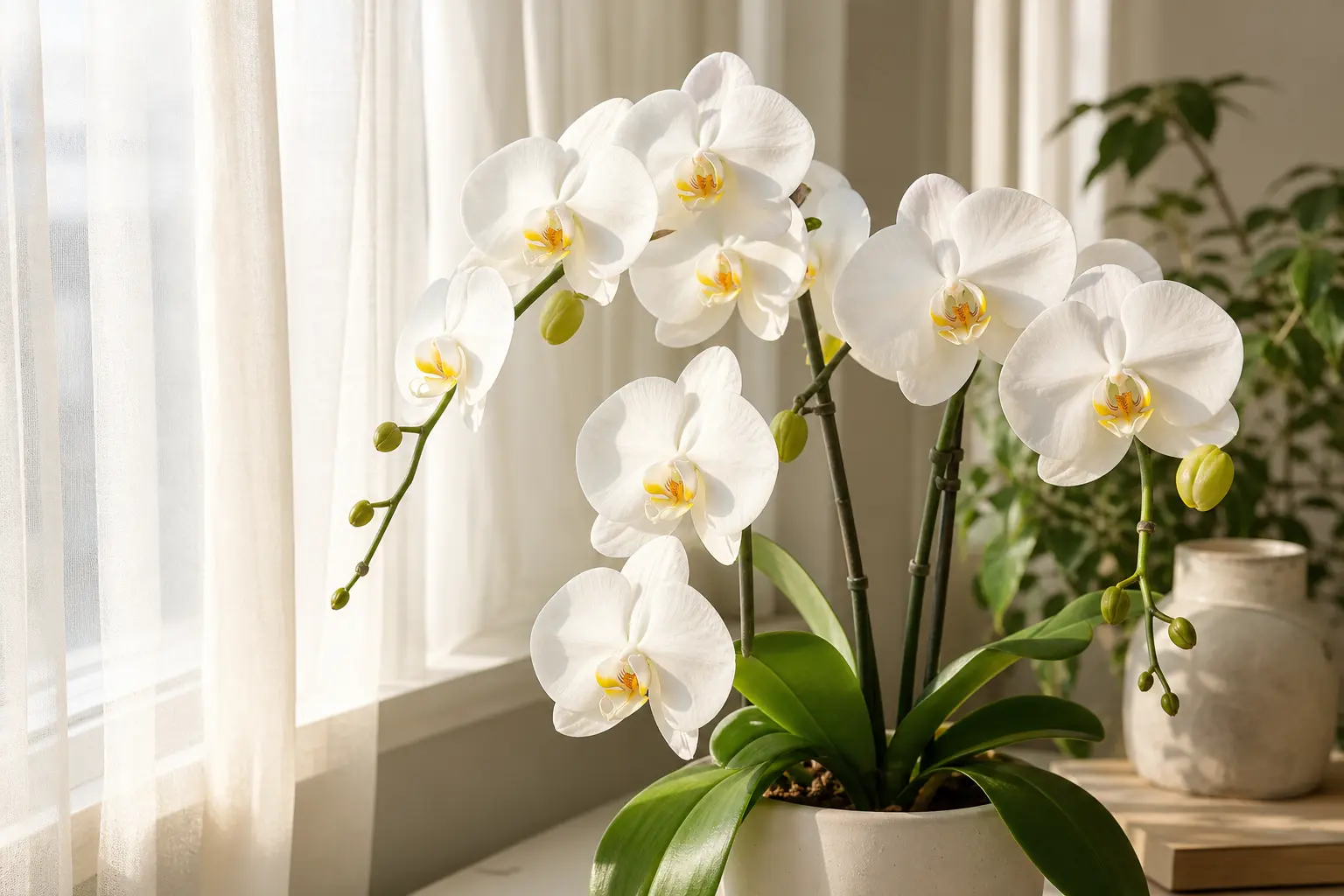
Phalaenopsis orchids need bright, indirect light - an east-facing window is the classic sweet spot, or a spot set back from a south or west window behind a sheer curtain. In nature they cling to tree trunks beneath the canopy, receiving dappled, filtered light all day and never direct midday sun.
Too much light shows up fast: leaves turn yellow-green or red-tinged, and scorching appears as sunken, bleached patches that stay permanently. Too little light is the more common and quieter failure - dark green leaves look healthy but the plant never re-blooms. Aim for olive-kelly green foliage; grass-green usually means slightly too much light, very dark green means not enough.
A quick test: your hand should cast a soft-edged shadow at midday. If the shadow is razor-sharp, move the plant further from the glass. In dim northern winters, a spot directly in an unobstructed window or under a grow light for 10–12 hours keeps the plant on cycle for spring blooming.
Watering
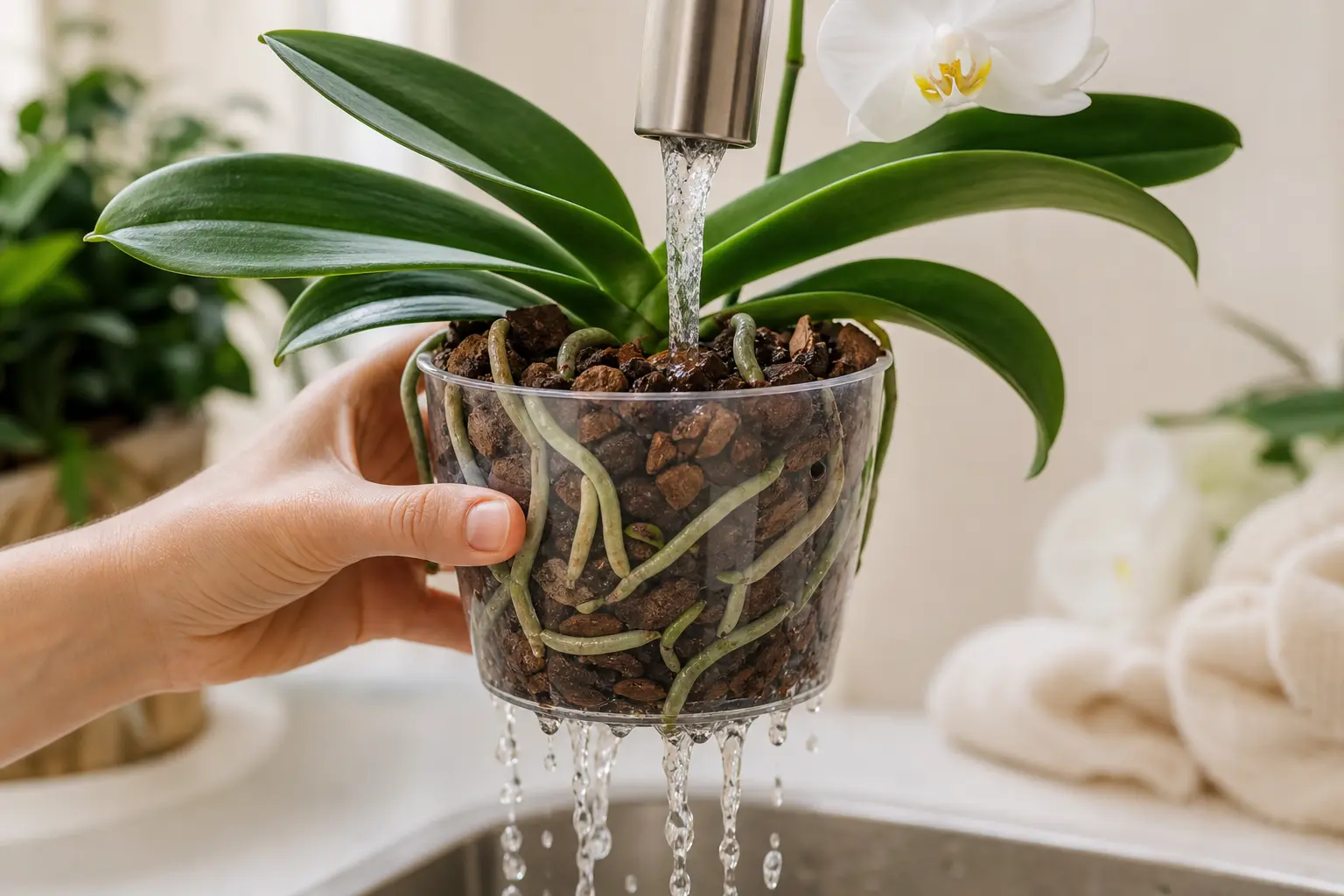
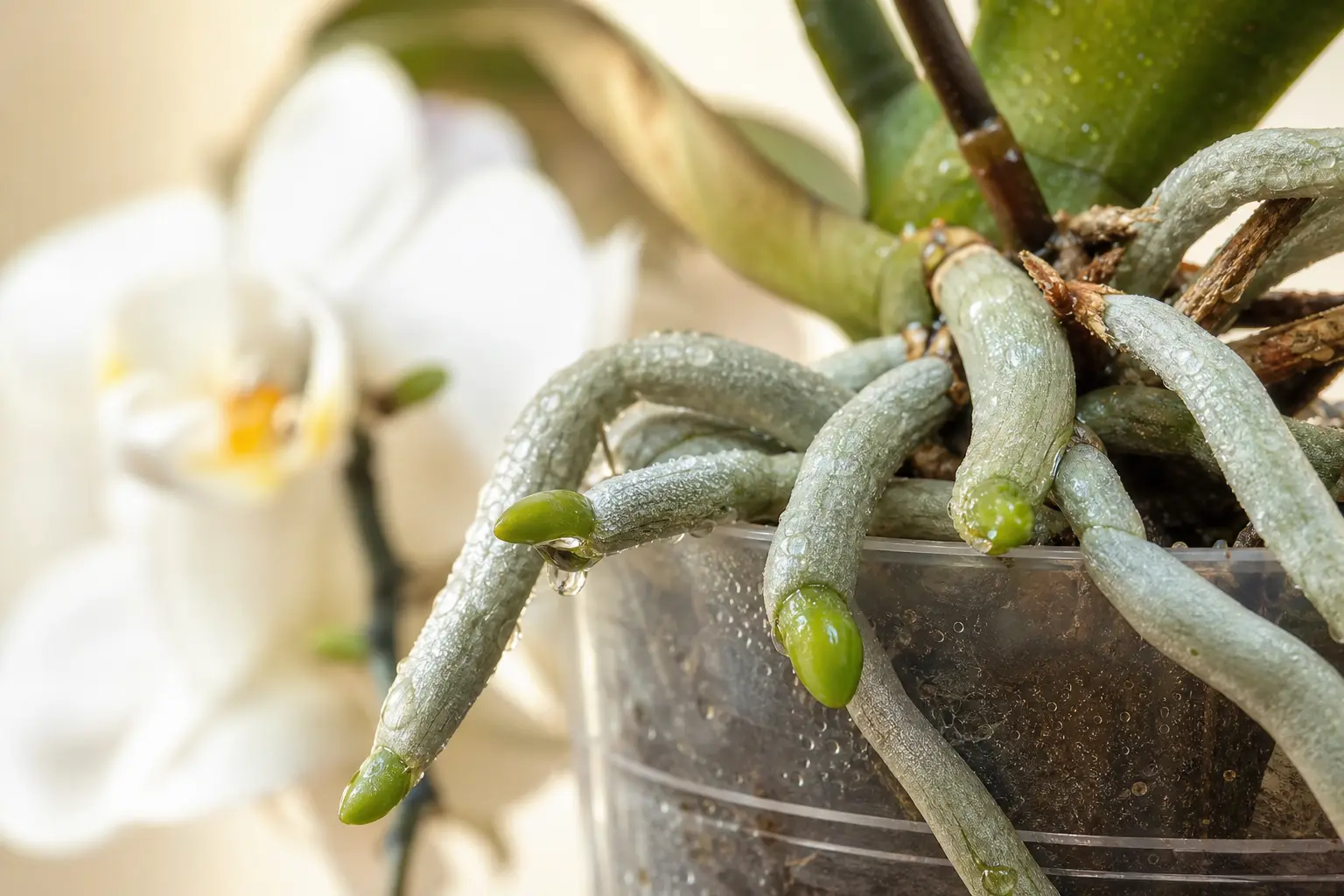
The golden rule: water the roots, not the crown, and never on a schedule - water when the roots tell you. In a clear pot (recommended), silvery-white roots mean it is time to water; plump green roots mean wait. Typically this works out to every 7–10 days in a bark mix, longer in winter.
The best method: take the grow pot to the sink and run lukewarm water through the bark for 15–30 seconds, letting it drain completely. Never let the pot sit in standing water - orchid roots rot in hours of saturation. If the bark has gone bone dry and pulls from the pot edges, a 10-minute soak rehydrates it.
Two classic killers to avoid: water sitting in the crown (the joint where leaves meet) causes crown rot - blot it dry with a paper towel immediately if it gets wet; and the famous "three ice cubes" ritual is better than overwatering but culturally odd for a tropical plant - room-temperature water mimics a warm rainstorm, which is what the plant evolved for.
Humidity
Moth orchids want 50–70% humidity - noticeably more than typical homes (30–45%), especially with winter heating. Signs the air is too dry: flower buds shriveling before opening ("bud blast") and slow, stunted new root growth.
A humidifier within a few feet is the most effective fix. A pebble tray half-filled with water (pot resting on pebbles, never in water) adds a few points, and grouping orchids together creates a helpful pocket of humid air. Kitchens and bright bathrooms are naturally good rooms for them.
Avoid misting the flowers - water pooling in the blooms invites botrytis spotting, and misting does little for ambient humidity anyway. If you run a humidifier, pair it with gentle air movement (a small fan on low across the room, not at the plant) so humid air does not stagnate and breed fungus.
Temperature
Keep phals between 65–85°F (18–29°C) - comfortably within normal home range. The crucial subtlety: a few weeks of cooler nights (down to 55–62°F) in autumn is what triggers a new flower spike. Without that day/night dip, many orchids grow lush leaves forever but never re-bloom.
Practical approach: in September or October, place the plant near a cool (but not cold-drafty) window for 3–4 weeks until a spike starts. Once the spike is a few inches long, return the plant to normal warmth. During spike and bud development, keep temperatures steady - moving a budding plant between rooms with different climates is a common cause of bud drop.
Never expose phals to frost or prolonged temperatures below 50°F (10°C). Keep them away from heating vents, air conditioners, and drafty doorways year-round.
Potting Mix (Not Soil)
Phalaenopsis are epiphytes - in the wild their roots cling to tree bark and breathe freely. Ordinary potting soil is the single fastest way to kill one: it stays wet, suffocates the roots, and rots them within weeks. Always use an orchid bark mix.
A standard blend: medium-grade fir bark, plus perlite and horticultural charcoal or sphagnum moss. Chunky bark-only mixes suit larger plants in brighter, drier homes; adding a little sphagnum helps in very dry conditions because it holds moisture a bit longer. Clear plastic grow pots inside a decorative cache pot are the practical standard - you can see root color (your watering signal) at a glance.
The mix breaks down into compacted chips after 1–2 years and holds water too long once it does - this, not calendar age, is the real reason to repot. Sniff test: sour, decomposed bark means it is time.
Fertilizer
Follow the orchid grower's mantra: "weekly, weakly." Feed with a balanced orchid fertilizer (like 20-20-20) diluted to quarter or half strength at most, weekly during spring through early fall. Once a month, water with plain water only to flush accumulated salts out of the bark.
A high-phosphorus "bloom booster" formula (such as 10-30-20) can be switched in during the autumn cooling period and early spike development to support flowering - though light and temperature management matter far more than any fertilizer for reblooming.
Stop or reduce feeding entirely through winter dormancy. Signs of over-fertilizing: leaf tips browning and a white or orange crust of salt on the bark surface and pot rim. Under-feeding is far safer than over-feeding - a starved orchid blooms fine, a burned one sulks for a season.
Repotting
Repot every 1–2 years, ideally right after the flowers drop (or in spring when new roots sprout from the base) so the plant regrows into fresh bark quickly. Other signals: the bark has decomposed into a sour mulch, roots are packed and circling, or the plant has climbed out of the pot.
Gently slide the plant out, discard all old bark, and inspect the roots: plump firm roots (green when wet, silvery when dry) stay; anything shriveled, mushy, or papery-thin gets trimmed off with sterilized scissors. Do not be alarmed at losing a third of the roots - phals regenerate readily.
Settle the plant into a pot that just fits the remaining root ball (orchids prefer being snug - over-potted orchids stay too wet), working bark around the roots and tapping to settle. If the plant is top-heavy, use a clip or stake. Wait 2–3 days before the first watering so cut root ends seal, then resume normal care.
Staking & Spike Care
A phalaenopsis flower spike grows toward the light and can become top-heavy with buds, so staking keeps the display elegant and prevents snaps. Insert a bamboo stake into the pot at spike emergence, and clip the spike to it every few inches as it elongates.
Direction matters: a spike trained vertically produces the classic arching cascade of blooms, while an untrained spike sprawls sideways. Train gently - young green spikes bend willingly, woody ones snap. Once buds form, leave the plant in one place; rotating it mid-development confuses the buds and contributes to drop.
After flowering, cut the spike 1 inch above the second node from the base - a healthy plant may re-branch from that node and bloom again in a few months. If the spike has turned brown and papery, cut it at the base entirely; the plant will rest and produce a fresh spike next season.
Our Experience
My orchid grew leaves for two years without a single spike until I learned about autumn cooling. Three weeks on a north windowsill in October with nights around 60°F, and it spiked for the first time - it has rebloomed every year since.
— Grown indoors in USDA Zone 7a, east window, October cooling period
Switching from decorative pots to clear plastic grow pots inside a cache pot changed everything - being able to see silver-versus-green roots took all the guesswork out of watering. My watering errors dropped to almost zero, and root rot became a thing of the past.
— Indoor collection, bright east window, bark mix, year-round
After blooms drop, I paste one node with keiki paste on my strongest plant each spring as an experiment. Two of four attempts gave babies - the trick is picking a plant that is growing vigorous new roots at the time, not one that just finished a heavy bloom.
— Home propagator, bright indirect light, sphagnum-bark mix
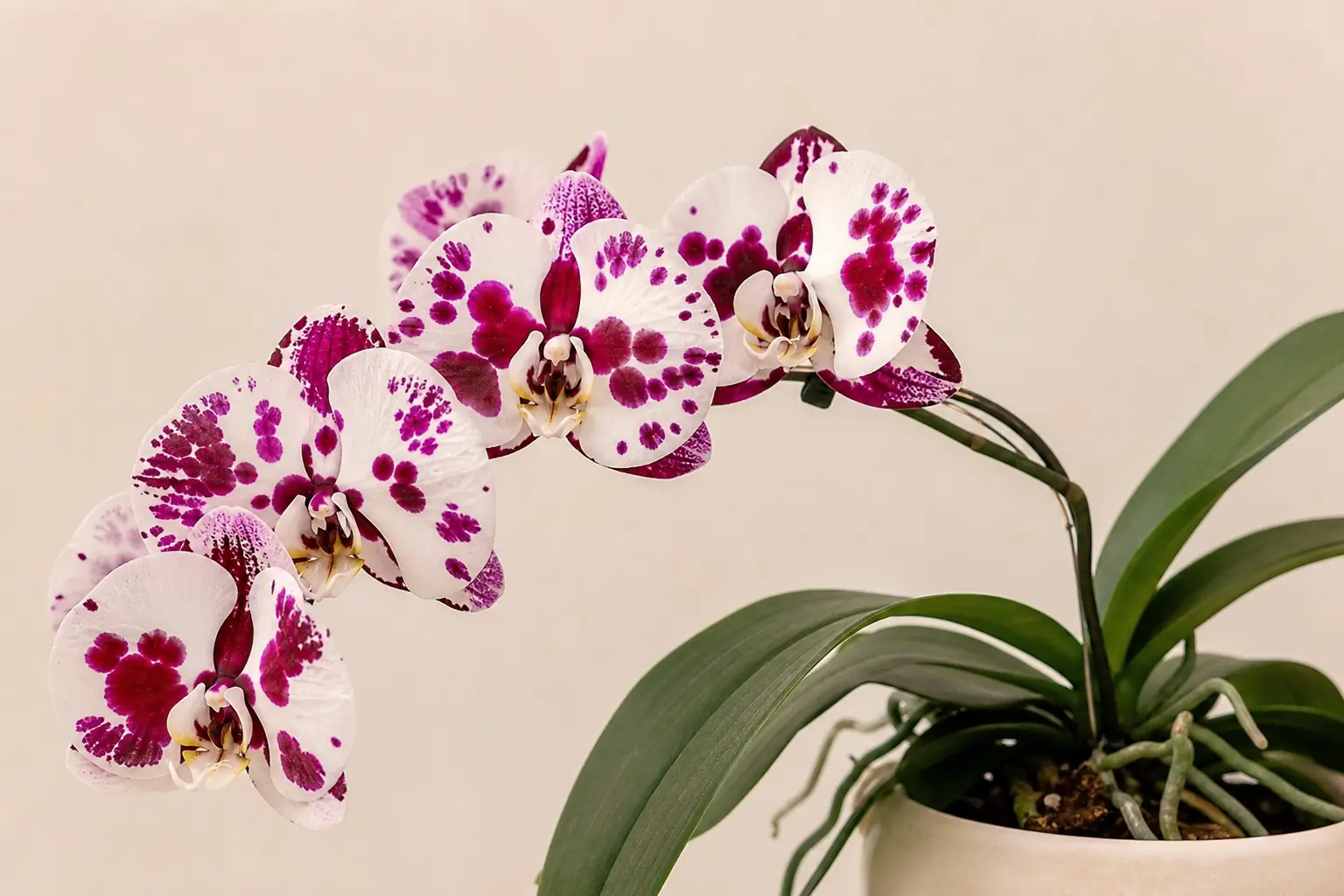 Harlequin
 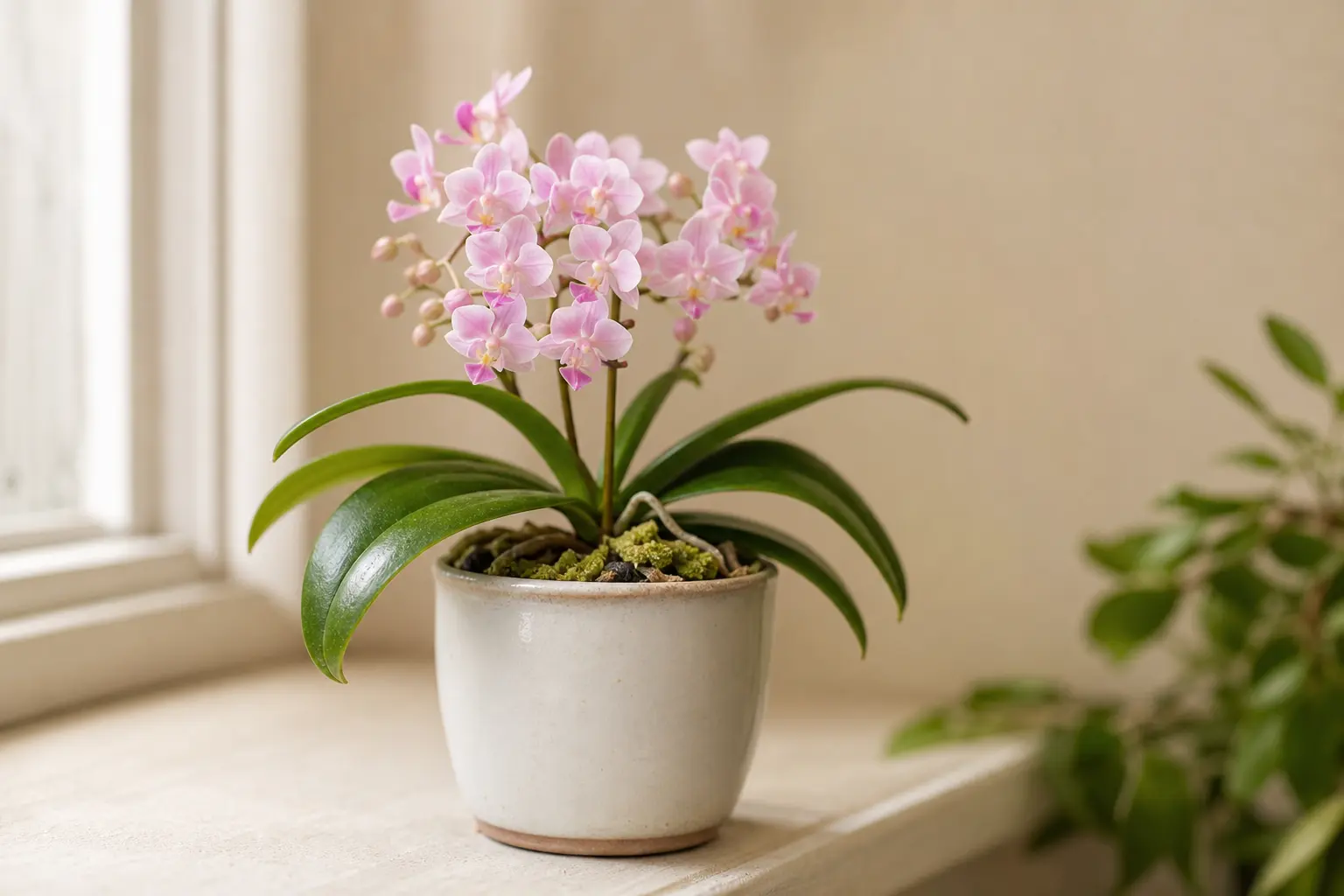 Miniature
 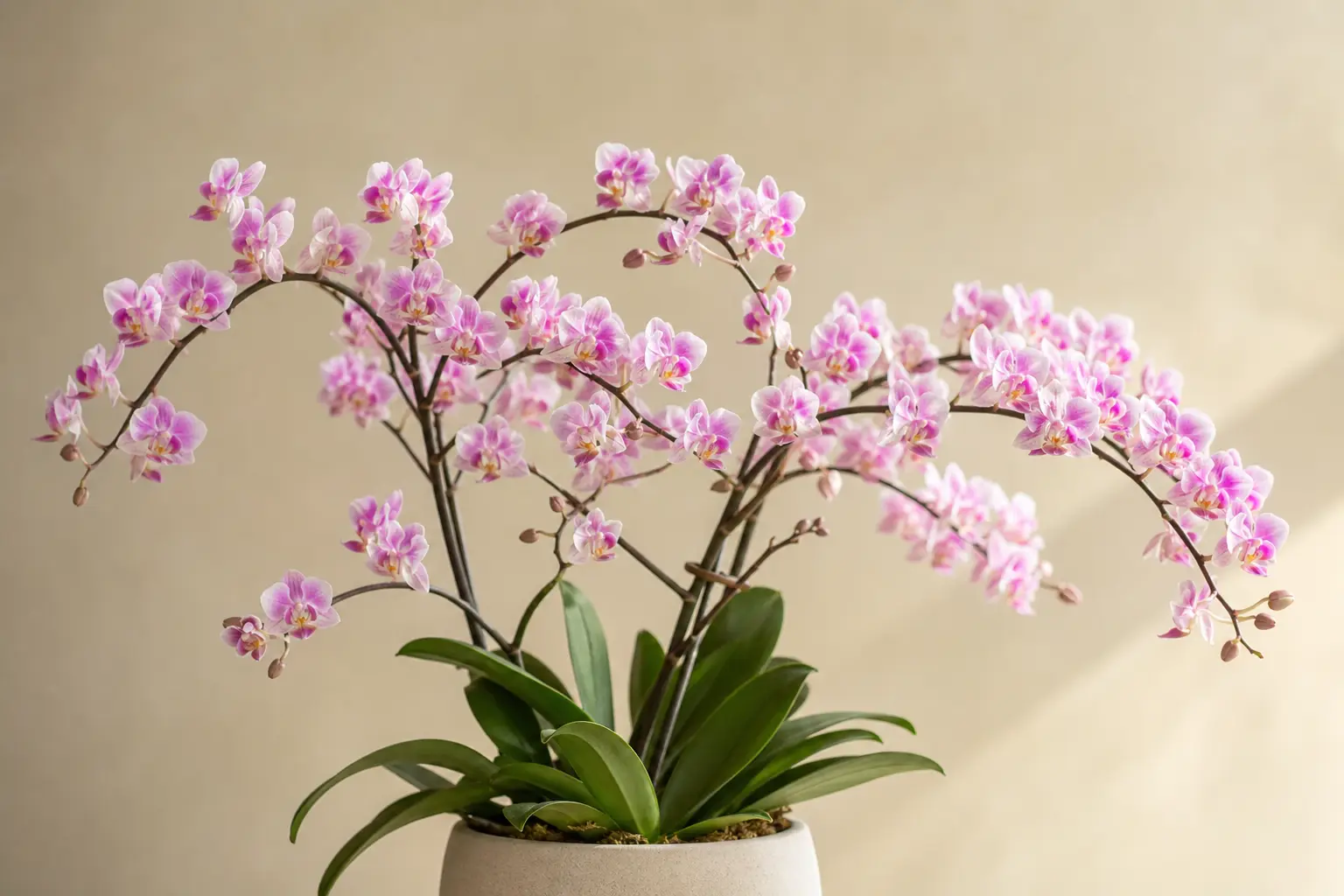 Multiflora
 Compare Varieties
Explore different cultivars side-by-side and find the best match for your space.
Browse all varieties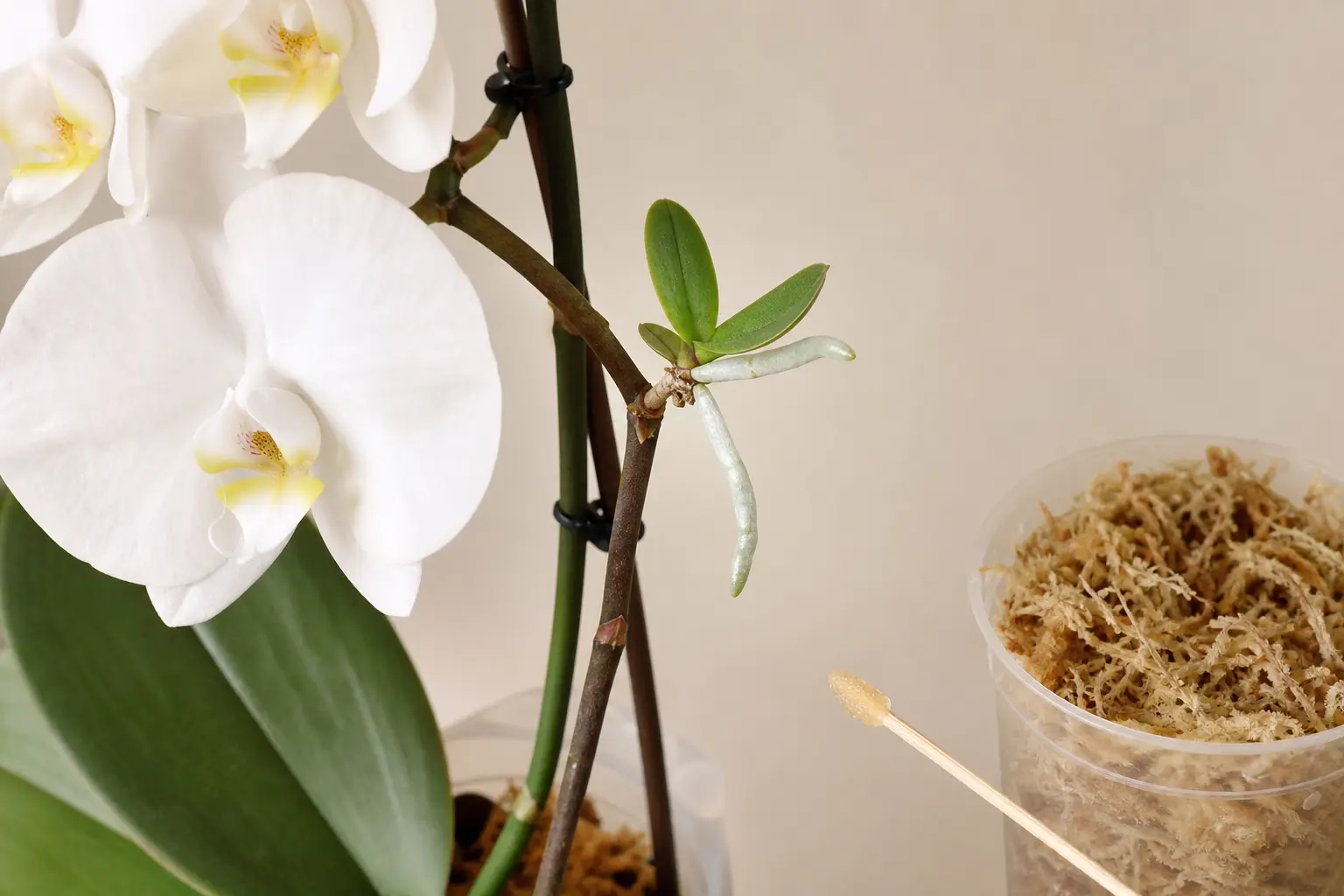
Propagation Guide
Step-by-step instructions for multiplying your plant collection.
Learn how to propagateFrequently Asked Questions
How do I get my orchid to bloom again?
How often should I water a phalaenopsis orchid?
Should I use ice cubes to water my orchid?
What do I do with the flower spike after the blooms fall off?
Why are my orchid's roots growing out of the pot?
Are phalaenopsis orchids safe for cats and dogs?
Why did my orchid's buds shrivel and drop before opening?
Why are my orchid leaves wrinkled and droopy?
When should I repot my moth orchid?
How long do phalaenopsis blooms last?
Common Problems
How to Fix an Overwatered Plant
Overwatering kills more houseplants than any other cause. The tricky part? The symptoms — yellowing, wilting, drooping — look just like underwatering. Here's how to tell the difference and fix it.
Read diagnosis guideWhy Are My Plant Leaves Turning Yellow?
Yellowing leaves are one of the most common houseplant problems. The good news is that most causes are easy to identify and fix once you know what to look for.
Read diagnosis guideReferences
- [1] American Orchid Society. Phalaenopsis Culture
- [2] ASPCA. Phalaenopsis spp. Toxicity (non-toxic)
- [3] Royal Horticultural Society. Phalaenopsis - orchid profile
- [4] Missouri Botanical Garden. Phalaenopsis (moth orchid) - Plant Finder
Similar Plants
Anthurium
Anthurium andraeanum

Peace Lily
Spathiphyllum wallisii
Hoya Carnosa
Hoya carnosa