
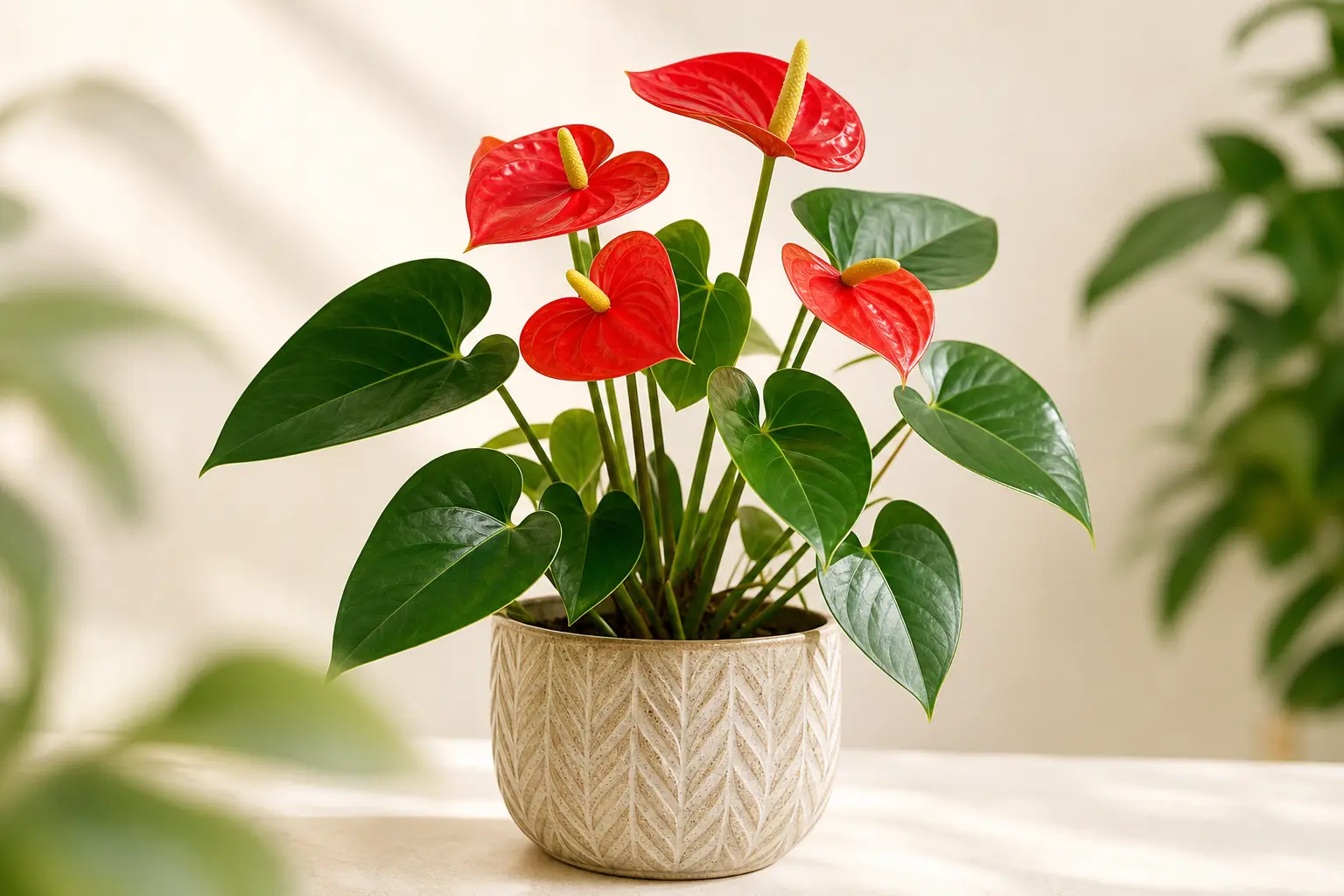
Anthurium
Anthurium andraeanum
Also known as: Flamingo Flower, Laceleaf, Tail Flower, Painter's Palette
Last updated: Sep 10, 2026
Bright indirect light
When top 2 inches of soil are dry
50–70%
65–80°F (18–27°C)
Well-draining orchid mix or chunky aroid mix
Monthly in spring/summer with balanced fertilizer
Beginner friendly
Toxic to pets
Toxic to Pets
All parts of the Anthurium plant contain calcium oxalate crystals that can cause oral irritation, excessive drooling, vomiting, and difficulty swallowing if ingested. The sap can also irritate skin and eyes. Keep away from pets and children, and wash hands after handling. Place in locations where curious pets cannot reach the leaves.
Source: ASPCA Toxic Plant List
Seasonal Care Calendar
| Season | Watering | Fertilizer | Notes |
|---|---|---|---|
| Spring | Every 5–7 days | Monthly feeding | Peak growing season. Resume active care. Best time to repot or divide. |
| Summer | Every 5–7 days | Monthly feeding | Strong growth and blooming. Keep out of direct sun. Maintain humidity. |
| Fall | Every 7–10 days | Reduce or stop | Growth slows. Bring any outdoor plants inside before frost. |
| Winter | Every 10–14 days | None or bi-monthly | Rest period. Let soil dry farther between waterings. Keep away from cold drafts. |
Detailed Care Guide
Everything you need to know to keep your Anthurium thriving.
Light Requirements
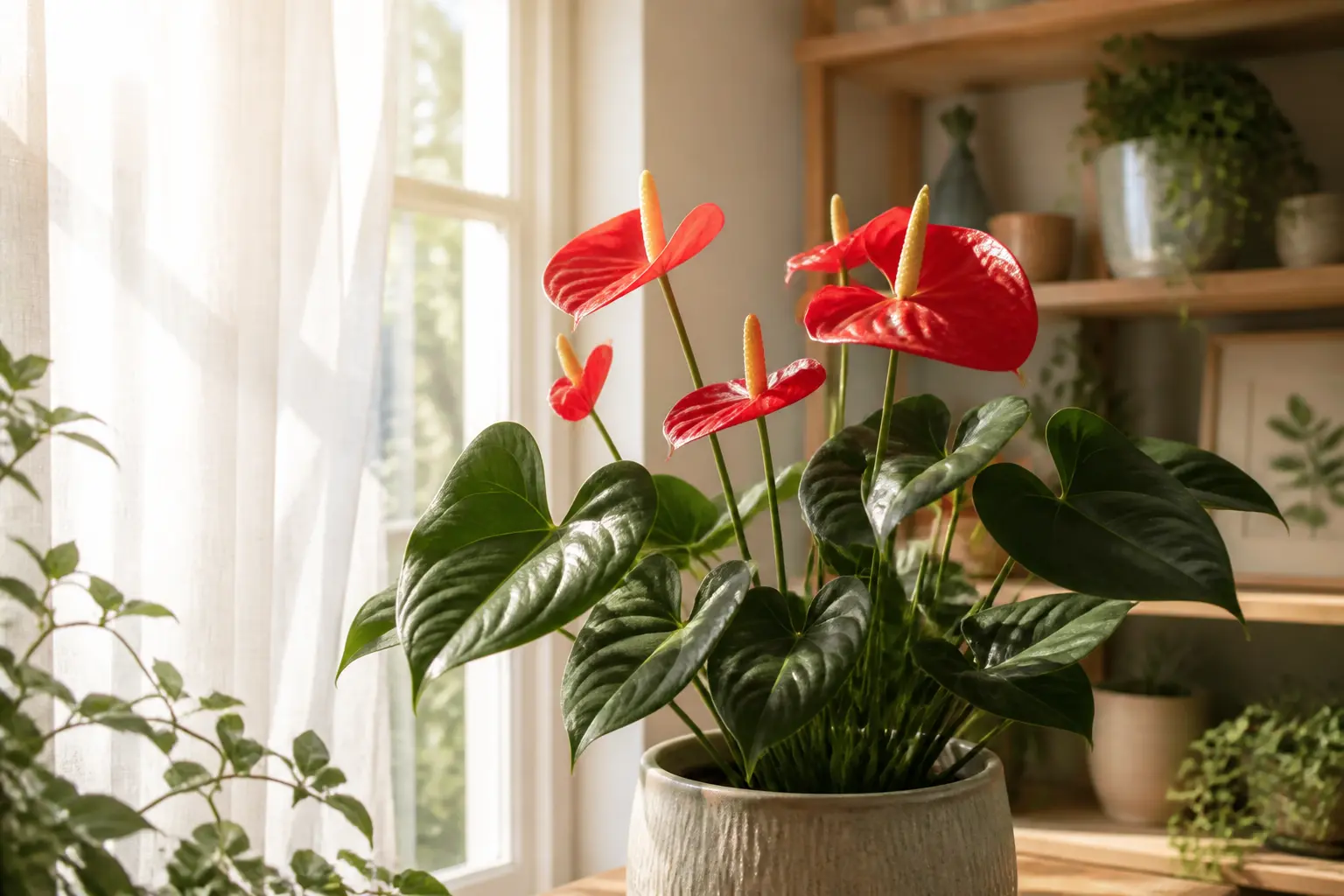
Anthurium thrives in bright indirect light, which is essential for both healthy foliage and consistent blooming. In its native rainforest habitat, this plant grows under the forest canopy, receiving filtered light through the leaves. Mimicking these conditions indoors produces the best results. An east-facing window with gentle morning sun is ideal, or a spot several feet from a south or west-facing window where the plant receives plenty of bright light but no direct sun.
Direct sunlight will scorch the leaves, causing brown crispy patches or faded, bleached areas. However, too little light results in leggy growth with long gaps between leaves, and the plant may stop producing its signature colorful spathes. If your Anthurium is not blooming, light is usually the culprit—insufficient light means the plant does not have enough energy to produce flowers. A north-facing window can work, but blooming may be reduced.
The plant can tolerate lower light levels and will survive, but it will grow more slowly and produce fewer flowers. If you notice the leaves becoming unusually dark green (a sign of low light) or the stems stretching excessively, move the plant to a brighter location. Rotate the pot every few weeks to ensure even growth on all sides.
Watering
Water Anthurium when the top 2 inches of soil feel dry to the touch. In typical indoor conditions, this means watering approximately once a week during the growing season (spring and summer) and every 10–14 days during fall and winter. The exact frequency depends on your home temperature, humidity, light levels, and pot type—always check the soil before watering rather than following a fixed schedule.
When watering, thoroughly soak the soil until water drains from the bottom of the pot, then empty the saucer completely. Anthurium roots are prone to rot in soggy soil, so it is crucial that the pot drains well and never sits in standing water. The plant prefers to dry out slightly between waterings but should not be allowed to wilt severely.
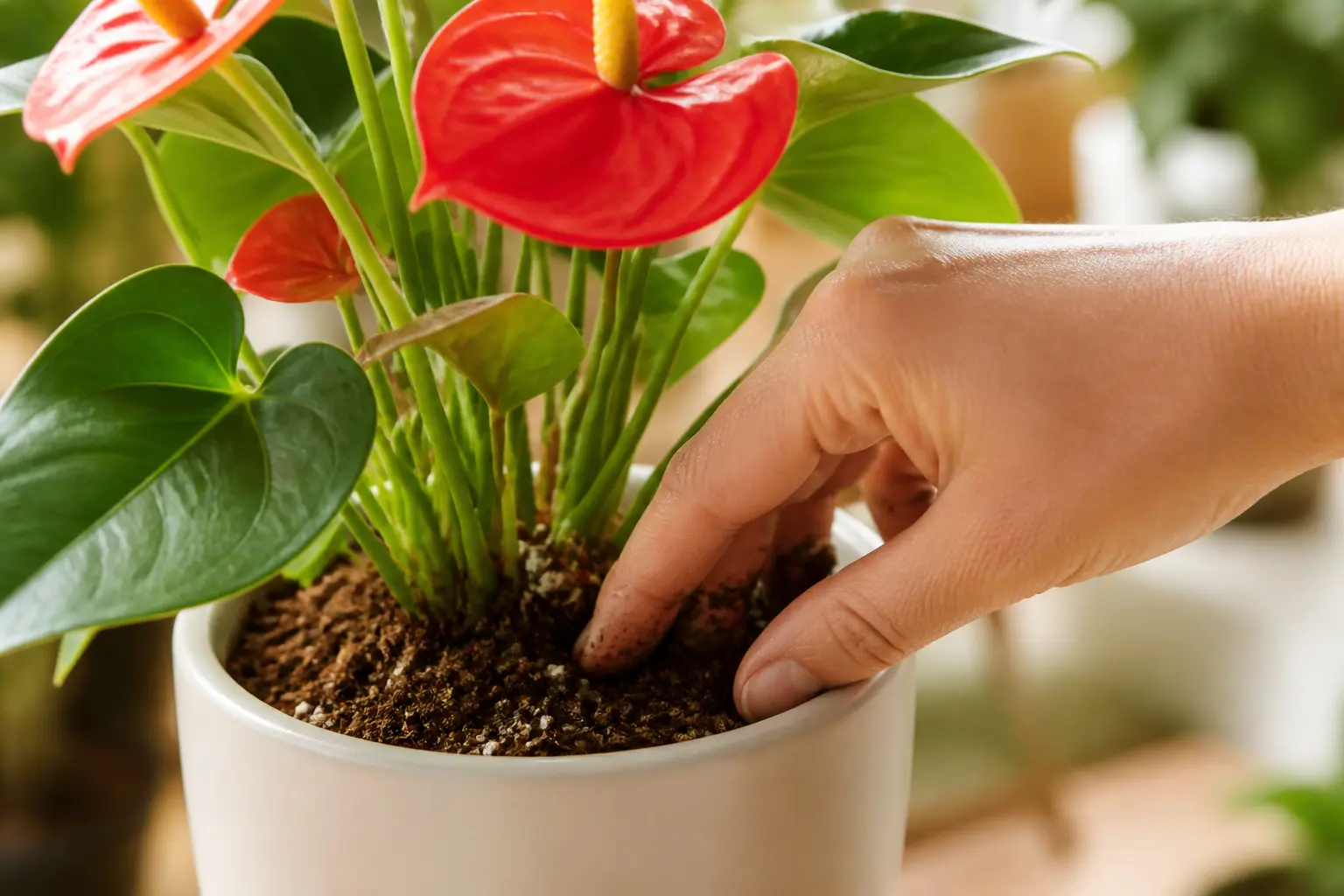
The best approach is to water thoroughly, then let the top few inches of soil dry before watering again. Insert your finger into the soil up to the second knuckle—if it feels dry, it is time to water. If it still feels moist, wait a few more days. Yellowing leaves, especially multiple leaves at once, often indicate overwatering. Wilting leaves can indicate both overwatering (root rot) or underwatering, so check the soil moisture to determine which issue you are dealing with.
Humidity
Anthurium comes from humid tropical rainforests and appreciates humidity levels of 50–70%. While it can tolerate average household humidity (40%), higher humidity promotes larger leaves, more vibrant colors, and more frequent blooming. Most homes can accommodate Anthurium without supplemental humidity, but dry environments—particularly in winter with heating or in air-conditioned offices—may cause the leaf edges to turn brown and crispy.
Simple methods to increase humidity include placing the pot on a pebble tray filled with water (ensuring the pot sits on the pebbles, not in the water), grouping the plant with other houseplants to create a microclimate, or running a humidifier nearby. Misting the leaves can help but is not a substitute for consistent ambient humidity—water sitting on the leaves for extended periods can encourage fungal problems.
Good airflow is important to prevent fungal issues. Avoid placing Anthurium in stagnant corners, and ensure the area is not completely enclosed. A bathroom with good light can be an excellent location for Anthurium, as the steam from showers naturally increases humidity. If leaf tips turn brown despite adequate watering, low humidity is likely the cause.
Temperature
Anthurium prefers indoor temperatures between 65–80°F (18–27°C), matching typical home and office environments. It thrives in warmth and does best in the warmer end of this range. The plant is not frost-tolerant and should be kept away from cold drafts, exterior doors, air-conditioning vents, and windows that become cold in winter.
Temperature consistency matters more than exact numbers. Avoid placing Anthurium where temperatures fluctuate dramatically, such as near frequently opened doors, heating vents, or drafty windows. Sudden drops in temperature can cause the plant to drop leaves or stop blooming. In winter, ensure the plant is not touching cold glass and move it away from windows if temperatures drop significantly overnight.
Cooler temperatures (60–65°F) in winter can actually encourage blooming by mimicking the plant's natural rest period, but do not let temperatures fall below 55°F (13°C). If your home is cool in winter, consider placing the plant in the warmest room. A consistent, warm environment with good light yields the most flowers.
Soil
Anthurium requires a well-draining, chunky potting mix that mimics its epiphytic nature in the wild, where it grows on trees rather than in soil. Standard potting soil is too dense and holds too much moisture, leading to root rot. The ideal mix is loose, airy, and fast-draining while still retaining some moisture.
A excellent commercial option is a high-quality orchid mix, which typically contains fir bark, perlite, and charcoal—perfect for Anthurium roots. Alternatively, create your own mix: 1 part potting soil, 1 part orchid bark or coarse charcoal, and 1 part perlite or pumice. Some growers also add sphagnum moss for additional moisture retention. The key is large air pockets that allow the roots to breathe.
Always use a pot with drainage holes. Terra cotta pots are excellent because they wick away excess moisture and help the soil dry faster—helpful if you tend to overwater. Plastic pots retain moisture longer, which works well in brighter, warmer locations. If the potting mix stays wet for more than a week after watering, add more perlite or switch to a chunkier mix.
Fertilizer
Feed Anthurium with a balanced liquid fertilizer diluted to half strength once a month during the growing season (spring and summer). This regular feeding supports both foliage growth and the production of its colorful spathes. In fall and winter, reduce feeding to every 6–8 weeks or stop altogether, as the plant's growth naturally slows during these months.
Over-fertilizing is more common than under-fertilizing with Anthurium. Signs of excess fertilizer include brown leaf tips, white crust on the soil surface or pot rim, and stunted or deformed new growth. If you notice these signs, flush the soil thoroughly with plain water to leach out accumulated salts, and reduce future feeding. Always apply fertilizer to damp soil—never to dry soil, as fertilizer on dry roots can cause chemical burn.
For best blooming, some growers switch to a bloom-boosting fertilizer with slightly higher phosphorus (such as 10-30-10) during the summer months, though this is optional. A slow-release granular fertilizer applied once in spring is an alternative for those who prefer less frequent feeding. Remember: it is easier to under-fertilize than over-fertilize this adaptable plant.
Repotting
Repot Anthurium every 2–3 years, or when you see roots emerging from the drainage holes or growth has noticeably slowed despite proper care. Spring or early summer is the best time to repot, as the plant can recover and establish in its new container during the active growing season. However, Anthurium actually prefers to be slightly root-bound and will often bloom more profusely in a snug pot, so do not rush to repot unless necessary.
Choose a new pot only 1–2 inches wider than the current one. A pot that is too large holds excess wet soil around the roots, increasing the risk of root rot. Gently remove the plant from its current pot, inspect the root ball, and trim any soft, mushy, or dark roots with clean scissors. Place fresh, well-draining potting mix in the new pot, position the plant at the same depth as before, and water thoroughly.
After repotting, place the plant in its usual spot with bright indirect light. Do not fertilize for 4–6 weeks to allow the roots to settle and recover. Some leaf drop or yellowing is normal after repotting due to transplant shock—this is temporary and the plant will rebound. If the plant is severely root-bound with a tight mass of roots, you can gently loosen the outer roots before placing in the new pot.
Blooming Tips
Anthurium is prized for its long-lasting colorful spathes that can bloom intermittently throughout the year with proper care. Each spathe (the heart-shaped "flower") can last 6–8 weeks or longer, making Anthurium an excellent flowering houseplant. The actual flowers are the tiny bumps on the spadix (the central column)—the colorful spathe is a modified leaf that attracts pollinators.
The key to getting Anthurium to bloom is adequate light. Plants in low light may produce leaves but no flowers. Move your Anthurium to a brighter location with indirect light, and you should see flower production increase within a few months. Mature plants (2+ years old) bloom more readily than young plants, so patience is key for newly potted Anthuriums.
Consistent care also matters: keep the plant slightly root-bound, maintain temperatures above 65°F, and do not overwater. Removing spent spathes by cutting the stem at the base encourages the plant to redirect energy into producing new flowers. With the right conditions, Anthurium can bloom almost year-round, with peak blooming typically in spring and summer.
Our Experience
My Anthurium only started blooming consistently after I moved it from a shelf 6 feet from a north window to directly in front of an east-facing window. The increase in bright indirect light made all the difference within 2 months.
— North-facing apartment, moved to east window, significant bloom increase
I water my Anthurium with ice cubes—six cubes once a week in summer. This method keeps the soil evenly moist without overwatering, and the gradual cold release mimics a slow, gentle rainforest watering.
— Ice cube watering method, east-facing window, consistent weekly schedule
I use orchid mix for my Anthurium instead of regular potting soil. The chunky bark mix drains faster and keeps the roots aerated—the plant's epiphytic nature means it hates "wet feet." The difference in root health was dramatic.
— Switched to orchid bark mix, terracotta pot, improved root health and reduced yellow leaves
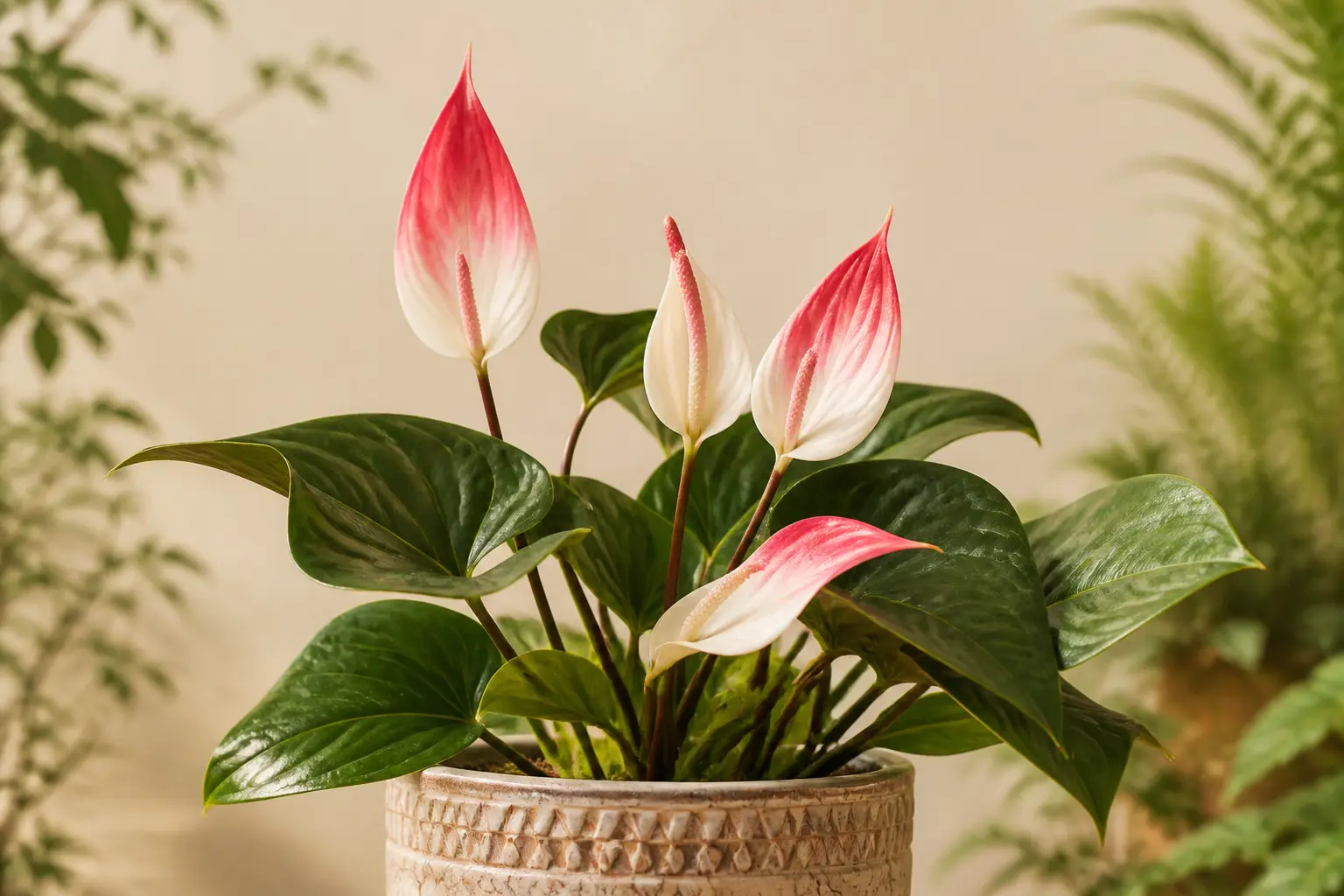 Obake
Obake 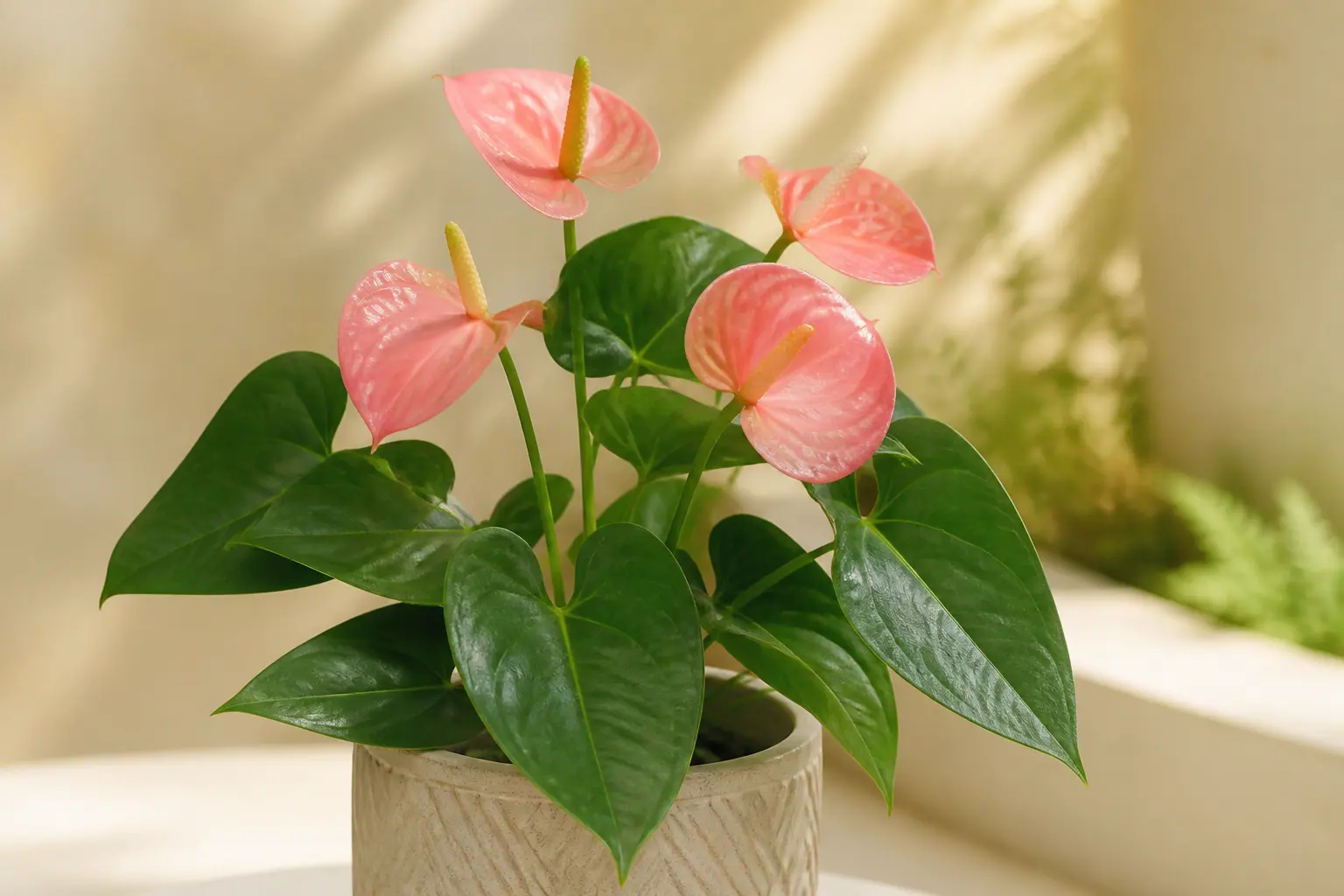 Pink
Pink 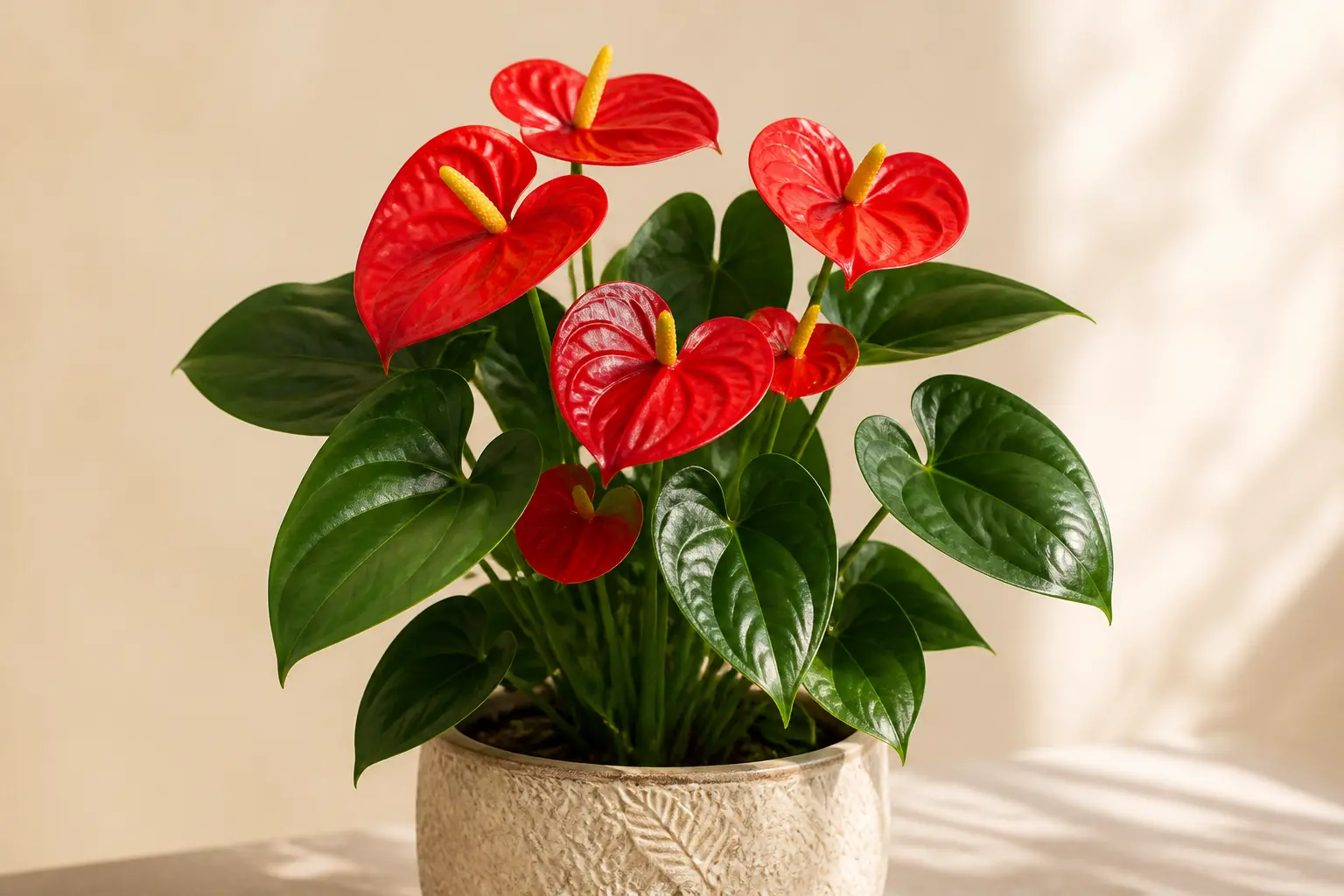 Red
Red Compare Varieties
Explore different cultivars side-by-side and find the best match for your space.
Browse all varieties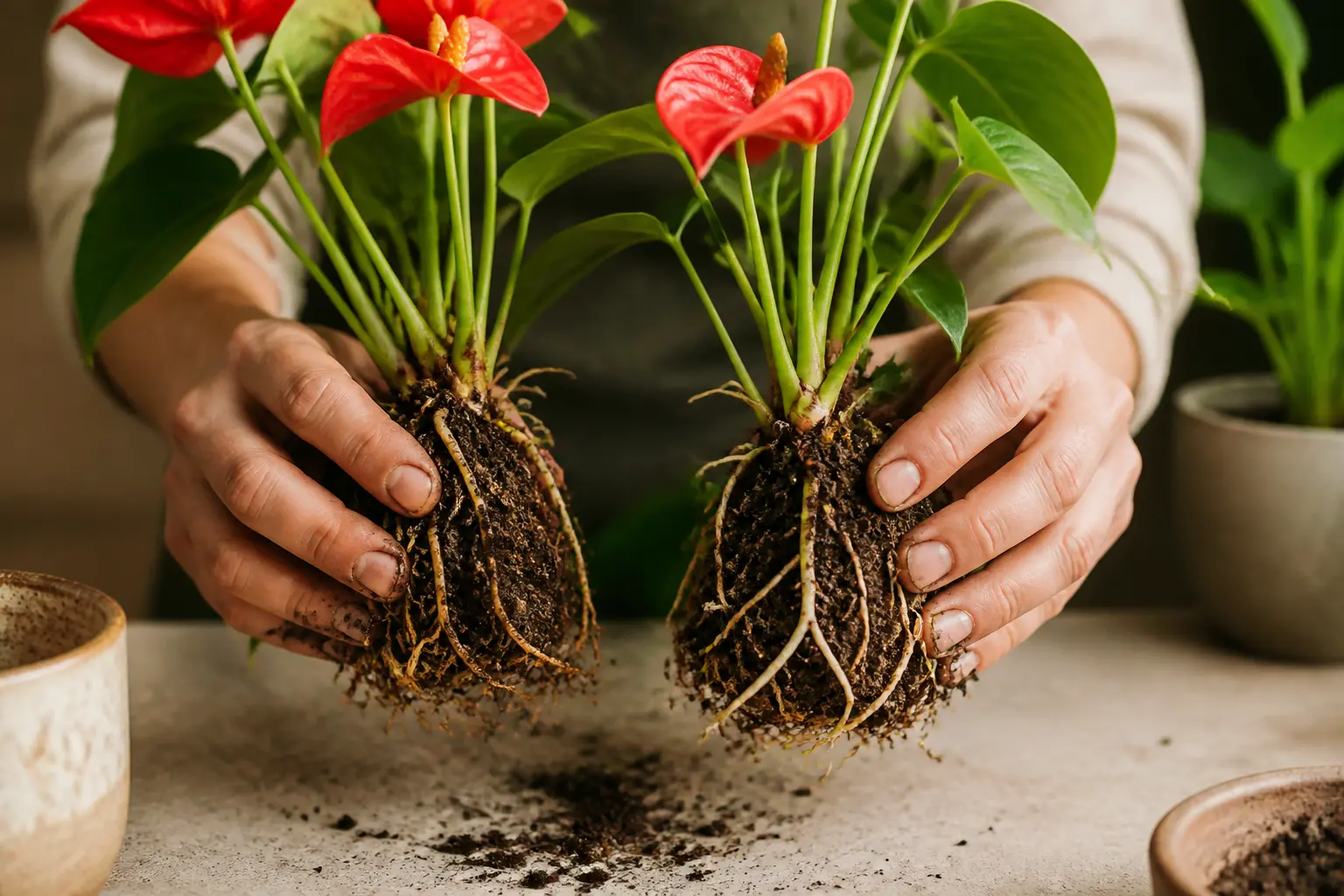
Propagation Guide
Step-by-step instructions for multiplying your plant collection.
Learn how to propagateFrequently Asked Questions
How often should I water Anthurium?
Why is my Anthurium not blooming?
Why are my Anthurium leaves turning yellow?
Is Anthurium safe for pets?
How do I get my Anthurium to produce more flowers?
What soil is best for Anthurium?
Common Problems
Why Are My Plant Leaves Turning Yellow?
Yellowing leaves are one of the most common houseplant problems. The good news is that most causes are easy to identify and fix once you know what to look for.
Read diagnosis guideHow to Fix an Overwatered Plant
Overwatering kills more houseplants than any other cause. The tricky part? The symptoms — yellowing, wilting, drooping — look just like underwatering. Here's how to tell the difference and fix it.
Read diagnosis guideReferences
- [1] Missouri Botanical Garden. Anthurium Plant Finder
- [2] ASPCA. Flamingo Flower Toxicity
- [3] Royal Horticultural Society. Anthurium Growing Guide
Similar Plants

Peace Lily
Spathiphyllum wallisii
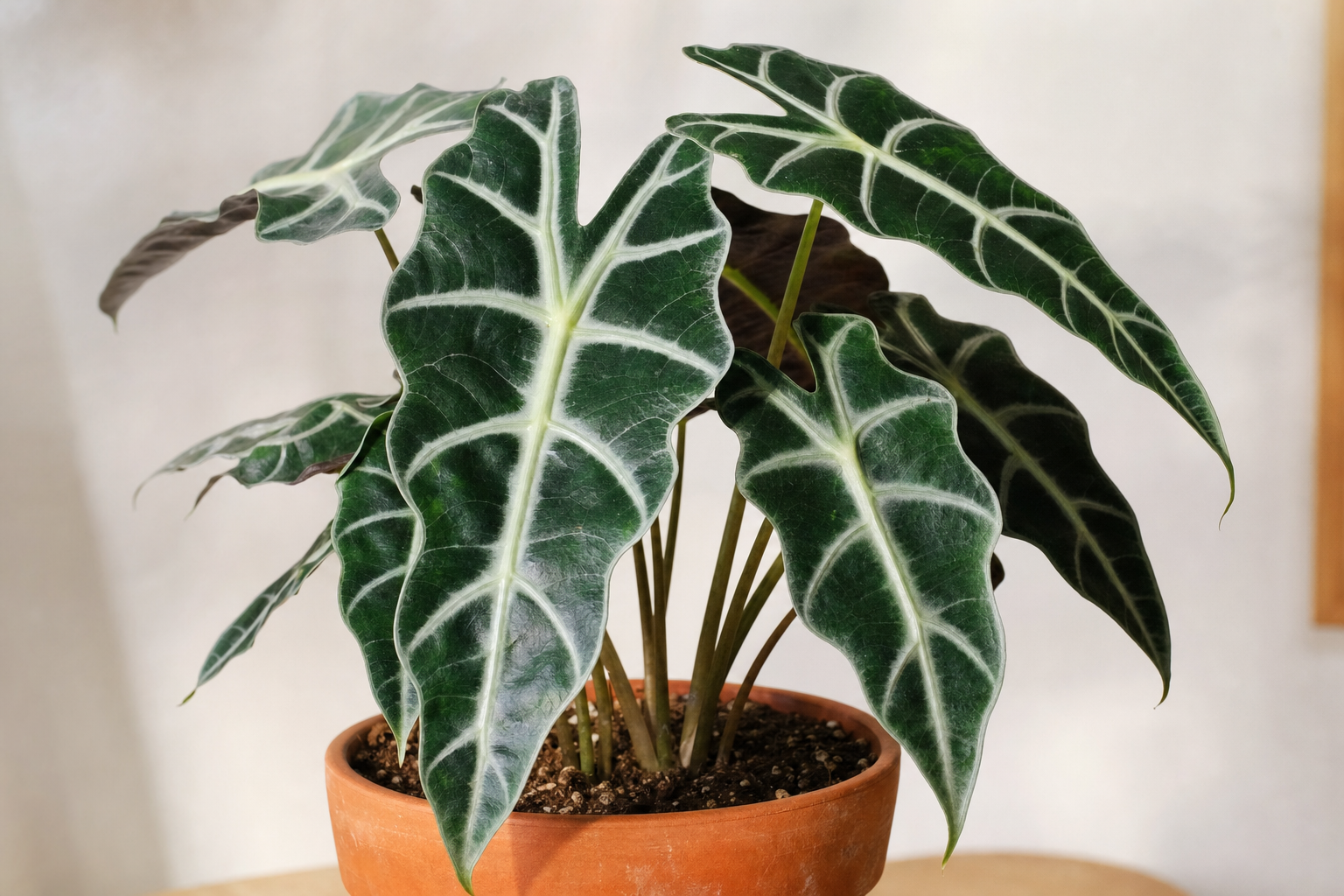
Alocasia Polly
Alocasia amazonica "Polly"

Philodendron
Philodendron hederaceum

Dumb Cane
Dieffenbachia