

Bird of Paradise
Strelitzia reginae
Also known as: Crane Flower, Orange Bird of Paradise, Strelitzia
Last updated: Sep 10, 2026
Bright indirect to some direct light
When top 1–2 inches of soil are dry
50–60%
65–80°F (18–27°C)
Well-draining potting mix with perlite and bark
Balanced liquid fertilizer, monthly in spring/summer
Intermediate
Toxic to pets
Toxic to Pets
Contains mild toxins that can cause nausea, vomiting, and drowsiness if ingested according to the ASPCA. The flowers and seeds are the most toxic parts. Keep away from pets and small children.
Source: ASPCA Toxic Plant List
Seasonal Care Calendar
| Season | Watering | Fertilizer | Notes |
|---|---|---|---|
| Spring | Every 7–10 days | Start monthly feeding | Begin repotting if needed. Resume regular watering. Best time to propagate by division. |
| Summer | Every 7–10 days | Monthly feeding | Active growth. Can move outdoors. Wipe leaves to remove dust. Watch for spider mites. |
| Fall | Every 10–14 days | Reduce to every 6 weeks | Growth slows. Reduce watering. Stop fertilizing by late fall. |
| Winter | Every 14–21 days | None | Resting period. Keep away from cold drafts and heating vents. Allow soil to dry more between waterings. |
Detailed Care Guide
Everything you need to know to keep your Bird of Paradise thriving.
Light Requirements
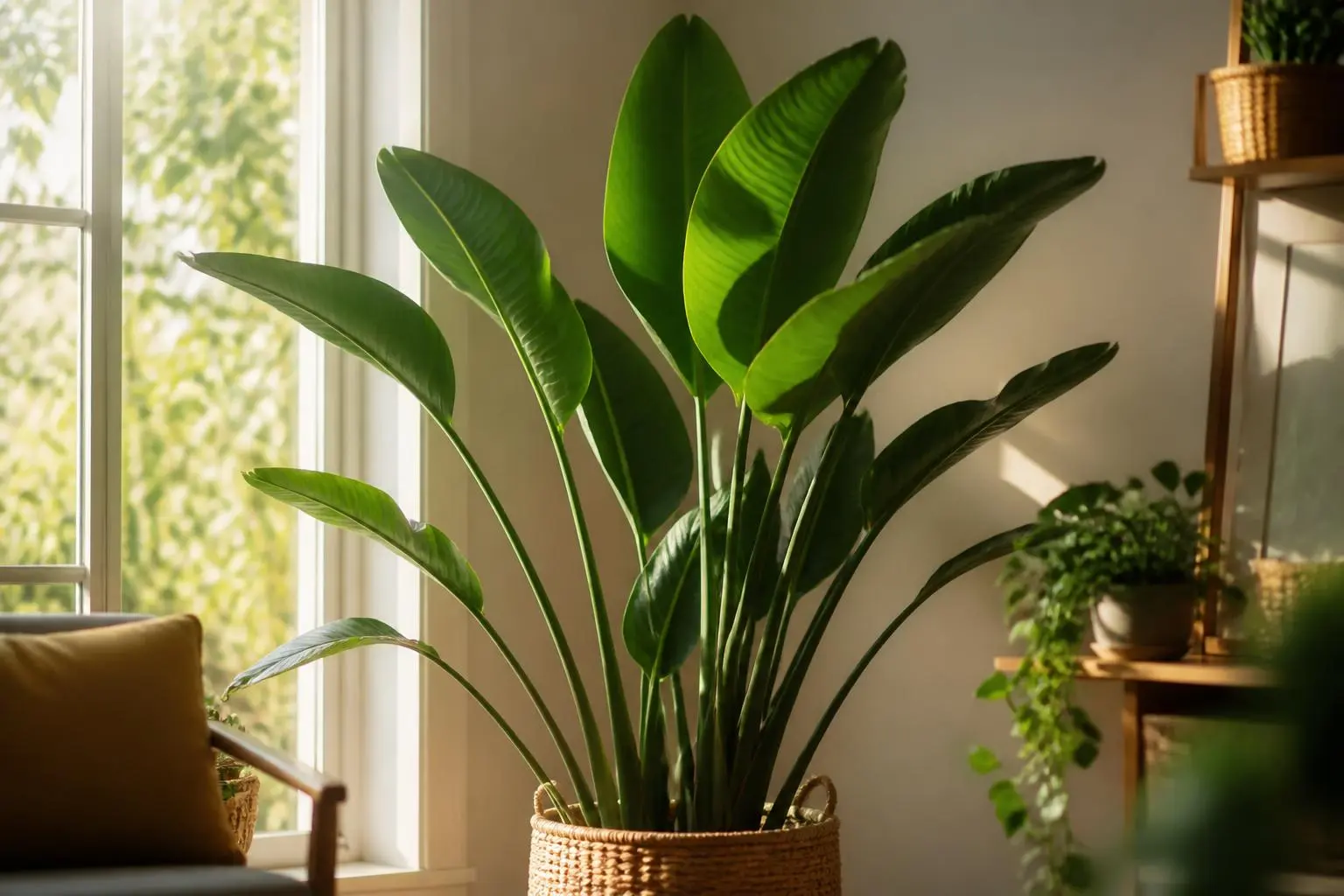
Bird of Paradise needs abundant bright light — it's one of the most light-hungry houseplants. Aim for at least 6 hours of bright indirect light daily, with some direct morning or late afternoon sun. A south- or west-facing window is ideal. The more light it receives, the healthier the growth and the better the chance of flowering.
In low light, the plant grows slowly, leaves remain small, and it will never flower. The dramatic, architectural form that makes Bird of Paradise desirable requires bright light to develop. If you don't have a bright enough spot, consider supplementing with a grow light.
Unlike most houseplants, Bird of Paradise actually benefits from a few hours of direct sun, especially morning sun. Acclimate the plant gradually if moving it from indoors to a sunnier spot to prevent leaf scorch. Outdoor-grown specimens in bright light develop thicker, sturdier leaves with more pronounced blue-green coloring.
Watering
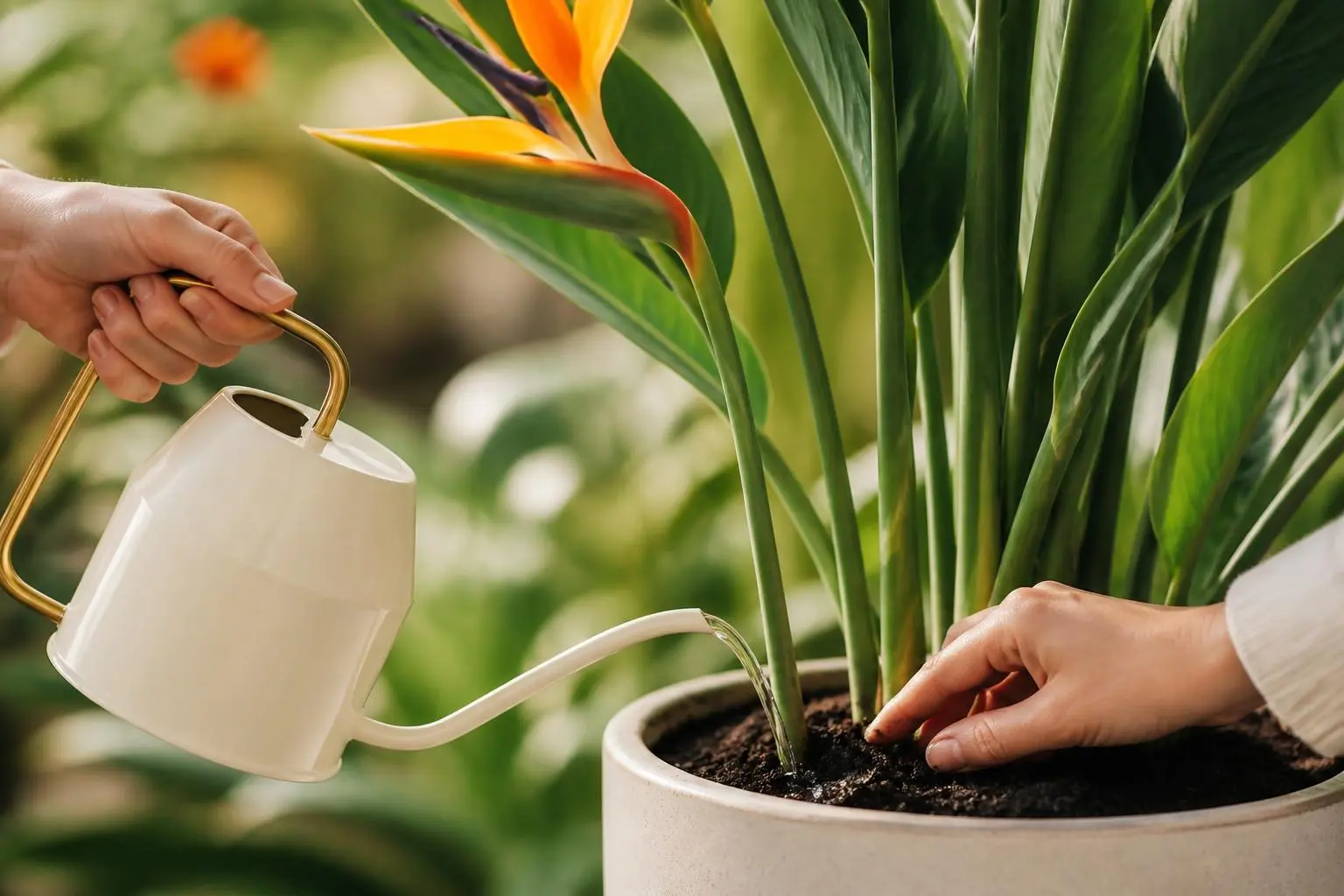
Water your Bird of Paradise when the top 1–2 inches of soil feel dry — typically every 7–10 days in spring/summer and every 14–21 days in fall/winter. They prefer consistent moisture during the growing season but don't tolerate soggy soil.
During active growth (spring through early fall), keep the soil evenly moist but not waterlogged. Water thoroughly until it runs from the drainage holes, then empty the saucer. In winter, allow the soil to dry out more between waterings as growth slows.
Bird of Paradise is somewhat forgiving of inconsistent watering — underwatering causes leaf curling and slow growth, while overwatering causes yellowing and root rot. If you notice the leaves curling inward along the edges, the plant is thirsty and needs water soon.
Use room-temperature water. These plants are generally less sensitive to tap water chemicals than Calathea or Spider Plants, but filtered water is still preferred.
Humidity
Bird of Paradise prefers moderate humidity (50–60%) but tolerates average home humidity (30–50%) reasonably well. This is one area where they're more forgiving than many tropical plants.
In very dry conditions, leaf edges may become crispy and brown, and the leaves are more prone to splitting. A humidifier nearby or a pebble tray can help. Misting provides only temporary relief and isn't particularly effective for a plant this size.
The large leaves tend to collect dust, which can interfere with photosynthesis and transpiration. Wipe them with a damp cloth every 2–3 weeks, supporting the leaf from underneath to avoid cracking. Clean leaves also look much more impressive — the glossy, blue-green sheen is part of the plant's appeal.
Temperature
Bird of Paradise prefers warm temperatures between 65–80°F (18–27°C). It can tolerate brief dips to 50°F (10°C) but will suffer damage below that, especially if the cold lasts more than a few hours. Freezing temperatures are fatal.
These plants enjoy warm, stable conditions. Avoid cold drafts from air conditioning vents, exterior doors in winter, and cold windowsills. Also avoid placing near heating vents — the dry, hot air causes leaf tip browning.
Bird of Paradise benefits from spending summers outdoors in a warm, sheltered spot with morning sun and afternoon shade. Bring it back inside when nighttime temperatures drop below 55°F. Outdoors, they're hardy in USDA zones 10–12.
Soil
Bird of Paradise needs a well-draining potting mix that retains some moisture without becoming waterlogged. A chunky, aerated mix works best for the thick, fleshy roots.
Recommended mix: 2 parts potting soil + 1 part perlite + 1 part orchid bark. The bark and perlite provide excellent drainage and aeration, while the potting soil retains enough moisture for the plant's needs. The pH should be slightly acidic to neutral (5.5–7.0).
Avoid dense, heavy potting mixes that hold too much water — the roots need oxygen as much as moisture. Also avoid pure cactus soil, which drains too quickly for a plant that likes consistent moisture during the growing season.
Fertilizer
Feed your Bird of Paradise with a balanced liquid fertilizer (NPK 10-10-10 or 20-20-20) diluted to half strength, applied once a month during spring and summer. For plants you want to flower, switch to a bloom-boosting fertilizer (higher phosphorus) in early spring.
Bird of Paradise are moderate feeders. Over-fertilizing causes salt buildup that burns leaf tips, while under-fertilizing results in slow growth and pale leaves. A monthly feeding schedule during the growing season strikes the right balance.
Stop fertilizing from late fall through winter when growth naturally slows. Resume when new growth appears in spring. Organic options like worm castings or fish emulsion work well for a gentler approach.
Repotting
Repot your Bird of Paradise every 2–3 years, or when roots are visibly growing out of the drainage holes and the plant is becoming unstable. These plants actually bloom more readily when slightly root-bound, so don't rush to upsize.
Choose a pot 2–3 inches larger in diameter. Bird of Paradise are top-heavy, so use a heavy ceramic or terracotta pot for stability. Always ensure drainage holes. Spring is the best time to repot.
To repot: water the plant a day before for easier removal. Bird of Paradise roots are thick and fleshy — handle them carefully. Gently loosen the root ball and trim any dead roots. Place in the new pot with fresh soil at the same depth, water thoroughly, and keep in a slightly shadier spot for a week.
For large, mature plants that are difficult to repot, top-dress instead: remove the top 2–3 inches of soil and replace with fresh potting mix and a layer of worm castings.
Our Experience
My Bird of Paradise was splitting every new leaf, and I thought it was a problem until I learned it's completely normal — especially indoors where fans and air currents cause the leaves to flex. The splits actually help the plant survive strong winds in nature. If you want fewer splits, keep it away from air vents and high-traffic areas.
— Indoor living room, near ceiling fan, year-round
After three years of no flowers, I moved my Bird of Paradise right up against a south-facing window where it gets 6+ hours of direct sunlight, and I started using a bloom-boosting fertilizer in early spring. It finally produced a flower the following year. Light is absolutely the key to flowering.
— South-facing window, bright direct light, spring blooming
I clean the leaves of my Bird of Paradise every two weeks with a damp microfiber cloth, supporting the leaf from underneath with my other hand. The leaves are surprisingly fragile and can crack if you push too hard. The clean leaves look incredible — that glossy blue-green sheen is the whole point of the plant.
— Indoor maintenance, year-round
 Juncea
  Mandelas Gold
  Nicolai
 Compare Varieties
Explore different cultivars side-by-side and find the best match for your space.
Browse all varieties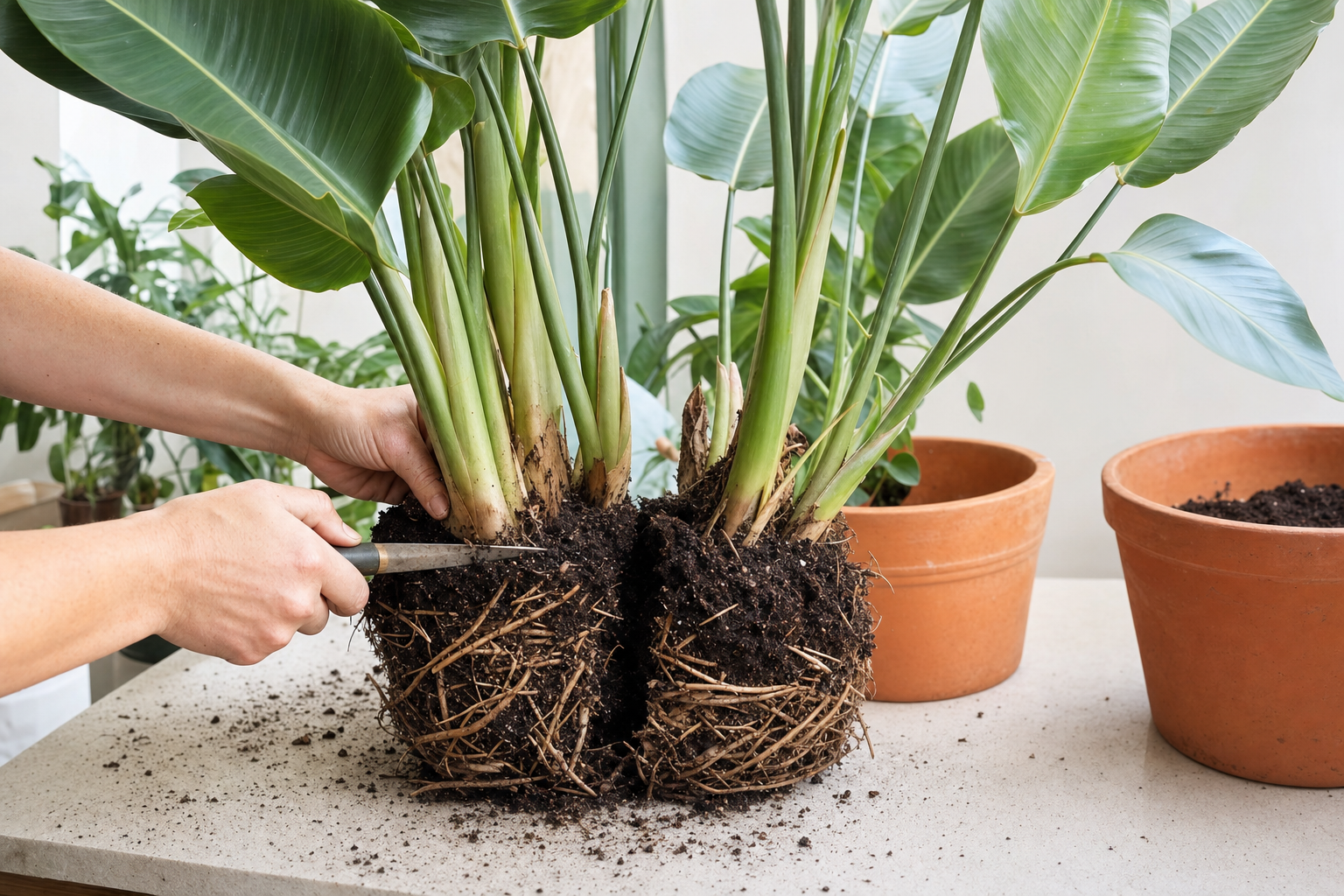
Propagation Guide
Step-by-step instructions for multiplying your plant collection.
Learn how to propagateFrequently Asked Questions
How much light does a Bird of Paradise need?
Why are my Bird of Paradise leaves splitting?
Will my indoor Bird of Paradise flower?
How often should I water my Bird of Paradise?
How tall does a Bird of Paradise grow indoors?
Is Bird of Paradise toxic to pets?
Common Problems
Why Are My Plant Leaves Turning Yellow?
Yellowing leaves are one of the most common houseplant problems. The good news is that most causes are easy to identify and fix once you know what to look for.
Read diagnosis guideHow to Fix an Overwatered Plant
Overwatering kills more houseplants than any other cause. The tricky part? The symptoms — yellowing, wilting, drooping — look just like underwatering. Here's how to tell the difference and fix it.
Read diagnosis guideReferences
- [1] Royal Horticultural Society. Strelitzia reginae
- [2] ASPCA. Strelitzia Toxicity
- [3] University of Florida IFAS Extension. Strelitzia reginae — Bird-of-Paradise
- [4] South African National Biodiversity Institute. Strelitzia reginae
Similar Plants

Fiddle Leaf Fig
Ficus lyrata

Rubber Plant
Ficus elastica

Dracaena
Dracaena marginata