

Jade Plant
Crassula ovata
Also known as: Money Plant, Lucky Plant, Money Tree, Friendship Tree
Last updated: Sep 10, 2026
Bright indirect light to some direct sun
When soil is completely dry
30–50%
55–75°F (13–24°C)
Well-draining cactus/succulent mix
Balanced liquid fertilizer diluted to half, every 2 months in spring/summer
Beginner friendly
Toxic to pets
Toxic to Pets
Contains unknown toxic principles that cause vomiting, depression, and incoordination in cats and dogs according to the ASPCA. In severe cases, it can cause a slowed heart rate. Keep away from pets and small children.
Source: ASPCA Toxic Plant List
Seasonal Care Calendar
| Season | Watering | Fertilizer | Notes |
|---|---|---|---|
| Spring | Every 2–3 weeks | Start bi-monthly feeding | Begin repotting if needed. Resume regular watering. Good time to propagate. |
| Summer | Every 2–3 weeks | Bi-monthly feeding | Active growth period. Can move outdoors to sunny spot. Protect from afternoon sun. |
| Fall | Every 3–4 weeks | Stop by late fall | Growth slows. Reduce watering significantly. Stop fertilizing. |
| Winter | Every 4–6 weeks | None | Semi-dormant. Minimal watering — just enough to prevent shriveling. Cool rest promotes flowering. |
Detailed Care Guide
Everything you need to know to keep your Jade Plant thriving.
Light Requirements
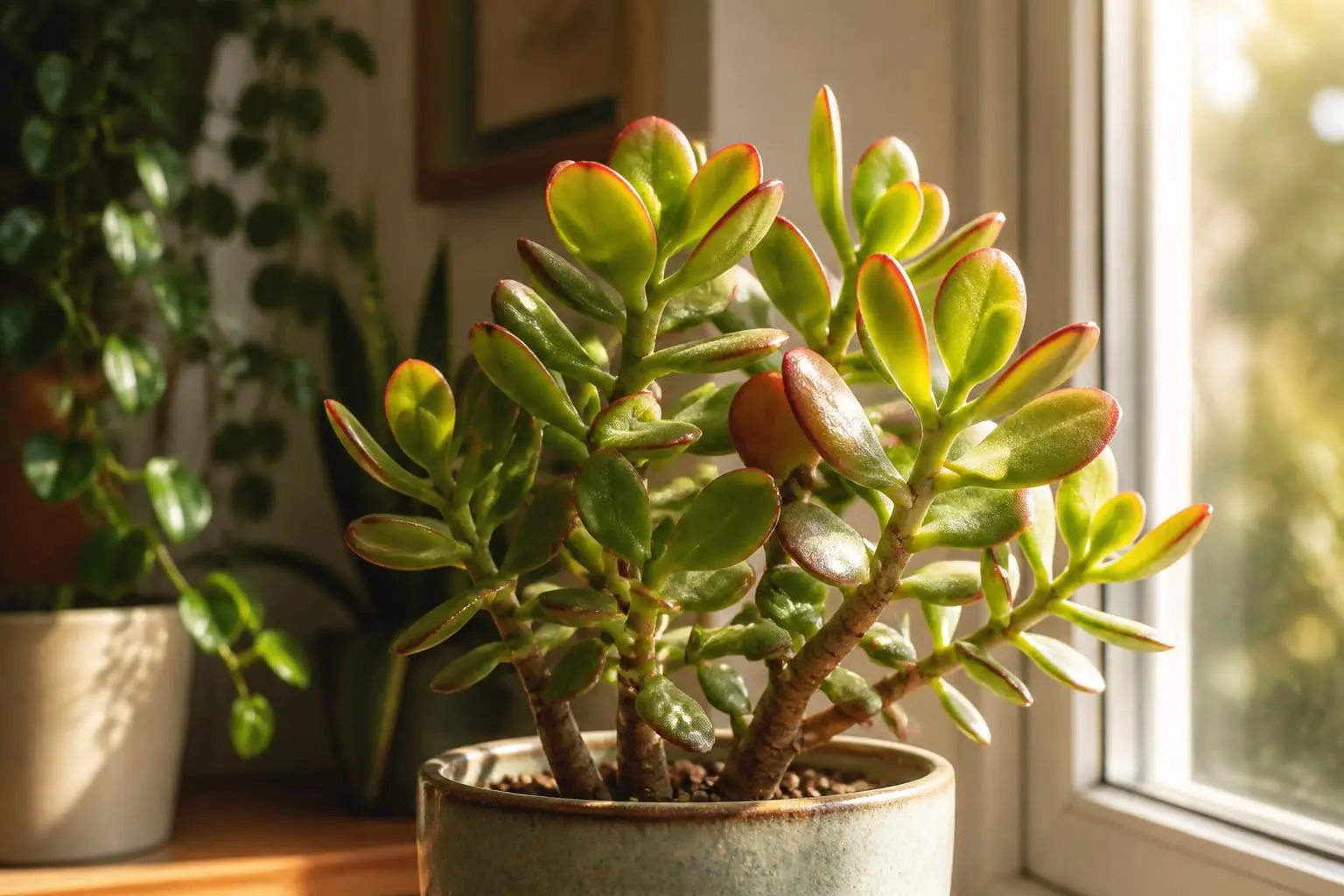
Jade Plants love bright light — at least 4–6 hours of bright indirect light daily, and they happily tolerate some direct sunlight. A south- or west-facing window is ideal. Unlike many houseplants, Jade Plants benefit from a few hours of direct morning or late afternoon sun, which keeps their growth compact and encourages the leaf edges to develop a beautiful red tint.
In low light, Jade Plants become leggy and stretched as they reach for the sun — the stems elongate, leaves space out, and the plant loses its compact, tree-like shape. If you notice the stem growing long between leaf pairs, it needs more light.
If moving a Jade Plant from low light to brighter conditions, do it gradually over 1–2 weeks to prevent sunburn. Leaves that have been in low light are not adapted to intense sun and can develop white or brown scorch marks if exposed too quickly. Once acclimated, Jade Plants can handle several hours of direct sun daily.
Watering
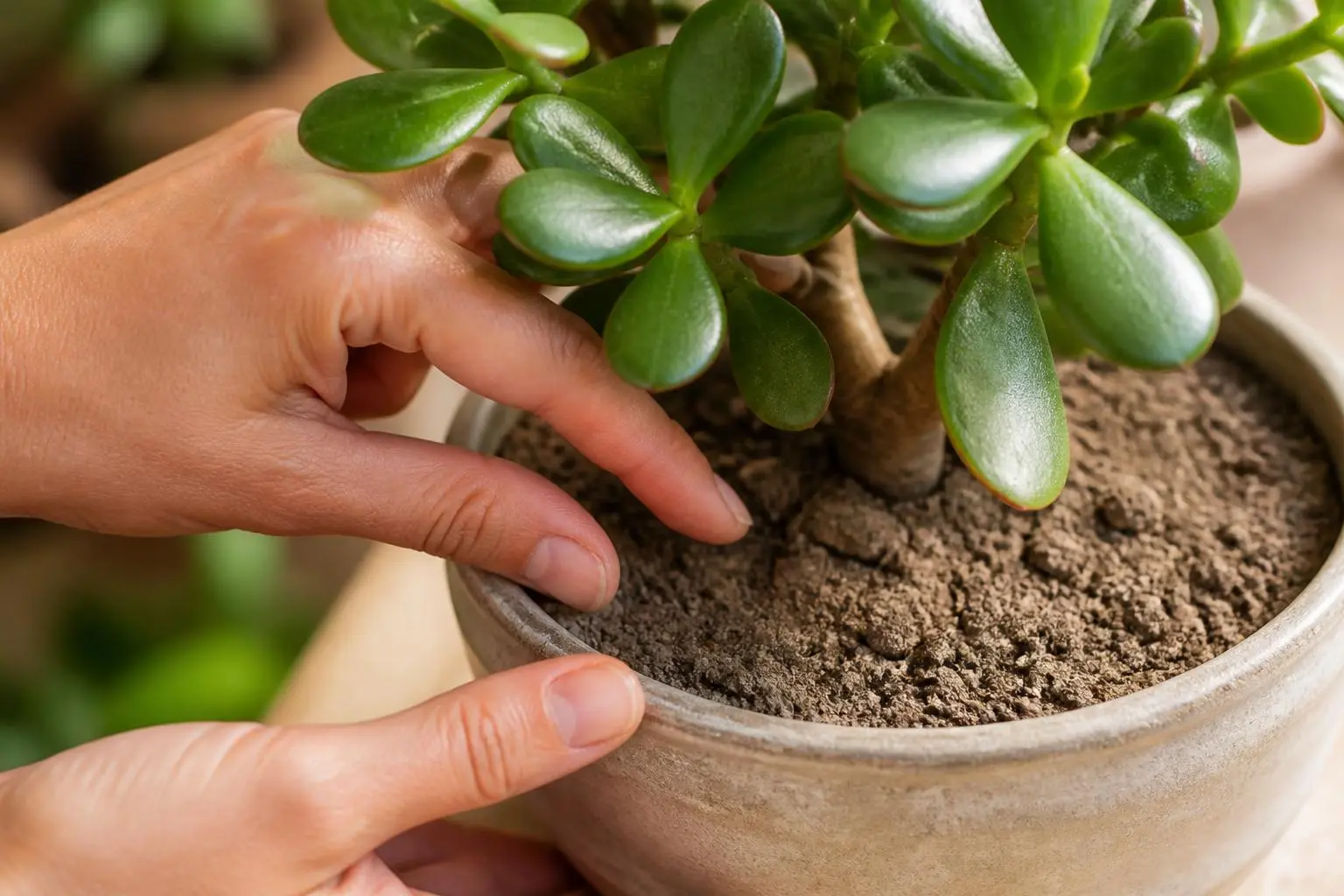
The golden rule for Jade Plants: let the soil dry out completely between waterings. In spring and summer, this typically means every 2–3 weeks. In fall and winter, when the plant is semi-dormant, water only every 4–6 weeks — just enough to keep the leaves from shriveling.
When you do water, give it a thorough soak until water runs from the drainage holes. Then let ALL the excess drain away — Jade Plant roots will rot if they sit in water for even a short time. Empty the saucer immediately after watering.
Signs of overwatering: leaves becoming soft, mushy, and translucent; stems turning black or brown at the base; leaves dropping at the slightest touch. This is far more dangerous than underwatering. Signs of underwatering: leaves shriveling and wrinkling, becoming slightly soft to the touch. A mildly dehydrated Jade Plant plumps back up within a day of watering — they're very forgiving.
Humidity
Jade Plants prefer low to moderate humidity (30–50%), which is exactly what most homes provide. As desert succulents, they actually suffer in high humidity — damp, humid conditions promote fungal diseases and root rot. If you live in a very humid climate, ensure excellent air circulation around the plant.
Never mist a Jade Plant. The water sits on the thick, waxy leaves and in the leaf joints, promoting rot. Unlike tropical houseplants, Jade Plants have no need for increased humidity — they evolved in arid South African conditions.
If your Jade Plant is in a bathroom or kitchen where humidity is naturally higher, make sure the soil dries out completely between waterings and that there's good air flow. A small fan nearby can help in humid rooms.
Temperature
Jade Plants prefer temperatures between 55–75°F (13–24°C) during their active growing season. They can tolerate temperatures down to 40°F (4°C) briefly, and a cool, dry winter rest period (50–55°F / 10–13°C) actually promotes flowering in mature plants.
Avoid placing your Jade Plant near heating vents, radiators, or fireplaces — the hot, dry air causes the leaves to shrivel and drop. Also avoid cold drafts from air conditioning or exterior doors. Sudden temperature changes stress the plant.
Jade Plants can spend the summer outdoors in a spot that receives morning sun and afternoon shade. Bring them inside when nighttime temperatures drop below 45°F. They are hardy in USDA zones 10–11 but are typically grown as houseplants.
Soil
Jade Plants require extremely well-draining soil — standard potting soil is too moisture-retentive and will cause root rot. Use a dedicated cactus and succulent potting mix, or make your own: 2 parts potting soil + 1 part perlite + 1 part coarse sand.
For even better drainage, add extra perlite or pumice. Some growers use a 50/50 mix of succulent soil and perlite. The goal is soil that water runs through quickly, never pooling on the surface. The pH should be slightly acidic to neutral (6.0–7.0).
Avoid mixes with added water-retaining crystals or moisture-control technology — these are designed for moisture-loving plants and are the opposite of what Jade Plants need. The soil should feel gritty and loose, not spongy or dense.
Fertilizer
Jade Plants are light feeders. Fertilize with a balanced liquid fertilizer (NPK 10-10-10) diluted to half strength, applied every 2 months during spring and summer only. Over-fertilizing causes more harm than good — salt buildup burns roots and causes leaf drop.
Alternatively, use a specialized cactus/succulent fertilizer at the recommended dilution. Organic options like worm castings top-dressed on the soil provide a gentle, slow-release nutrient supply without salt buildup risk.
Stop fertilizing entirely from fall through winter. The plant is in its resting period and won't use the nutrients — they'll just accumulate as salts in the soil. Resume feeding when new growth appears in spring.
Repotting
Repot your Jade Plant every 2–3 years, or when it becomes top-heavy and unstable. Jade Plants actually prefer being slightly root-bound and grow best in relatively small pots. A pot that's too large holds excess soil that stays wet too long.
Choose a pot only 1–2 inches wider than the current one. Terracotta or clay pots are ideal — they're porous and allow the soil to dry more quickly between waterings. Heavy pots also provide stability for top-heavy Jade Plants. Always ensure drainage holes.
The best time to repot is in spring when the plant is entering its active growing season. Water a few days before repotting to make removal easier. Gently shake off old soil from the roots, trim any dead or rotting roots, and plant at the same depth in fresh succulent soil. Wait 3–5 days before watering after repotting to let any damaged roots heal.
Our Experience
My Jade Plant was dropping leaves constantly until I realized I was watering it way too often. I switched to the "soak and dry" method — I wait until the leaves start to feel slightly soft and flexible, then give it a thorough watering. The leaves plump back up within 24 hours. No more leaf drop since I made this change.
— Grown indoors in USDA Zone 7a, south-facing window, year-round
I moved my Jade Plant to a terracotta pot and it made a huge difference. The clay wicks away moisture, so the soil dries out properly between waterings. In the plastic pot it was in before, the soil stayed damp for too long and the lower leaves kept turning mushy and falling off.
— Indoor environment, switched from plastic to terracotta pot
For propagation, I've had the best luck with leaf cuttings. I twist off a healthy leaf, let it callus for 3 days on a paper towel, then lay it on top of dry succulent soil. I don't water at all until I see tiny roots forming (about 2–3 weeks). The success rate is nearly 100% if you resist the urge to water too early.
— Indoor propagation, spring/summer, succulent soil mix
 Gollum
  Hummels Sunset
  Variegata
 Compare Varieties
Explore different cultivars side-by-side and find the best match for your space.
Browse all varieties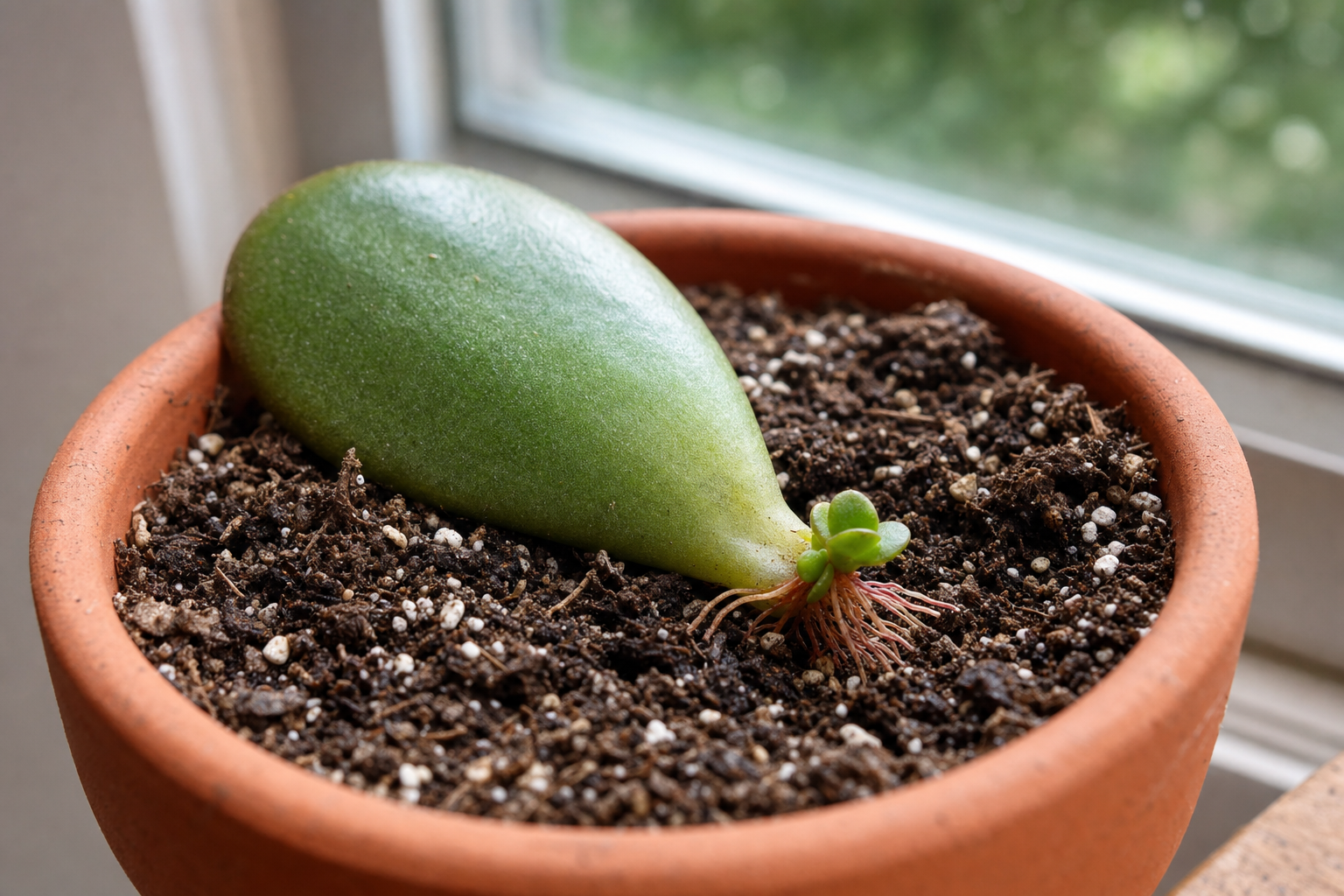
Propagation Guide
Step-by-step instructions for multiplying your plant collection.
Learn how to propagateFrequently Asked Questions
How often should I water my Jade Plant?
Why is my Jade Plant dropping leaves?
How do I propagate a Jade Plant?
How much light does a Jade Plant need?
Is Jade Plant toxic to pets?
Why are my Jade Plant leaves shriveling?
When should I repot my Jade Plant?
Common Problems
Why Are My Plant Leaves Turning Yellow?
Yellowing leaves are one of the most common houseplant problems. The good news is that most causes are easy to identify and fix once you know what to look for.
Read diagnosis guideHow to Fix an Overwatered Plant
Overwatering kills more houseplants than any other cause. The tricky part? The symptoms — yellowing, wilting, drooping — look just like underwatering. Here's how to tell the difference and fix it.
Read diagnosis guideReferences
- [1] Royal Horticultural Society. Crassula ovata
- [2] ASPCA. Crassula ovata Toxicity
- [3] University of Florida IFAS Extension. Crassula ovata — Jade Plant
- [4] South African National Biodiversity Institute. Crassula ovata
Similar Plants

Aloe Vera
Aloe barbadensis miller

Snake Plant
Dracaena trifasciata

ZZ Plant
Zamioculcas zamiifolia