

Boston Fern
Nephrolepis exaltata
Also known as: Sword Fern, Boston Sword Fern, Fluffy Ruffles
Last updated: Sep 10, 2026
Medium indirect light to partial shade
Keep soil consistently moist but not soggy
60–80%
60–75°F (16–24°C)
Peat-based potting mix with perlite
Balanced liquid fertilizer diluted to half, monthly in spring/summer
Intermediate
Pet safe
Seasonal Care Calendar
| Season | Watering | Fertilizer | Notes |
|---|---|---|---|
| Spring | Every 5–7 days | Start monthly feeding | Begin repotting if needed. Resume regular watering. Increase humidity monitoring. |
| Summer | Every 5–7 days | Monthly feeding | Peak growing season. Keep humidity high. Can move outdoors to shaded porch. Trim dead fronds. |
| Fall | Every 7–10 days | Reduce to every 6 weeks | Growth slows. Reduce watering. Stop fertilizing by late fall. Some frond browning is normal. |
| Winter | Every 7–10 days | None | Dormant period. Keep away from heating vents. Use humidifier. Don't let soil dry out completely. |
Detailed Care Guide
Everything you need to know to keep your Boston Fern thriving.
Light Requirements
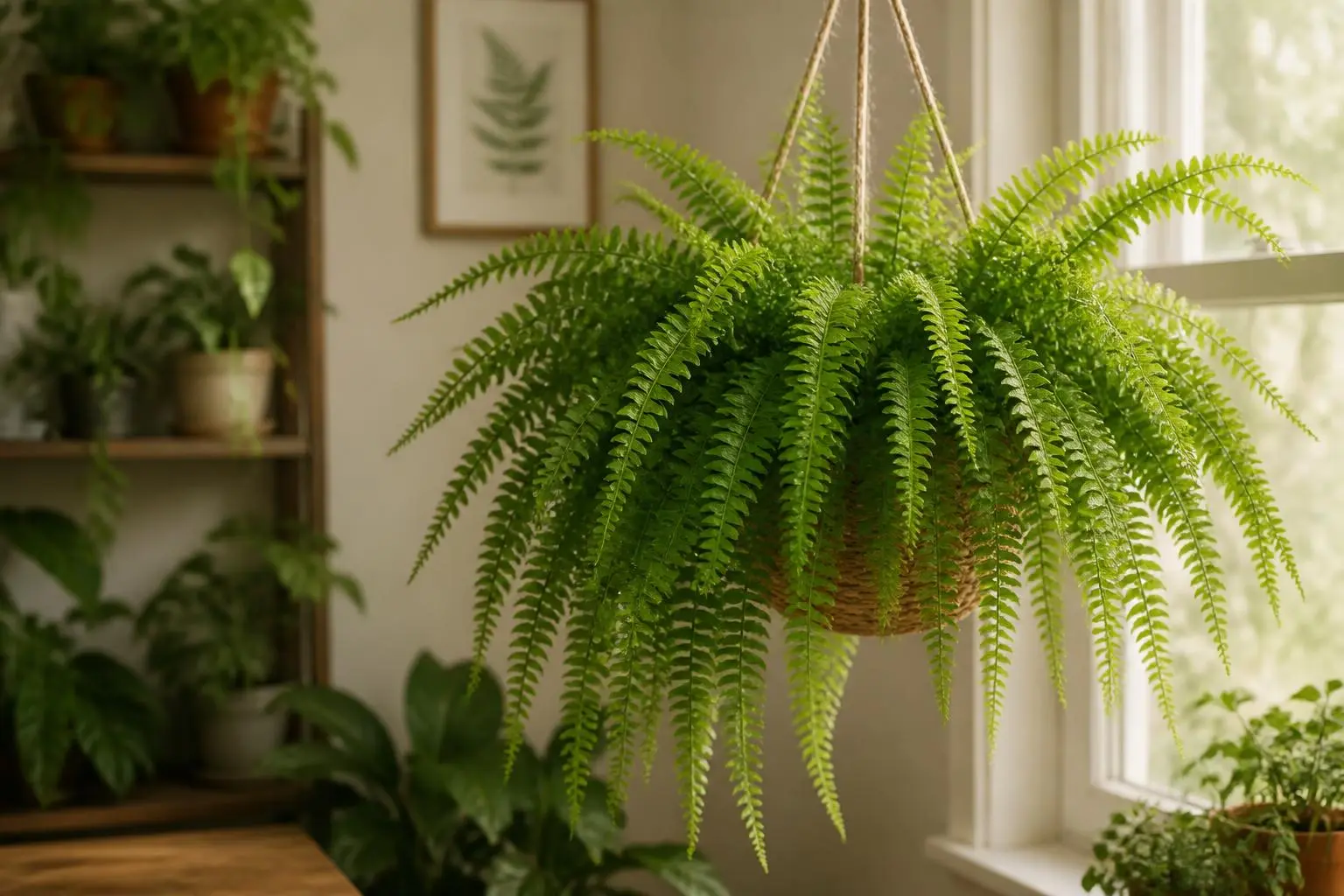
Boston Ferns thrive in medium indirect light to partial shade — they naturally grow on the forest floor under the tree canopy, so they're adapted to dappled, filtered light. An east- or north-facing window is ideal. They also do well in bright bathrooms where the light is naturally diffused.
Direct sunlight is the enemy — it scorches the delicate fronds, causing bleached patches and crispy brown leaflets. Even a few hours of direct afternoon sun through a window can cause significant damage. On the other hand, very low light causes slow growth, pale fronds, and leaflet drop.
Boston Ferns are excellent bathroom plants because they enjoy both the higher humidity and the typically filtered light. They also do well in hanging baskets near a bright window where they receive indirect light from the side. Rotate the basket a quarter turn weekly for even growth.
Watering
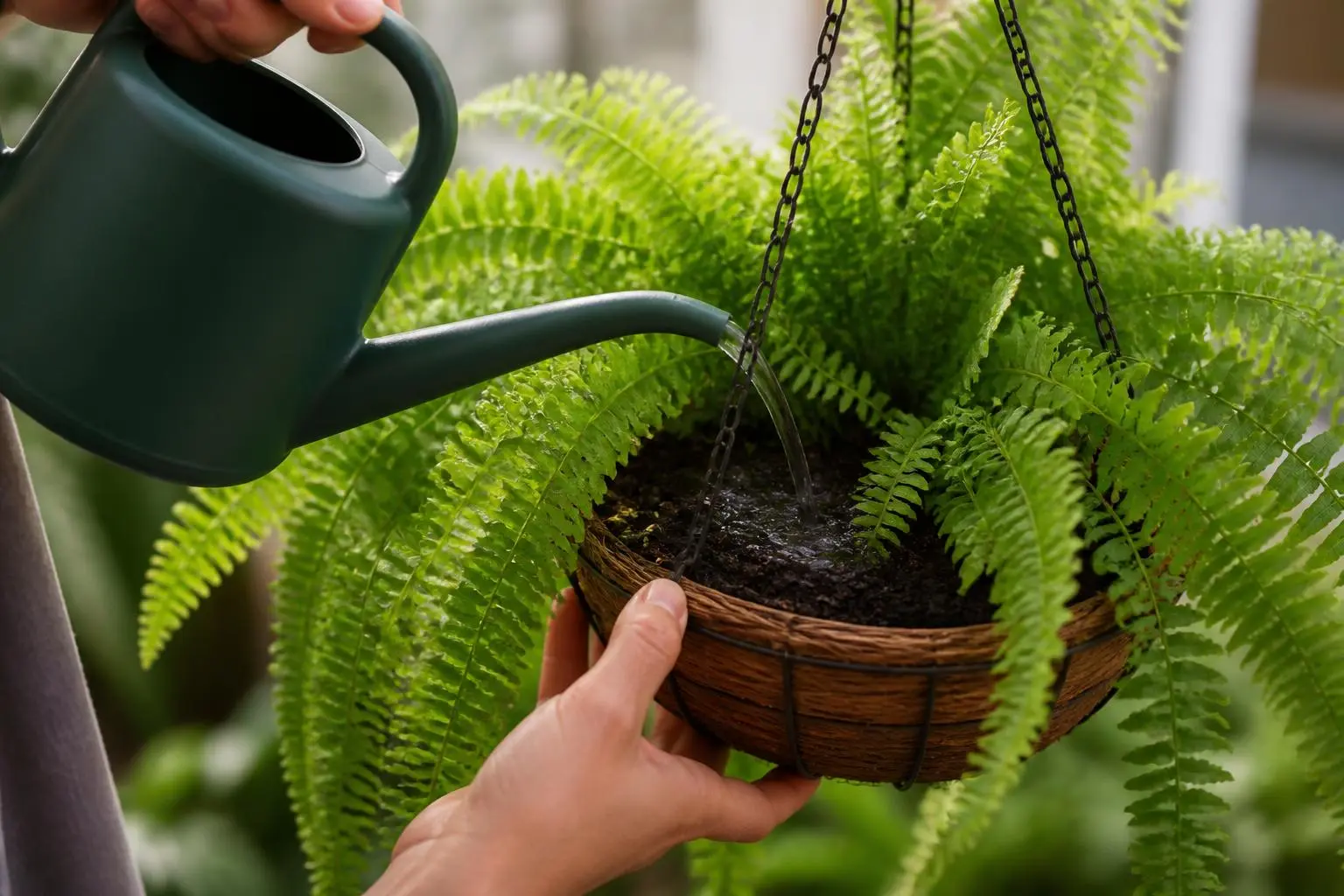
Boston Ferns need consistently moist soil — not soggy, not dry. This is the most critical aspect of their care and the one most people get wrong. Water when the top inch of soil feels just barely moist (not wet, not dry) — typically every 5–7 days in spring/summer and every 7–10 days in fall/winter.
When watering, give it a thorough soak until water runs from the drainage holes. Never let the pot sit in standing water — empty the saucer after 15 minutes. The soil should never dry out completely, but it also shouldn't be waterlogged. Think "damp sponge" consistency.
Boston Ferns are sensitive to chemicals in tap water. Chlorine and fluoride can cause brown tips and frond damage. Use filtered water, rainwater, or let tap water sit out overnight. Room-temperature water is best — cold water shocks the roots.
If fronds are turning yellow and the soil is wet, you're overwatering. If fronds are turning grayish-brown and crispy, you're underwatering. Both cause leaflet drop, so check the soil to determine which.
Humidity
High humidity (60–80%) is essential for Boston Ferns — this is the single most important factor in keeping them healthy indoors. Average home humidity (30–50%) is simply too dry, which is why Boston Ferns are notoriously difficult as houseplants in heated or air-conditioned homes.
The most effective solution is a humidifier placed within 3–4 feet of the plant. A pebble tray filled with water beneath the pot (with the pot sitting on the pebbles, not in the water) provides a modest humidity boost. Grouping plants together creates a shared humid microclimate.
Misting is popular but nearly useless — the water evaporates in minutes and doesn't meaningfully raise ambient humidity. In fact, wet fronds can promote fungal growth if they don't dry quickly. If you do mist, do it in the morning only.
Bathrooms and kitchens naturally have higher humidity, making them the best rooms for Boston Ferns. If your fern lives in a dry living room, a humidifier is essentially mandatory during winter.
Temperature
Boston Ferns prefer temperatures between 60–75°F (16–24°C). They can tolerate brief dips to 50°F (10°C) but will suffer damage below that — fronds may yellow and drop. Temperatures above 80°F (27°C) stress the plant, especially if humidity is low.
Avoid placing your Boston Fern near heating vents, radiators, fireplaces, or air conditioning units. The hot, dry air from heating systems is particularly damaging, causing rapid frond browning and leaflet drop. Cold drafts from air conditioning or frequently opened exterior doors in winter also stress the plant.
Boston Ferns enjoy spending summers outdoors in a shaded, humid spot (like a covered porch or under a tree). Bring them inside when nighttime temperatures consistently drop below 55°F. They are hardy in USDA zones 9–11.
Soil
Boston Ferns need a moist but well-draining potting mix that retains water without becoming waterlogged. A peat-based mix provides the moisture retention they need, while perlite ensures adequate drainage and aeration.
Recommended mix: 2 parts peat-based potting soil + 1 part perlite. Some growers add a handful of orchid bark for extra aeration. The pH should be slightly acidic (5.0–6.0), which peat naturally provides.
Avoid standard cactus/succulent soil — it drains too quickly and dries out too fast for a fern. Also avoid heavy garden soil, which compacts and suffocates roots. The soil should feel like a wrung-out sponge — damp but not dripping.
Fertilizer
Feed your Boston Fern with a balanced liquid fertilizer (NPK 20-20-20) diluted to half strength, applied once a month during spring and summer. Boston Ferns are light feeders, and over-fertilizing causes more harm than under-fertilizing.
Excess salts from fertilizer burn the delicate frond tips, causing brown, crispy leaflet edges. If you notice salt buildup (white crust on the soil), flush the pot thoroughly with water to leach out minerals.
Organic alternatives like fish emulsion diluted to quarter strength or worm castings top-dressed on the soil provide gentle, slow-release nutrition. Stop fertilizing entirely from late fall through winter when growth naturally slows.
Repotting
Repot your Boston Fern every 1–2 years, ideally in spring. Ferns in hanging baskets may need more frequent repotting as they can quickly become root-bound. Signs it's time: roots growing out of the drainage holes, water running straight through without being absorbed, or the plant drying out too quickly.
Choose a pot only 1–2 inches larger in diameter. Going too large means excess soil stays wet too long, promoting root rot. Boston Ferns have shallow, fibrous root systems, so wide pots are better than deep ones. Always use pots with drainage holes.
When repotting, you can divide a large fern into 2–3 sections for multiple plants. Gently tease apart the root ball with your fingers, ensuring each section has healthy roots and several fronds. Plant each division in fresh soil at the same depth, water thoroughly, and keep in a humid spot for a week to recover.
Our Experience
My Boston Fern was always browning and shedding until I moved it to the bathroom. The natural humidity from showers made all the difference — within two weeks, all the new growth came in lush and green. Now it hangs right above the shower where it gets indirect light and regular steam.
— Bathroom with frosted window, indoor, year-round
I keep a humidifier on a timer — 8 hours overnight right next to my Boston Fern. During the day when the humidifier is off, the pebble tray beneath the pot provides baseline humidity. This combination keeps the frond tips from browning even in dry winter air.
— Living room, USDA Zone 7a, forced-air heating, winter
When my fern gets too big or starts looking scraggly, I give it a "haircut" — trimming off the oldest, longest fronds at the base. This sounds drastic, but within a month, fresh new fronds emerge from the center. It's like hitting a reset button on the plant's appearance.
— Indoor maintenance pruning, spring, healthy plant
 Dallas
  Fluffy Ruffles
  Green Fantasy
 Compare Varieties
Explore different cultivars side-by-side and find the best match for your space.
Browse all varieties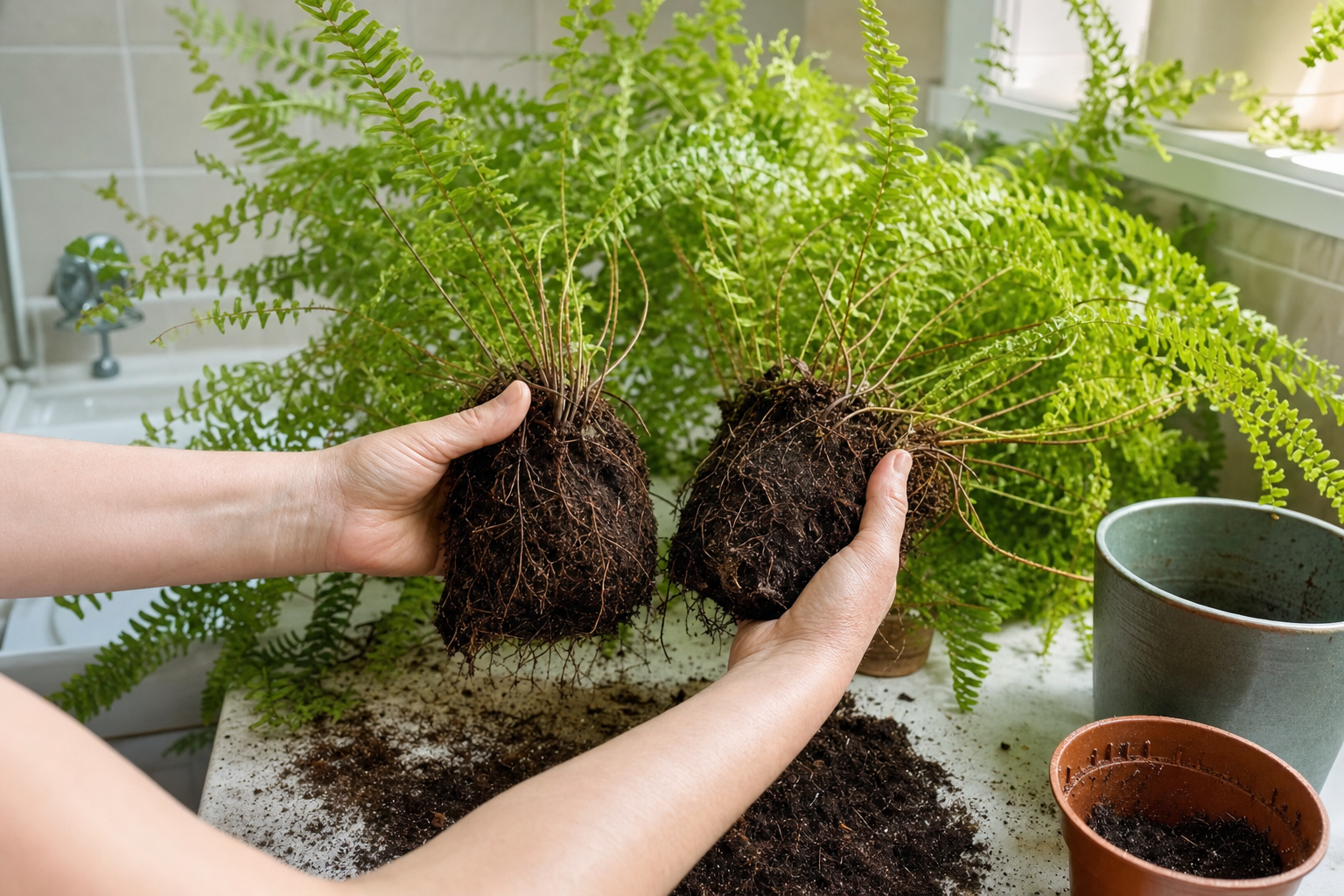
Propagation Guide
Step-by-step instructions for multiplying your plant collection.
Learn how to propagateFrequently Asked Questions
Why is my Boston Fern turning brown?
How often should I water my Boston Fern?
Does a Boston Fern need high humidity?
Can Boston Fern grow indoors?
How do I revive a dying Boston Fern?
Are Boston Ferns safe for cats and dogs?
Common Problems
Why Are My Plant Leaves Turning Yellow?
Yellowing leaves are one of the most common houseplant problems. The good news is that most causes are easy to identify and fix once you know what to look for.
Read diagnosis guideHow to Fix an Overwatered Plant
Overwatering kills more houseplants than any other cause. The tricky part? The symptoms — yellowing, wilting, drooping — look just like underwatering. Here's how to tell the difference and fix it.
Read diagnosis guideReferences
- [1] Royal Horticultural Society. Nephrolepis exaltata
- [2] ASPCA. Nephrolepis exaltata Non-Toxicity
- [3] University of Florida IFAS Extension. Nephrolepis exaltata — Boston Fern
- [4] NASA Clean Air Study. Interior Landscape Plants for Indoor Air Pollution Abatement
Similar Plants

Spider Plant
Chlorophytum comosum

English Ivy
Hedera helix

Peace Lily
Spathiphyllum wallisii