
Alocasia Polly Varieties
A comparison of the most popular Alocasia Polly varieties — learn which one is right for your space and skill level.
| Variety | Key Feature | Care Difficulty | Price Range |
|---|---|---|---|
| Alocasia Polly (Amazonica) | Arrow-shaped leaves with dark green coloring and bold silvery-white veining; compact growth habit; purplish-red leaf undersides | Easy | Varies |
| Alocasia Amazonica (Parent Plant) | Larger, more deeply lobed arrow-shaped leaves with metallic silver veining; more pronounced leaf serrations than Polly | Easy | Varies |
| Alocasia Polly "Variegata" | Unstable variegation with cream, white, or pink patches on leaves; each leaf has unique pattern | Easy | Varies |
| Alocasia "Dragon Scale" (Baginda) | Thick, puckered "dragon scale" textured leaves; deep green with silvery veining; substantial, almost succulent leaf texture | Easy | Varies |
Variety Details
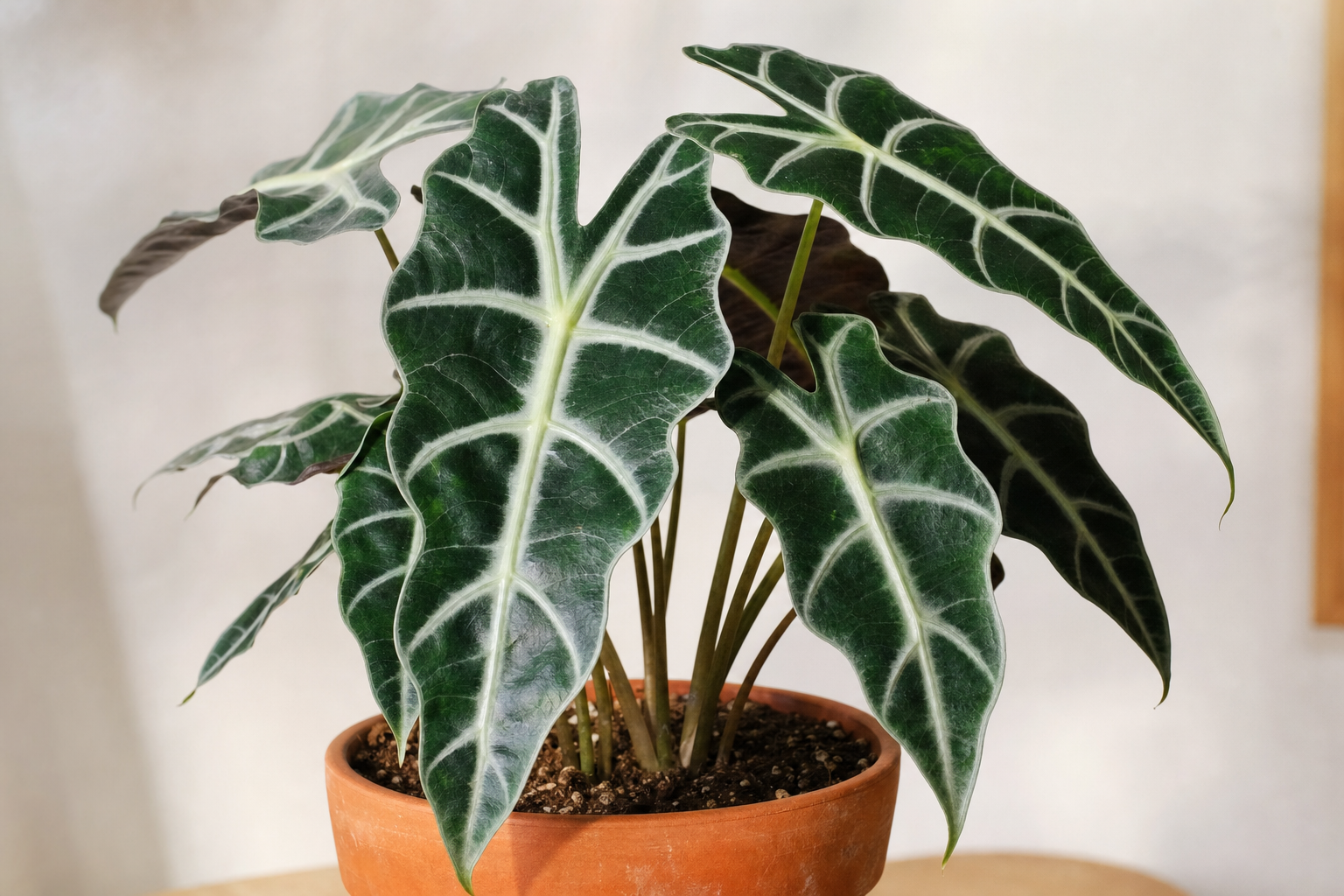
Alocasia Polly (Amazonica)
The classic Alocasia Polly with dramatic, arrow-shaped leaves featuring dark green coloring and bold silvery-white veining. The leaf undersides are a striking purplish-red. This compact variety typically reaches 1–2 feet tall, making it perfect for tabletops and indoor spaces. It is the most common and widely available Alocasia variety, typically priced at $15–$40.
Distinguishing feature: Arrow-shaped leaves with dark green coloring and bold silvery-white veining; compact growth habit; purplish-red leaf undersides
Care notes: Standard Alocasia care — bright indirect light, consistent moisture, high humidity. This is considered one of the more "forgiving" Alocasia varieties, making it a good entry point to the genus. Watch for yellow leaves from overwatering, which is the most common mistake.
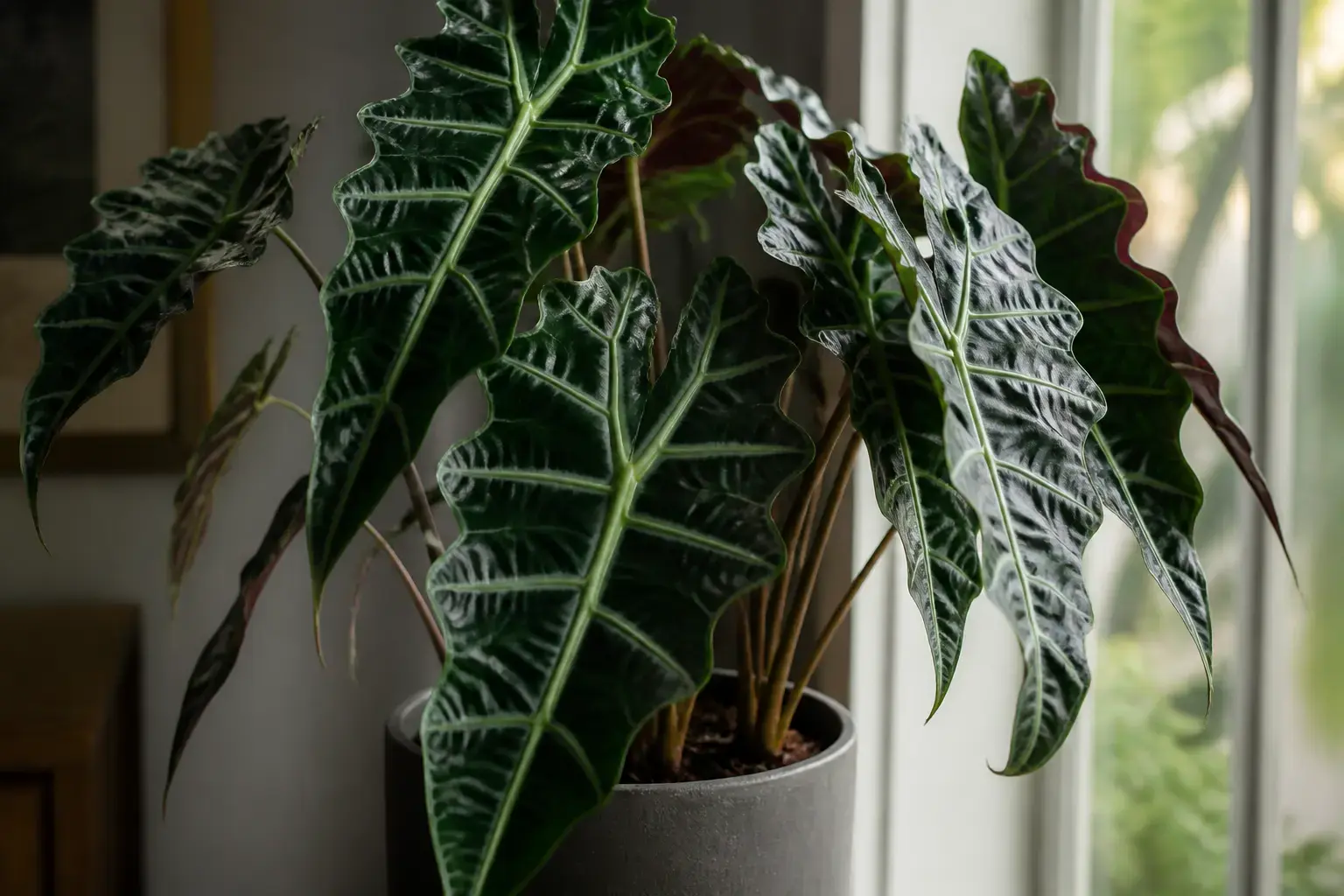
Alocasia Amazonica (Parent Plant)
The true Alocasia amazonica is a natural hybrid (Alocasia sanderiana × Alocasia baginda) that originated in the 1950s. It has even more dramatic, deeply-lobed arrow-shaped leaves with metallic silver-white veining that appears to "glow" against the dark green leaf surface. The leaves are larger and more deeply serrated than Polly. Slightly harder to find than Polly, typically priced at $25–$60.
Distinguishing feature: Larger, more deeply lobed arrow-shaped leaves with metallic silver veining; more pronounced leaf serrations than Polly
Care notes: Similar care to Polly but may be slightly more demanding. Requires even more bright indirect light to maintain the striking vein coloration. Slightly more sensitive to overwatering. The plant that most "serious" Alocasia collectors ultimately seek.
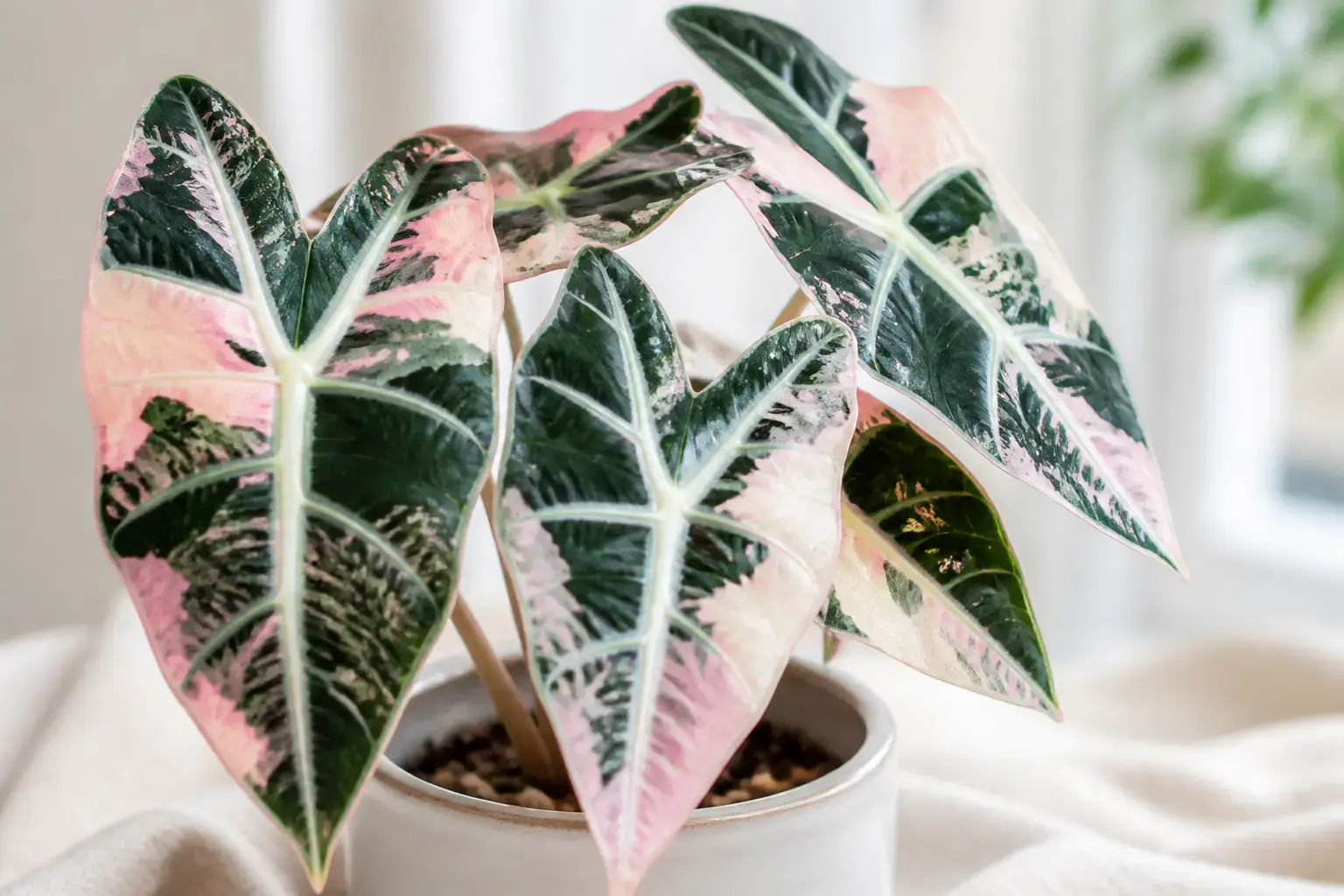
Alocasia Polly "Variegata"
A rare variegated mutation of Alocasia Polly featuring leaves splashed with cream, white, or even pink variegation. Each leaf is unique — some have subtle cream sectors while others are nearly half-white. The variegation is unstable and can revert. Highly sought by collectors, typically priced at $80–$200+ for well-variegated specimens.
Distinguishing feature: Unstable variegation with cream, white, or pink patches on leaves; each leaf has unique pattern
Care notes: Needs more bright indirect light than standard Polly to compensate for reduced chlorophyll in variegated areas. More prone to burning in direct sun. Watch for all-white leaves — they lack chlorophyll and should be pruned to preserve plant health. More sensitive to overwatering. A collector plant that commands attention.
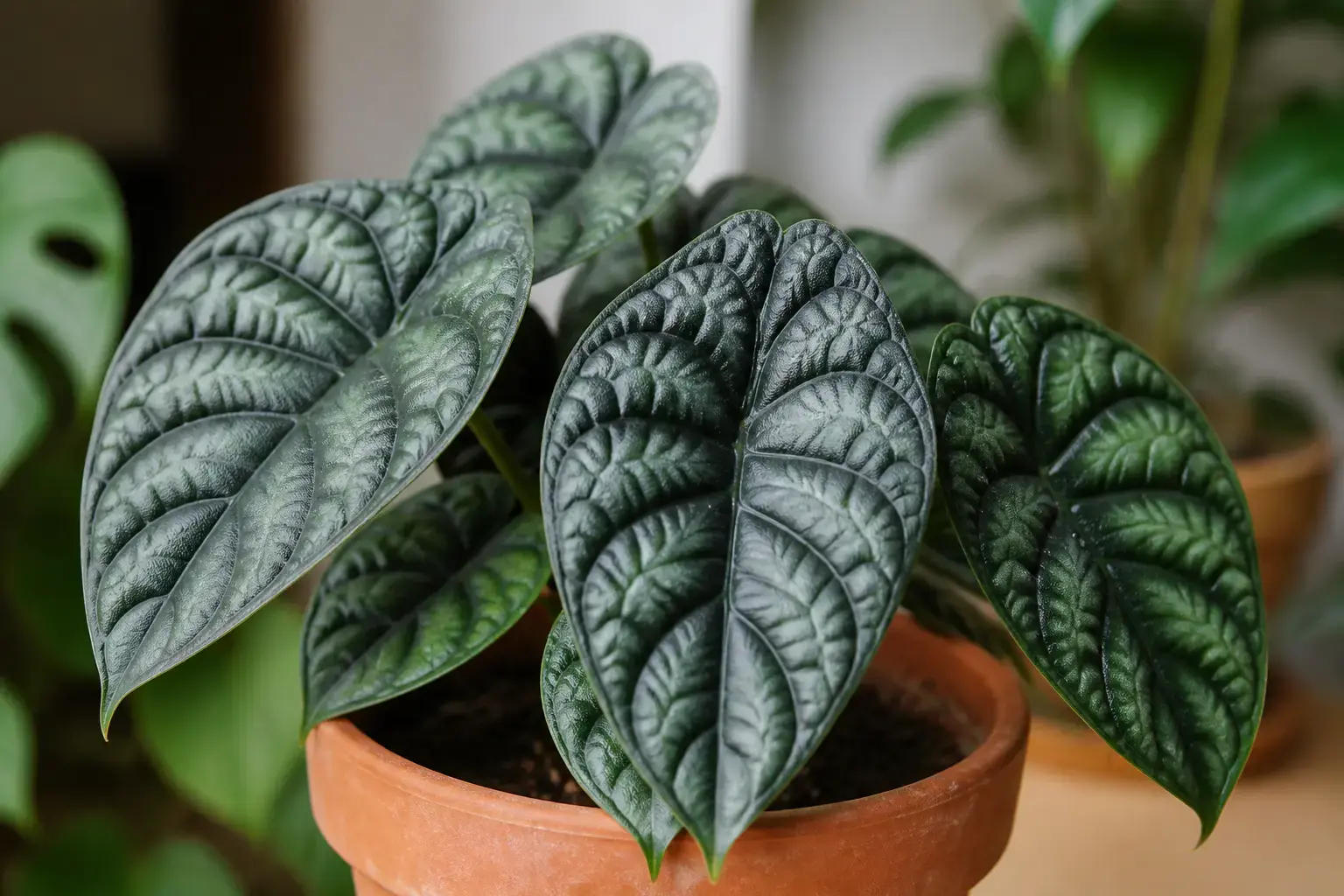
Alocasia "Dragon Scale" (Baginda)
A stunning species with thick, textured leaves that resemble dragon scales. The leaves have a puckered, bullate surface with deep green coloring and contrasting silvery veining. The leaf texture is noticeably thicker and more substantial than Polly. Moderately available from specialty sellers, typically priced at $30–$80.
Distinguishing feature: Thick, puckered "dragon scale" textured leaves; deep green with silvery veining; substantial, almost succulent leaf texture
Care notes: More tolerant of lower humidity than many Alocasia due to its thicker leaves. Slightly more drought-tolerant as a result. Still needs bright indirect light for best coloration. Growth rate is slower than Polly. A must-have for texture lovers.