
How to Propagate String of Pearls
String of Pearls is one of the easiest houseplants to propagate. Here are three reliable methods — choose the one that fits your comfort level and available supplies.
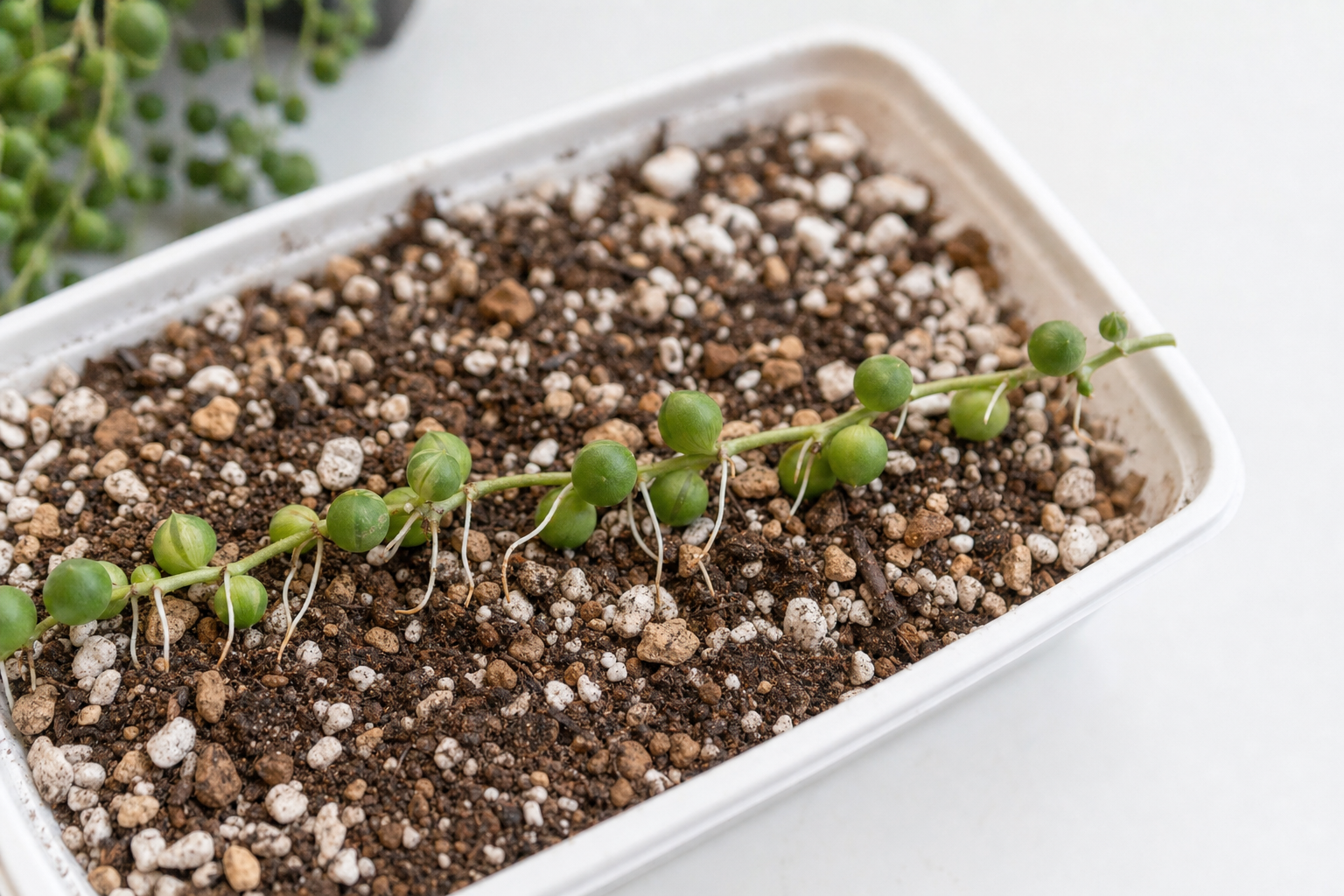
Stem cutting in soil (recommended method)
You will need clean scissors, a shallow pot with drainage holes, succulent/cactus potting mix, and bent paperclips or U-pins.
- 1 Select a healthy strand at least 4–6 inches long with plump, firm pearls. Avoid strands with shriveled or translucent pearls.
- 2 Cut the strand using clean scissors.
- 3 Gently remove the pearls (round leaves) from the bottom 2 inches of the stem by pinching them off — leave this section bare. Do not bury pearls under any circumstances, as they rot quickly in moist soil.
- 4 Lay the cutting on top of moist (not wet) succulent soil, and pin the bare section down with a bent paperclip or U-pin so the bare stem makes contact with the soil surface.
- 5 Do not water for the first 7 days — the cutting needs to develop root initials before it can absorb water, and excess moisture causes rot.
- 6 After 7 days, water very sparingly — only enough to lightly moisten the soil surface.
- 7 Keep in bright indirect light at warm temperatures (65–80°F).
- 8 Roots develop from the leaf nodes on the bare stem section in 2–3 weeks.
- 9 Once the cutting shows new pearl growth (4–6 weeks), it is established and you can begin normal watering when the soil is completely dry.
Expected timeline: root initials in 2–3 weeks, new growth in 4–6 weeks, established plant in 8–12 weeks. Success rate: approximately 70–85%.
Success rate: approximately 70–85%.
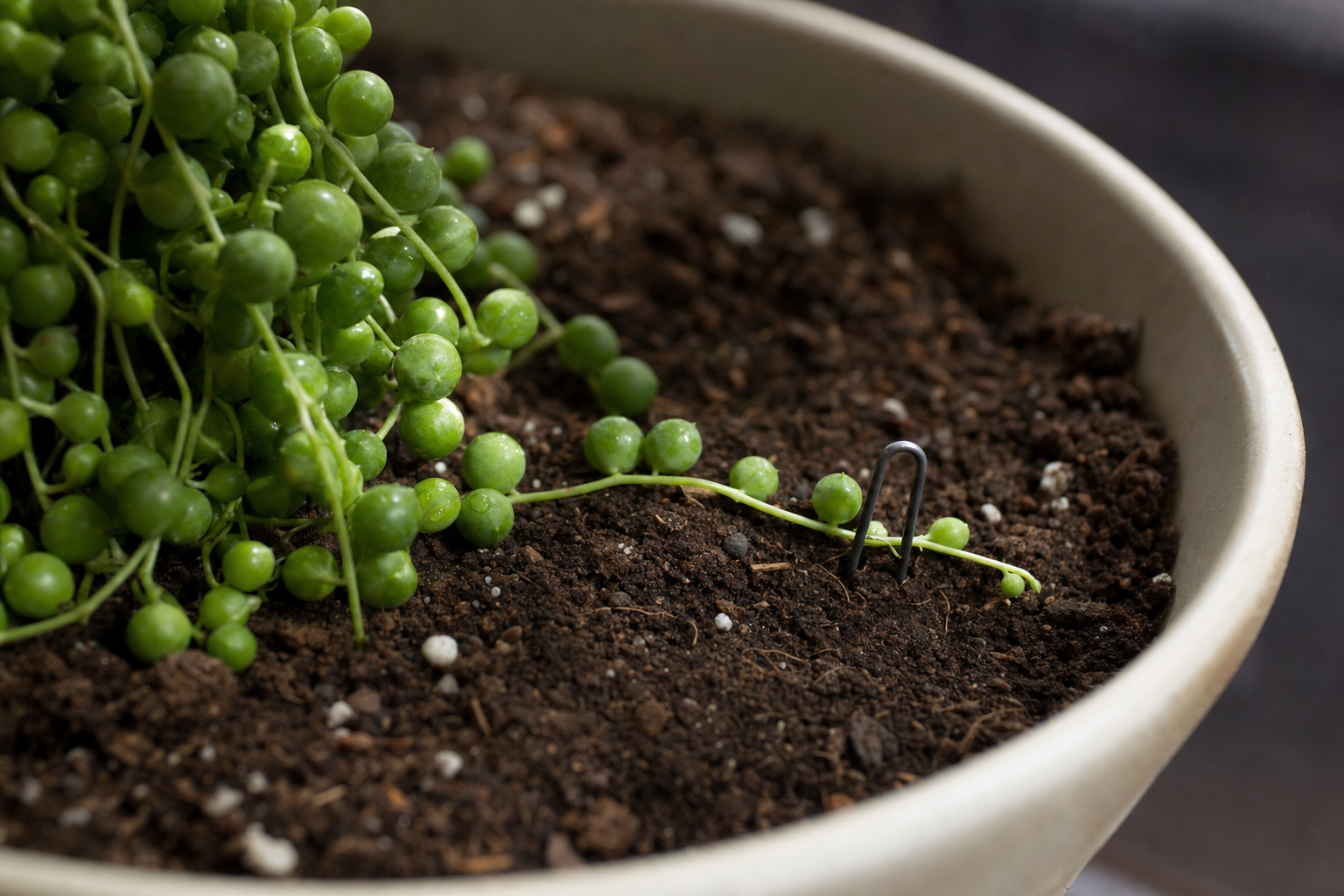
Coiling method (for a fuller plant faster)
This is the best method for creating a lush, full String of Pearls in record time. You will need a wide shallow pot, succulent soil, and several U-pins.
- 1 Take a long healthy strand (8–12 inches or more).
- 2 Remove pearls from several points along the stem to create bare sections every 2–3 inches.
- 3 Fill a wide shallow pot with moist succulent soil.
- 4 Coil the strand on top of the soil in a spiral or circular pattern, pinning down each bare section with a U-pin so it makes contact with the soil.
- 5 Do not water for the first 7 days.
- 6 After 7 days, water very sparingly.
- 7 Each pinned contact point will develop roots independently, creating multiple growth points simultaneously.
- 8 Within 4–6 weeks, the coiled strand will have rooted at multiple points and begun producing new strands from each rooted section.
- 9 Once the plant is well-established (8–12 weeks), you can remove the pins.
Expected timeline: roots at multiple points in 2–3 weeks, new growth from multiple points in 4–6 weeks, full lush plant in 3–4 months. Success rate: approximately 80–90%.
Success rate: approximately 80–90%.
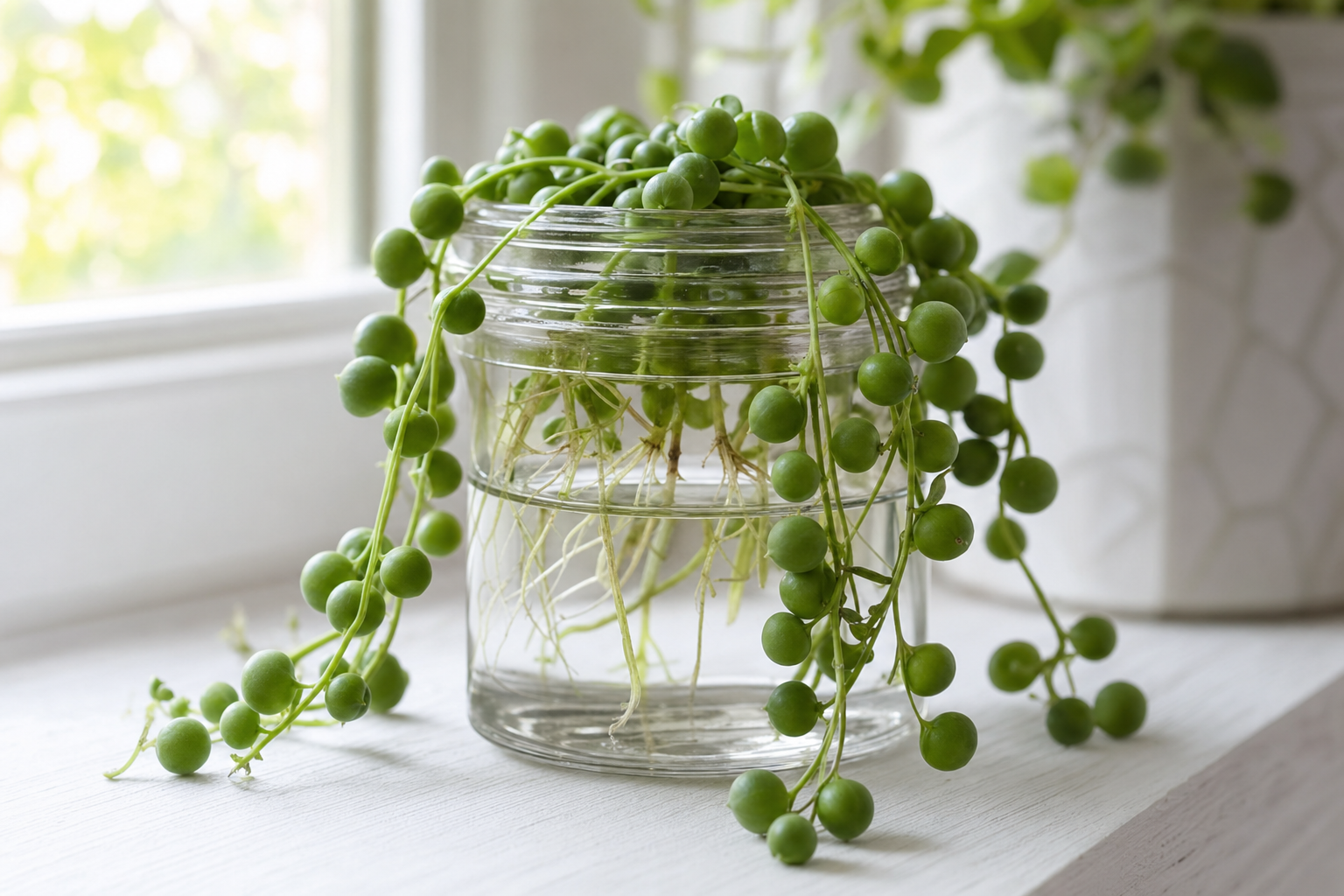
Water propagation
You will need a small container and room-temperature water.
- 1 Cut a 4–6 inch strand and remove pearls from the bottom 2 inches.
- 2 Place the bare stem section in a small container of water, ensuring no pearls are submerged.
- 3 Change the water every 5–7 days.
- 4 Roots appear in 7–14 days — faster than soil propagation.
- 5 Plant in soil once roots are 1/2 inch long.
- 6 Transition carefully — water-rooted cuttings are more delicate and need gradual adjustment to soil. Keep the soil slightly more moist than usual for the first 2 weeks, then transition to normal dry-between-watering schedule.
Expected timeline: roots in 7–14 days, transplant by week 3, established plant in 8–10 weeks. Success rate: approximately 65–75%.
Success rate: approximately 65–75%.
Troubleshooting Common Issues
Pearls rotting where they touch the soil
This is the most common propagation failure. Never bury pearls under soil — only the bare stem should contact the growing medium. If you accidentally bury pearls, gently unbury them with a toothpick. Also ensure the soil is not too wet — String of Pearls cuttings need barely moist soil, not soggy conditions.
Cutting shriveling instead of rooting
Cuttings that shrivel quickly were likely taken from an already stressed strand, or the environment is too dry and warm. Select plump, well-hydrated strands for propagation. Increase humidity around the cutting with a clear plastic dome (remove it for an hour daily to prevent fungal issues). Keep temperatures moderate (65–75°F) rather than very warm.
Roots forming but no new growth
String of Pearls can be slow to push new strands after rooting. Ensure the plant is receiving bright indirect light (a few hours of gentle morning direct sun is beneficial). Once roots are established, begin a monthly feeding with diluted succulent fertilizer during the growing season. Be patient — new growth often appears 6–8 weeks after rooting.
Water-rooted cutting dying after transplant
The transition from water to soil is the most vulnerable period. Minimize shock by transplanting when roots are very small (1/2 inch), using a well-draining succulent mix, and keeping the soil slightly more moist than normal for the first 2 weeks. Gradually reduce watering frequency over 3–4 weeks to the normal dry-between-watering schedule.
Propagation Tips
- ✓ Always use clean, sterilized tools to prevent infection
- ✓ Cuttings need bright indirect light — never direct sun
- ✓ Change propagation water every 5–7 days to prevent bacteria
- ✓ Be patient — rooting takes 2–6 weeks depending on the method
- ✓ Spring and summer are the best seasons for propagation