
How to Propagate Spider Plant
Spider Plant is one of the easiest houseplants to propagate. Here are three reliable methods — choose the one that fits your comfort level and available supplies.
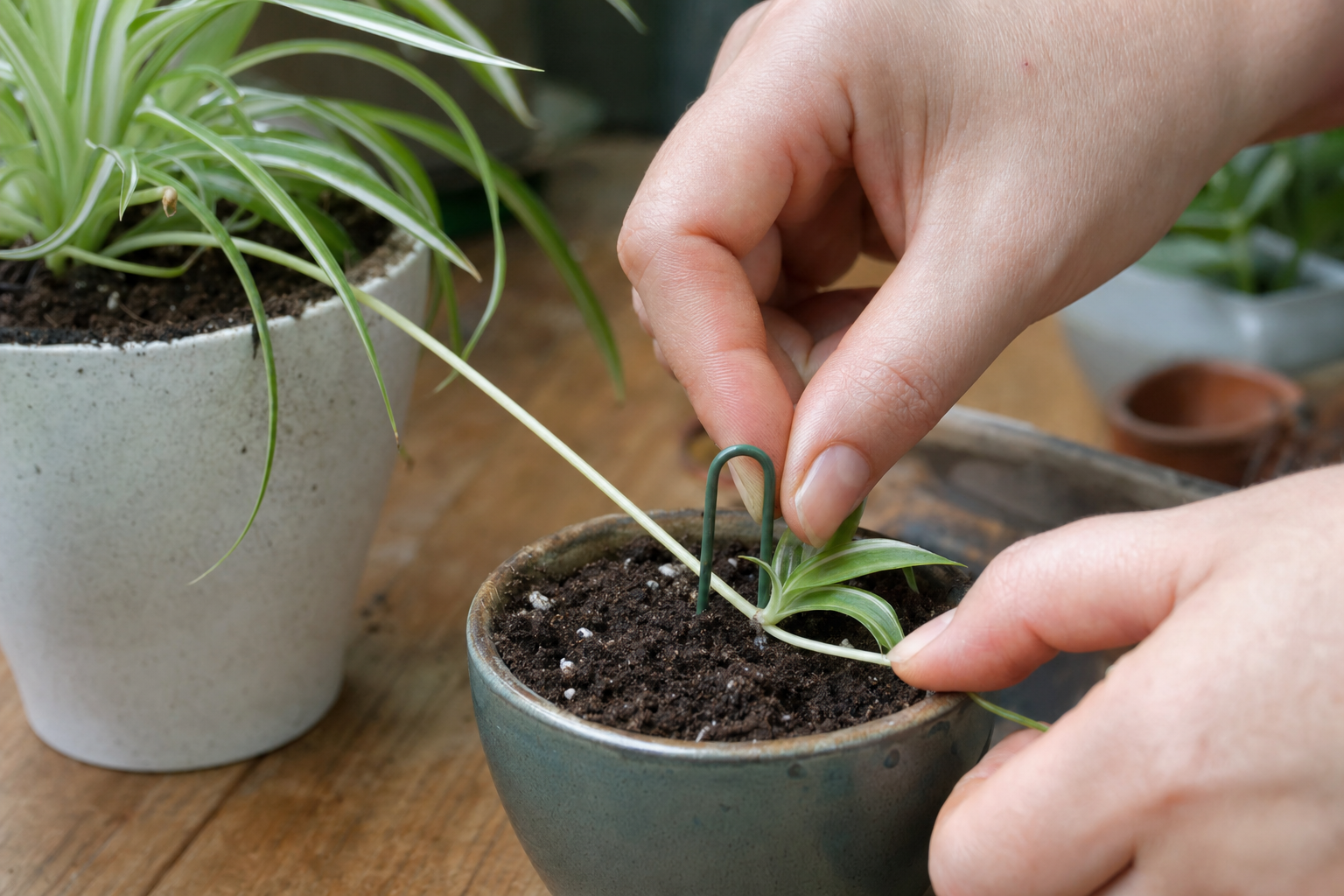
Stolon pinning method (easiest and highest success rate)
This is the most foolproof propagation method for Spider Plants because the baby remains attached to the parent plant, receiving water and nutrients through the stolon until its own roots are established. You will need a small pot with drainage holes, moist potting soil, and a bent paperclip or U-shaped wire.
- 1 Identify a healthy baby plantlet on the end of a stolon. The best babies have small nubs at their base — these are pre-root tips ready to grow.
- 2 Fill a small pot with moist potting soil and place it next to the parent plant.
- 3 Without cutting the baby from the parent, pin it into the soil using a bent paperclip or U-shaped wire, burying the base about 1/2 inch deep.
- 4 Keep the soil consistently moist at the pinned point.
- 5 After 2–3 weeks, give the baby a gentle tug — if you feel resistance, roots have formed.
- 6 Snip the stolon connecting the baby to the parent plant.
- 7 Treat the new plant as independent, watering when the top inch of soil is dry.
Expected timeline: roots form in 2–3 weeks, independent plant in 3–4 weeks, established plant in 6–8 weeks. Success rate: approximately 95–100%.
Success rate: approximately 95–100%.
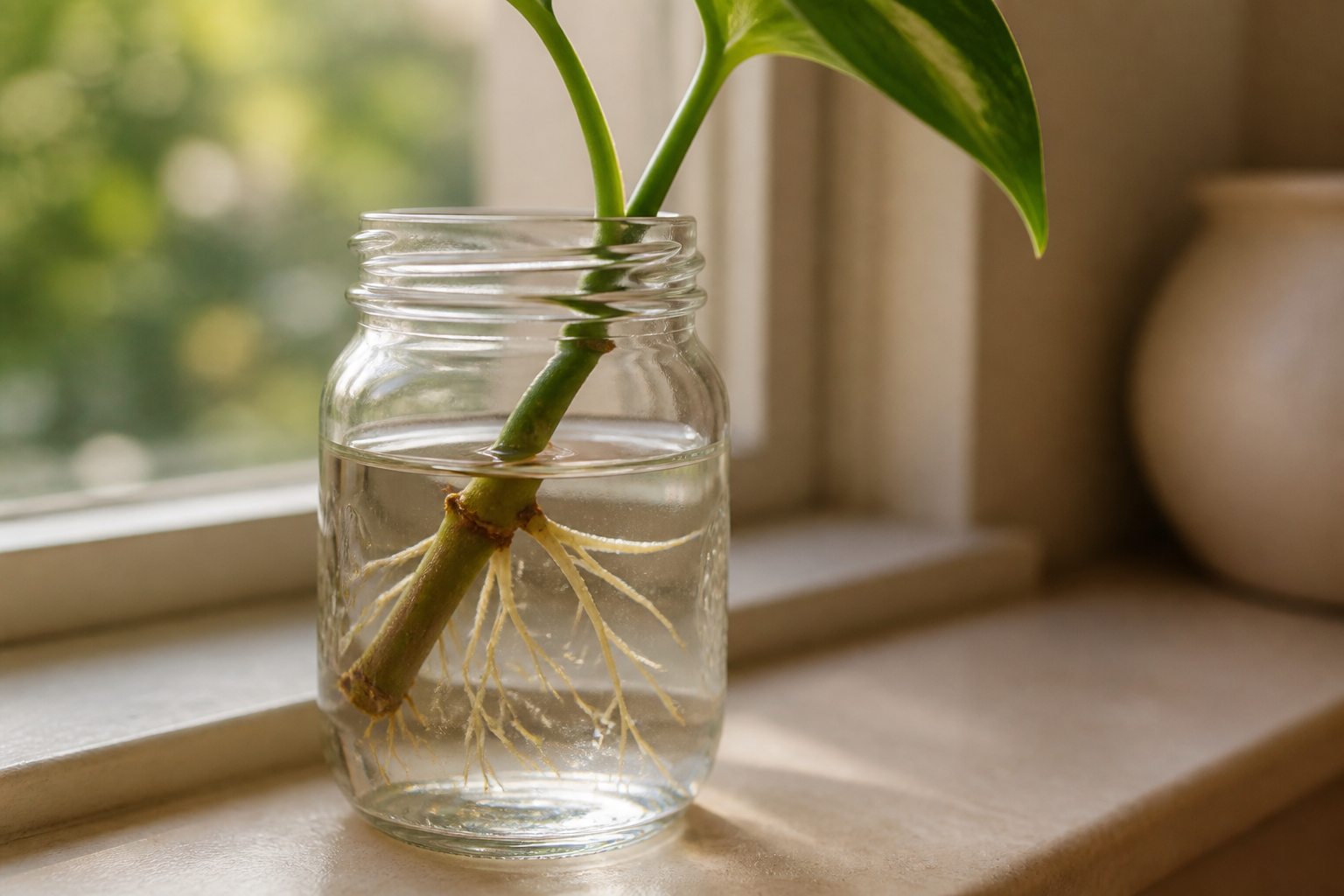
Water propagation
You will need a glass jar and room-temperature water.
- 1 Cut a baby plantlet from the stolon, keeping the small nub at its base intact.
- 2 Place the base in a jar of water, ensuring only the bottom nodes are submerged — the leaves should not touch the water.
- 3 Position in bright indirect light.
- 4 Change the water every 5–7 days.
- 5 Roots appear in 7–10 days.
- 6 Once roots are 1–2 inches long (2–3 weeks), transplant into potting soil.
- 7 Keep the soil consistently moist for the first 2 weeks as the plant transitions from water roots to soil roots.
Expected timeline: roots appear in 7–10 days, ready to transplant by week 2–3, new growth by week 4–5. Success rate: approximately 85–95%.
Success rate: approximately 85–95%.
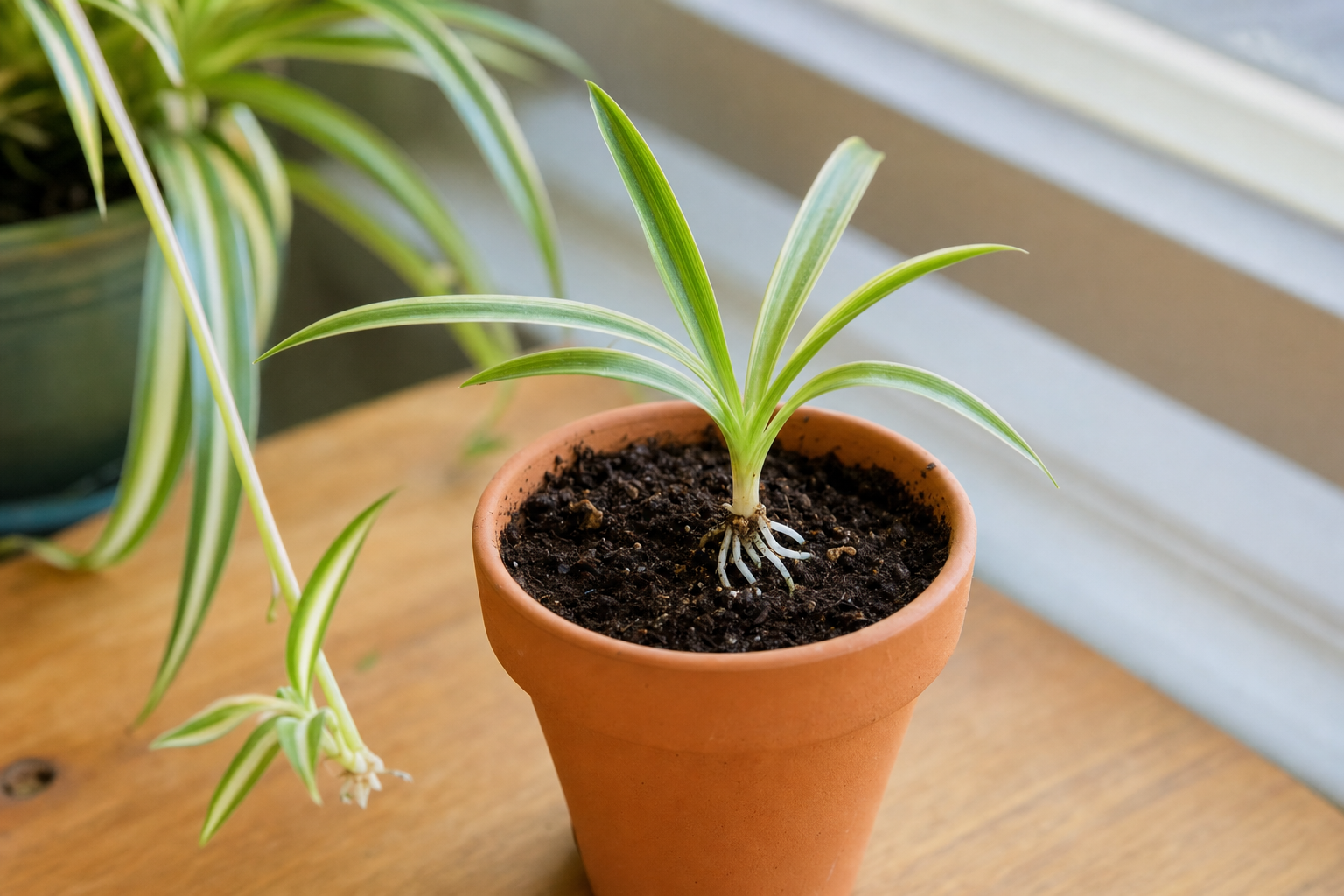
Direct soil planting
You can also plant baby plantlets directly into soil without rooting them in water first.
- 1 Cut a baby plantlet from the stolon.
- 2 Plant it directly in moist potting soil, burying the base about 1/2 inch deep.
- 3 Keep the soil consistently moist and the humidity high for the first 2 weeks — a clear plastic bag over the pot helps.
- 4 Place in bright indirect light.
- 5 New growth appearing in 3–4 weeks indicates the plantlet has rooted.
Expected timeline: roots in 2–3 weeks, new growth in 3–4 weeks, established plant in 6–8 weeks. Success rate: approximately 75–85%.
Success rate: approximately 75–85%.
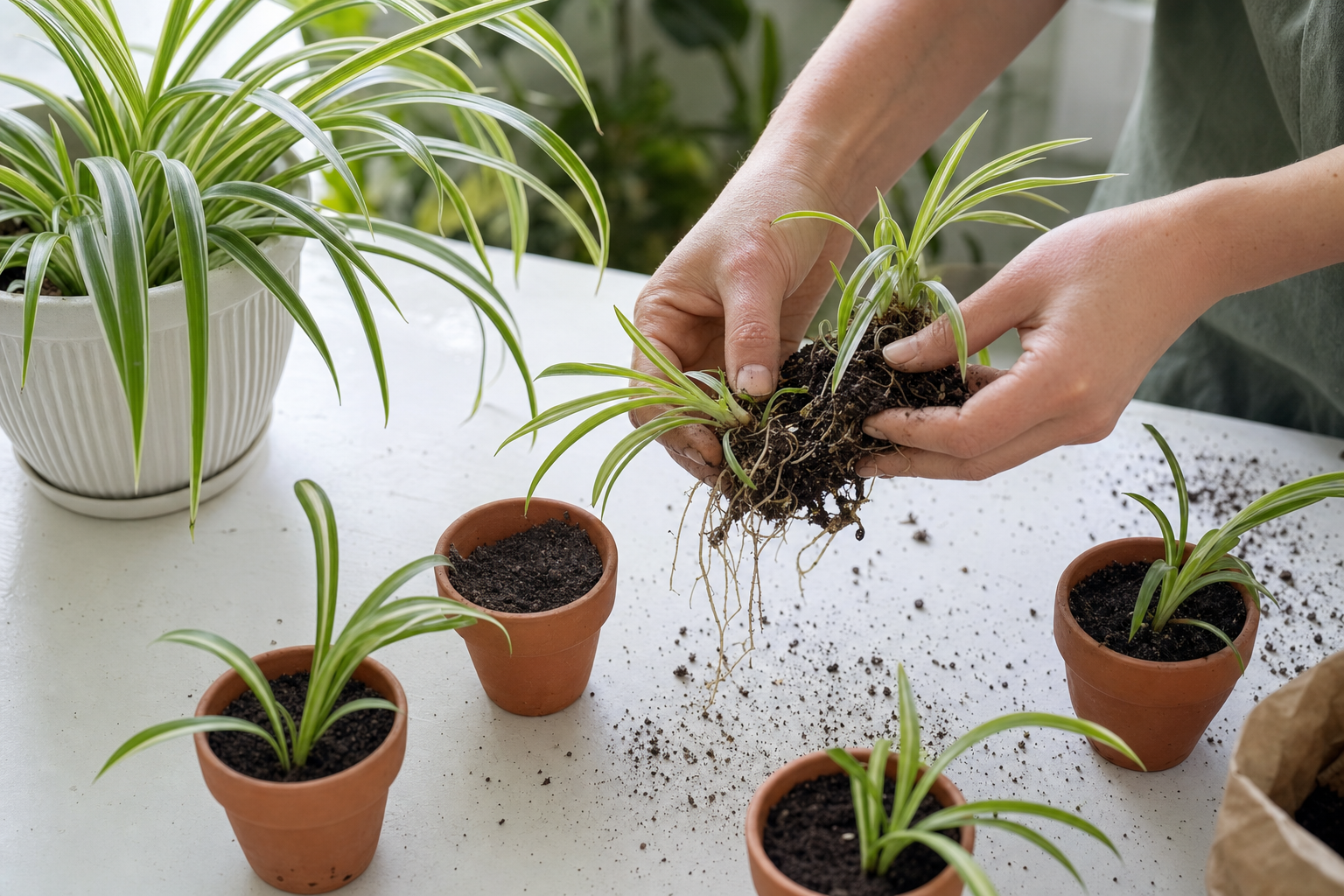
Division (for full-size plants)
You will need a clean sharp knife and pots with drainage holes.
- 1 The best time to divide is during spring repotting when the plant is actively growing.
- 2 Remove the Spider Plant from its pot and gently shake off excess soil.
- 3 Identify natural division points where clusters of leaves have their own root systems. Spider Plants produce thick, fleshy, tuberous roots.
- 4 Using your hands or a clean knife, separate the root ball into 2–3 sections, each with several plants and a healthy root mass.
- 5 Plant each division in its own pot with fresh soil.
- 6 Water thoroughly and keep in bright indirect light.
- 7 Divisions may look slightly wilted for a few days but recover quickly.
Expected timeline: perked up in 3–5 days, new growth in 2–3 weeks. Success rate: approximately 90–95%.
Success rate: approximately 90–95%.
Encouraging baby production
If your Spider Plant isn't producing babies, it may be too comfortable. Spider Plants produce plantlets most prolifically when they are slightly root-bound, receiving bright indirect light, and being fed regularly during the growing season. Some growers find that a brief period of slight underwatering stress can trigger stolon production. Also, the plant needs to reach a certain maturity — young plants may not produce babies until they are 1–2 years old.
Troubleshooting Common Issues
Baby plantlet rotting instead of rooting
This usually happens when the base of the plantlet is buried too deep or the soil is kept too wet. Only bury the base 1/2 inch deep, and keep the soil moist but not soggy. If rooting in water, ensure no leaves are submerged. Remove any brown, mushy plantlets immediately.
Plantlet roots not growing in water
Ensure the water level reaches the tiny root nubs at the base of the plantlet. Change the water every 5–7 days. Warm temperatures (70–80°F) speed up root development. If the baby is very small with no visible root nubs, try the stolon pinning method instead, which is more reliable for immature plantlets.
Transplanted babies wilting
Some wilting is normal during the transition from water to soil. Keep the soil consistently moist (not soggy) for the first 2 weeks and maintain high humidity. Most plantlets recover within 5–7 days as new soil-adapted roots develop.
Division not producing babies
Newly divided plants need time to re-establish their root systems before producing stolons. Expect to wait 2–4 months after division before the plant begins making babies again. Ensure the plant is slightly root-bound, receiving bright light, and being fed monthly during spring and summer.
Propagation Tips
- ✓ Always use clean, sterilized tools to prevent infection
- ✓ Cuttings need bright indirect light — never direct sun
- ✓ Change propagation water every 5–7 days to prevent bacteria
- ✓ Be patient — rooting takes 2–6 weeks depending on the method
- ✓ Spring and summer are the best seasons for propagation