
How to Propagate Rubber Plant
Rubber Plant is one of the easiest houseplants to propagate. Here are three reliable methods — choose the one that fits your comfort level and available supplies.
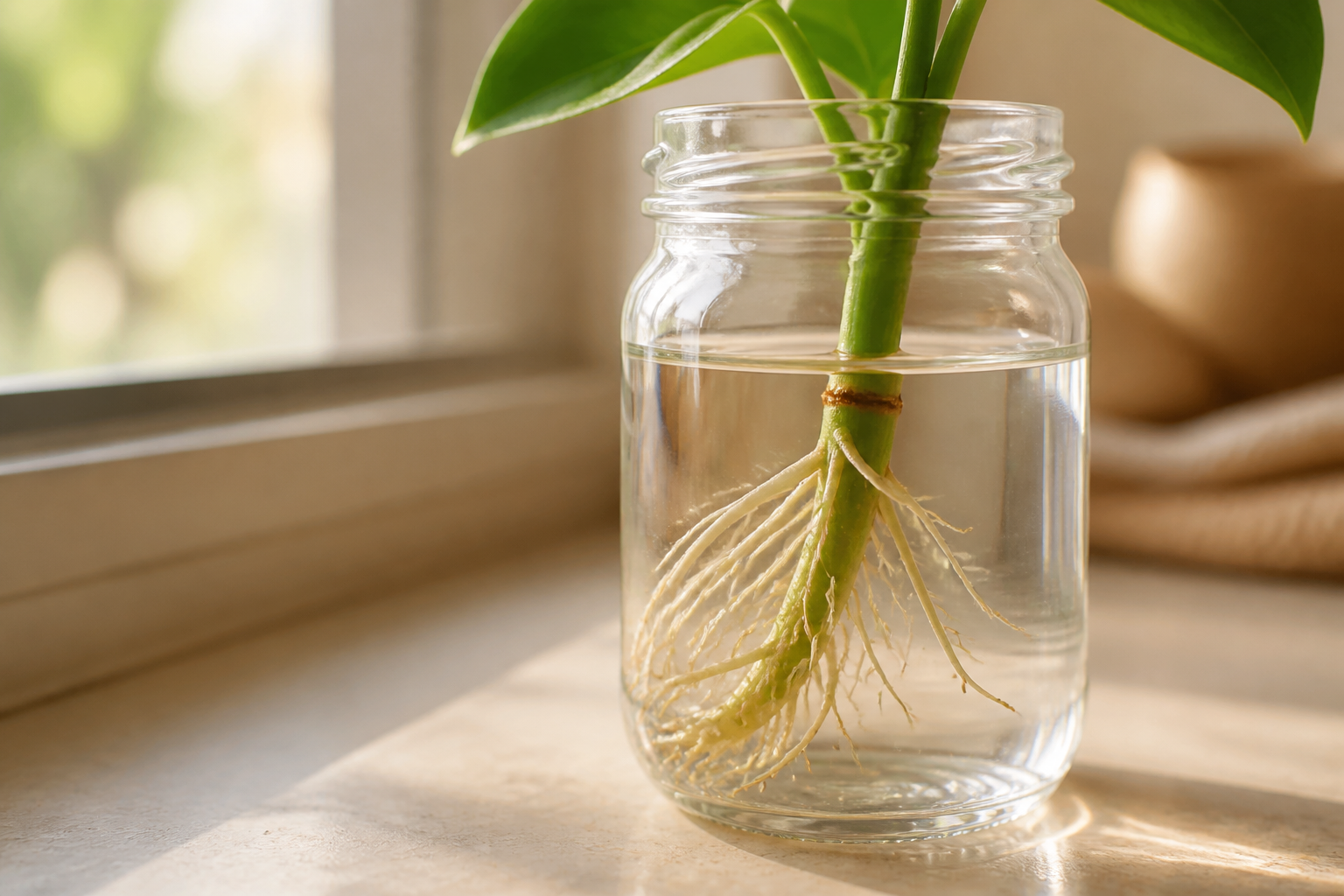
Stem tip cutting in water
You will need clean sterilized scissors or a sharp knife, a glass jar, room-temperature water, and optionally rooting hormone.
- 1 Select a healthy stem tip with at least 2–3 leaves and 4–6 inches of stem. The cutting should come from the current or previous season's growth — greenish stems root much better than old, woody ones.
- 2 Cut just below a node (the small bump where a leaf attaches) using sterilized tools.
- 3 The cut end will bleed white latex sap — rinse it under cool running water to stop the flow, then wear gloves for the remainder.
- 4 Let the cutting sit for 30–60 minutes so the cut end can callus slightly — this helps prevent rot.
- 5 Remove the bottom 1–2 leaves to expose the node.
- 6 Place the cutting in a jar of room-temperature water, ensuring the node is submerged but no leaves touch the water.
- 7 Position in bright indirect light — direct sun will heat the water and promote bacterial growth.
- 8 Change the water every 5–7 days, rinsing the jar each time.
- 9 Roots should appear in 3–4 weeks. Wait until roots are 2–3 inches long (typically 6–8 weeks total) before transplanting into well-draining soil.
- 10 Water the newly potted cutting thoroughly and keep the soil consistently moist for the first 2 weeks.
Expected timeline: roots appear in 3–4 weeks, ready to transplant at 6–8 weeks, new growth in 10–12 weeks. Success rate: approximately 65–75%.
Success rate: approximately 65–75%.
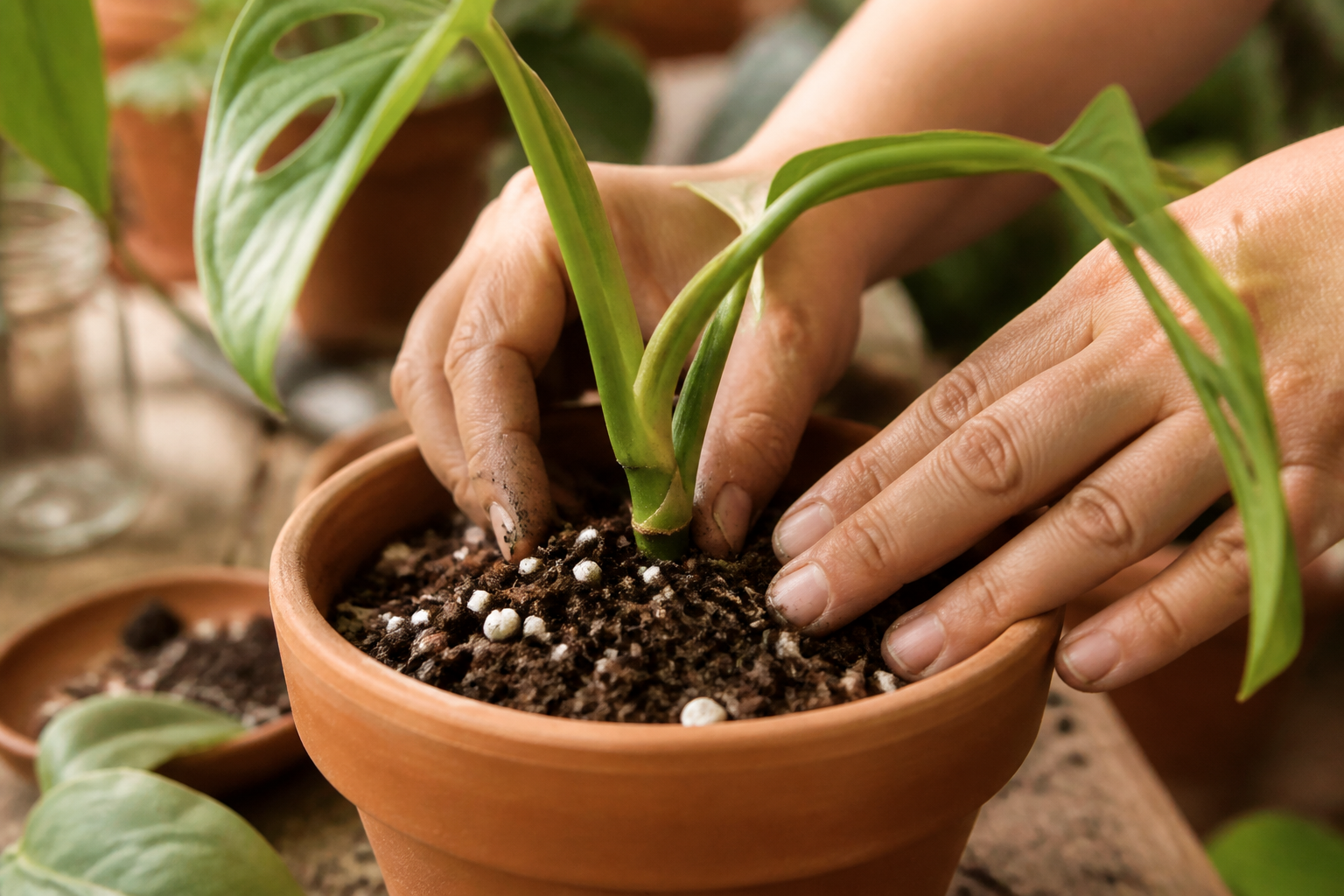
Stem tip cutting in soil
You will need the same tools plus a small pot with drainage holes, moist well-draining potting mix, rooting hormone (strongly recommended), and a clear plastic bag or propagation dome.
- 1 Prepare a cutting as described above (cut, rinse sap, callus for 30–60 minutes).
- 2 Dip the callused cut end in rooting hormone, coating the bottom inch of stem.
- 3 Plant directly into moist potting mix, burying the node about 1 inch deep.
- 4 Water lightly to settle the soil.
- 5 Cover with a clear plastic bag or propagation dome to maintain high humidity — rubber plant cuttings need 60–80% humidity to root successfully.
- 6 Keep in bright indirect light at warm temperatures (70–80°F). A heat mat underneath the pot significantly improves success rates.
- 7 Keep the soil consistently moist but not soggy.
- 8 New growth appearing at 6–8 weeks indicates successful rooting.
- 9 Gradually remove the humidity cover over 4–5 days.
Expected timeline: roots form in 4–6 weeks, new growth in 6–8 weeks, established plant in 12–16 weeks. Success rate: approximately 55–70%.
Success rate: approximately 55–70%.
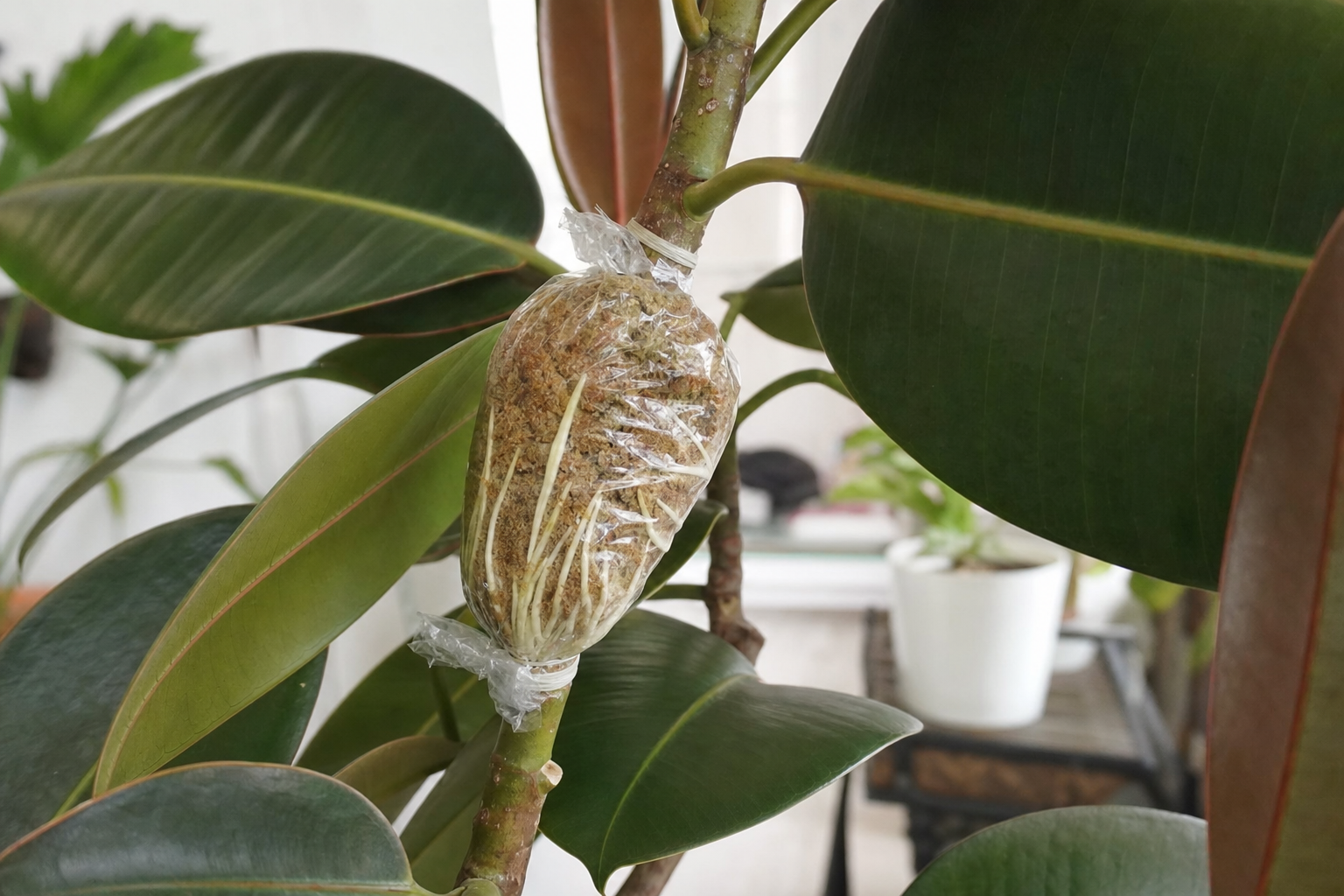
Air layering (most reliable for mature plants)
This method produces the highest success rate because the cutting develops roots while still attached to the parent plant, receiving water and nutrients throughout the process. You will need a clean sharp knife, a toothpick, rooting hormone powder, moist sphagnum moss, plastic wrap, and tape.
- 1 Select a healthy stem section on the parent plant where you want a new plant to form.
- 2 Make an upward diagonal cut about halfway through the stem.
- 3 Insert a toothpick into the cut to keep it from closing.
- 4 Apply rooting hormone to the cut surface.
- 5 Wrap a generous handful of moist sphagnum moss around the cut, covering it completely.
- 6 Cover the moss with plastic wrap, securing both ends tightly with tape.
- 7 Check the moss every 5–7 days and mist if it feels dry.
- 8 Roots will develop inside the moss in 6–10 weeks.
- 9 Once you see a good root network, cut the stem below the rooted section and pot it up.
- 10 The parent plant will continue growing and often produces new branches below the cut.
Expected timeline: roots in 6–10 weeks, established plant in 14–16 weeks. Success rate: approximately 80–90%.
Success rate: approximately 80–90%.
Troubleshooting Common Issues
Cutting losing all leaves
Rubber plant cuttings often drop their lower leaves during propagation as they redirect energy to root development. If the stem remains firm and green, the cutting may still root. If the stem itself is soft or shriveled, the cutting has failed. High humidity (60–80%) helps prevent excessive leaf loss.
Sap irritation on skin
If latex sap gets on your skin, wash immediately with soap and cool water. Avoid touching your face or eyes. The sap can cause contact dermatitis in sensitive individuals. Always wear gloves when taking cuttings.
No roots after 6 weeks
Rubber plants are slow rooters. Ensure warm temperatures (75–80°F), consistent moisture, and high humidity. Adding a heat mat can dramatically improve rooting speed. If the cutting is still firm with no signs of rot, give it more time — some cuttings take 8–10 weeks.
Air layering moss drying out
Dry moss means the cut may have healed closed and no roots will form. Unwrap and remoisten the moss, then reseal tightly. If the cut has healed, make a fresh cut and restart the process.
Propagation Tips
- ✓ Always use clean, sterilized tools to prevent infection
- ✓ Cuttings need bright indirect light — never direct sun
- ✓ Change propagation water every 5–7 days to prevent bacteria
- ✓ Be patient — rooting takes 2–6 weeks depending on the method
- ✓ Spring and summer are the best seasons for propagation