
Money Tree Varieties
A comparison of the most popular Money Tree varieties — learn which one is right for your space and skill level.
| Variety | Key Feature | Care Difficulty | Price Range |
|---|---|---|---|
| Money Tree (Standard Braided) | Multiple trunks braided into one thick plait with a leafy canopy on top; the standard money tree look | Easy | $20–$60 |
| Money Tree Forest (Multi-Trunk Grove) | Several separate slim trunks rising from one pot in a grove - no braid, denser canopy | Easy | $35–$80 |
| Variegated Money Tree | Cream and yellow marbling on the palmate leaflets, different on every leaf | Moderate | $60–$150 |
| Bonsai Money Tree | A thick tapered trunk and dense pruned canopy in a shallow bonsai dish under 18 inches | Easy–Moderate | $40–$100 |
Variety Details
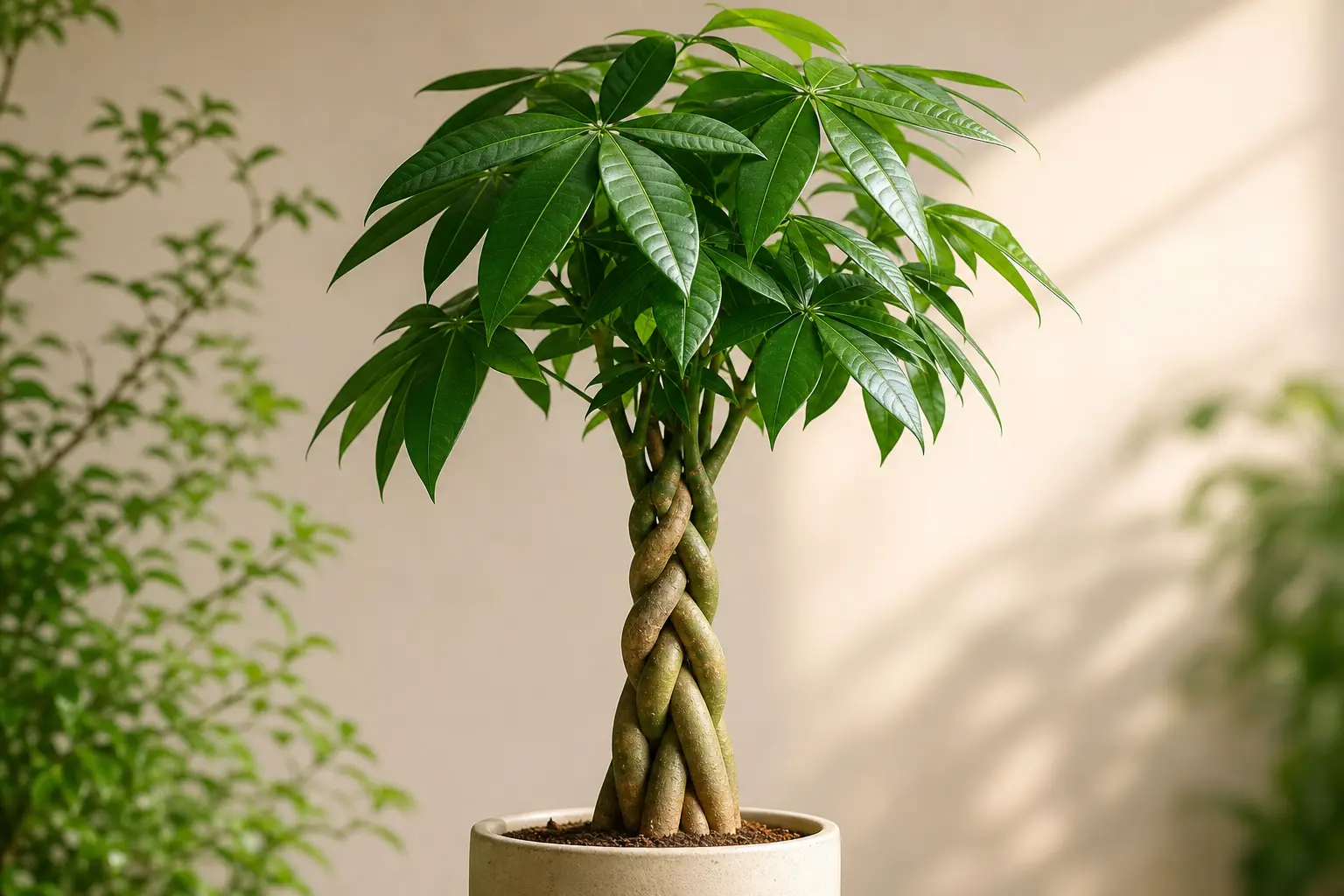
Money Tree (Standard Braided)
The familiar nursery money tree: 3–5 young Pachira aquatica trunks woven into a single braid topped with a canopy of glossy palmate leaves. The braid is purely ornamental - growers weave pliable seedlings, and the trunks fuse as they thicken. Widely available from big-box stores to florists at $20–$60 depending on size, and the classic feng shui housewarming gift.
Distinguishing feature: Multiple trunks braided into one thick plait with a leafy canopy on top; the standard money tree look
Care notes: Standard money tree care applies: bright indirect light, water when the top few inches dry, and keep the braid dry when watering. Watch for one trunk softening - remove a rotting trunk promptly so it does not spread to its woven neighbors.
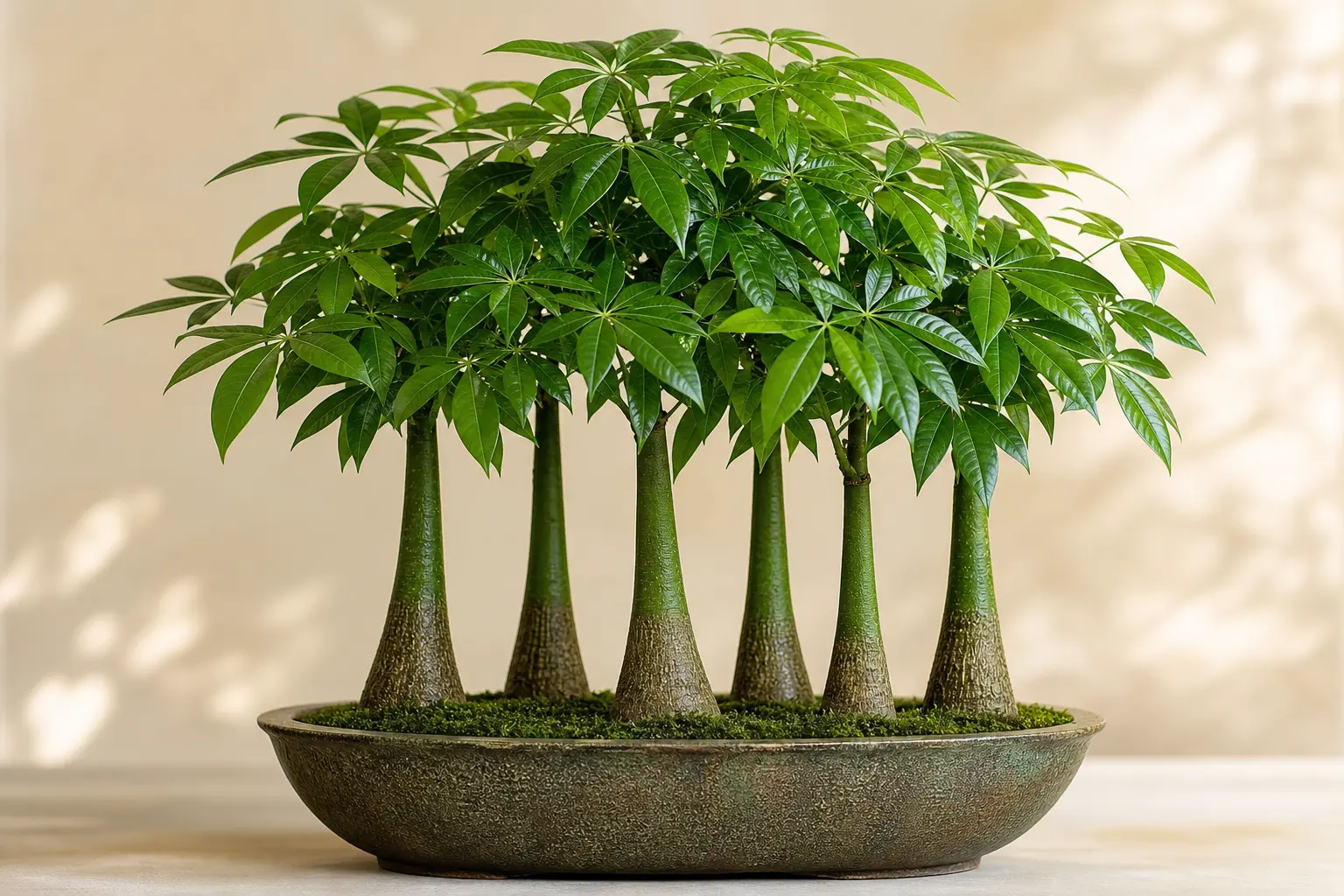
Money Tree Forest (Multi-Trunk Grove)
Five to eight unbraided seedlings planted together in one wide pot, grown as a miniature grove rather than a single trunk. The multi-planting gives a fuller, bushier silhouette at table height and skips the braid entirely, which makes trunk-rot problems rarer. Common from bonsai and specialty nurseries at $35–$80.
Distinguishing feature: Several separate slim trunks rising from one pot in a grove - no braid, denser canopy
Care notes: Identical watering and light to the standard braid. The wider pot dries more evenly than a deep one, and each trunk can be pruned to shape the grove. An excellent choice for growers who have lost a braided tree to trunk rot before.
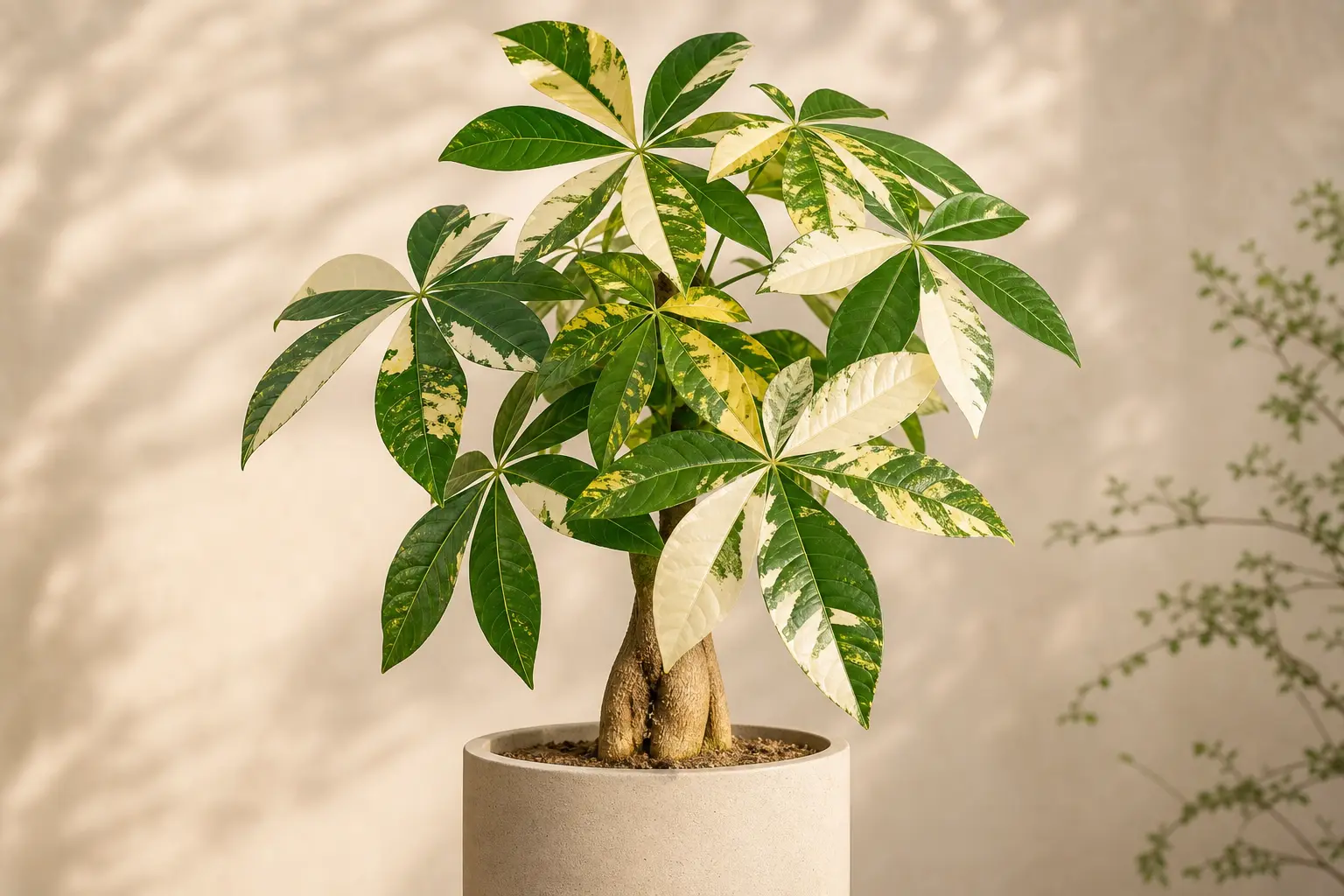
Variegated Money Tree
A rarer form splashed with cream-to-yellow variegation on the leaflets, often sectoral so each leaf is patterned differently. Variegated Pachira is slow-growing and less commonly propagated, so it trades at collector prices - typically $60–$150 for a rooted plant. Brighter light keeps the variegation bold; dim rooms let new leaves revert toward solid green.
Distinguishing feature: Cream and yellow marbling on the palmate leaflets, different on every leaf
Care notes: Give it the brightest indirect light you can to hold variegation, and trim fully reverted solid-green branches. Slower growth means less frequent repotting - every 3 years or so. Otherwise water and feed as standard.
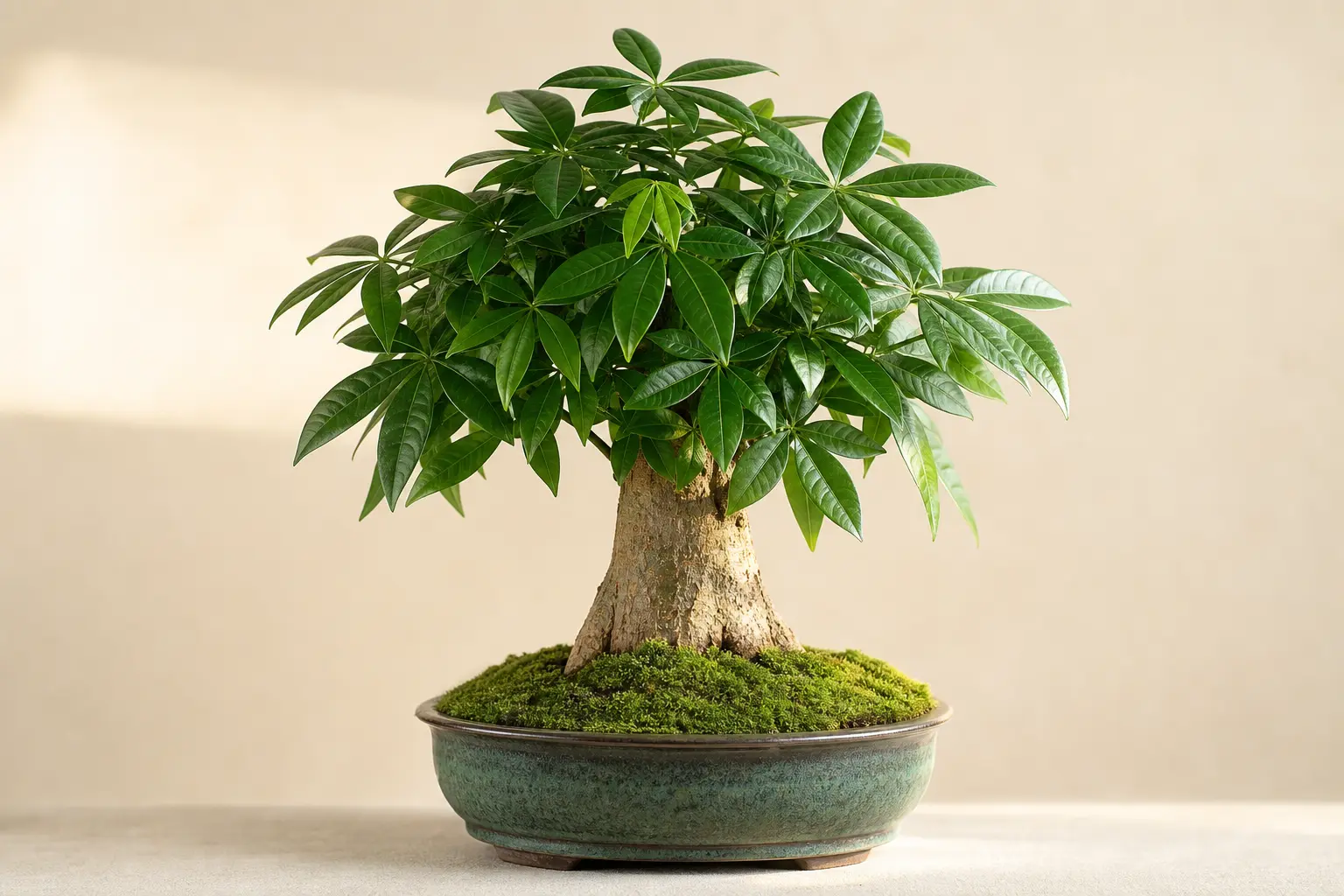
Bonsai Money Tree
The same Pachira aquatica trained as a small bonsai or tabletop tree: a chunky short trunk, pruned canopy, and shallow dish, usually under 18 inches tall. Money trees take bonsai training well because the trunk thickens with age and responds to leaf pruning by back-budding. Sold readymade at $40–$100, or grown from a standard tree by patient pruning.
Distinguishing feature: A thick tapered trunk and dense pruned canopy in a shallow bonsai dish under 18 inches
Care notes: The shallow dish dries fast - check soil twice weekly in summer. Prune new stems back to 2–3 leaves once the canopy fills in, and wire only young green shoots, never woody trunks. Same bright-indirect, dry-between-watering rules in miniature.